
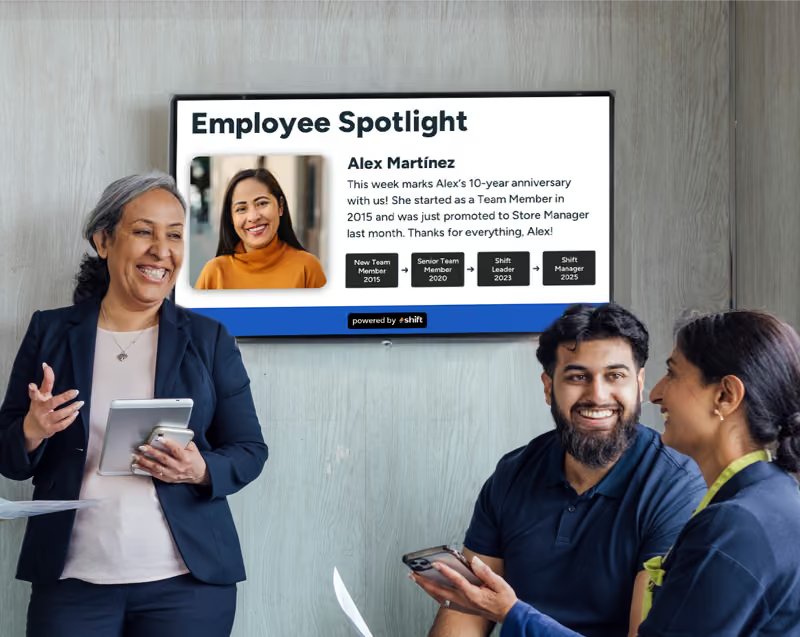

Clear and concise communication has always been the number one goal in most, if not all, modern workplaces. And when it comes to using the same methods we’ve been using since the internet really started its reign, i.e. emails and direct messages, there can be a lot of…discrepancy. Things can get lost easily, messages undelivered or unseen in time for the important thing that needs to get done, so having reliable communication is what every place of business should be striving for.
That’s where internal signage comes in.

Internal signage is most commonly described as a “visual communication system” where teams who work in an office use displays with text on them, usually made of wood or metal- (with more streamlined businesses will use plasma screens), to reliably guide them through navigating the work building, keep up-to-date on the latest happenings with the work, and orient themselves more confidently in their job. Today we’re here to give you the complete guide to internal signage for modern workplaces so you can see what you’ve been missing and how it can effectively change your business operations for the better.
- Internal Signage: What is it? What is it good for?
- Examples of Internal Signage in the Workplace
- Why Internal Digital Signage is Superior
- A Look at into Digital Signage with Shift
Internal Signage: What is it? What is it good for?
We touched on it briefly in the intro but let’s take a closer look at internal signage. When we say those words, to the uninformed, it may seem like a concept that is a lot bigger than it really is.
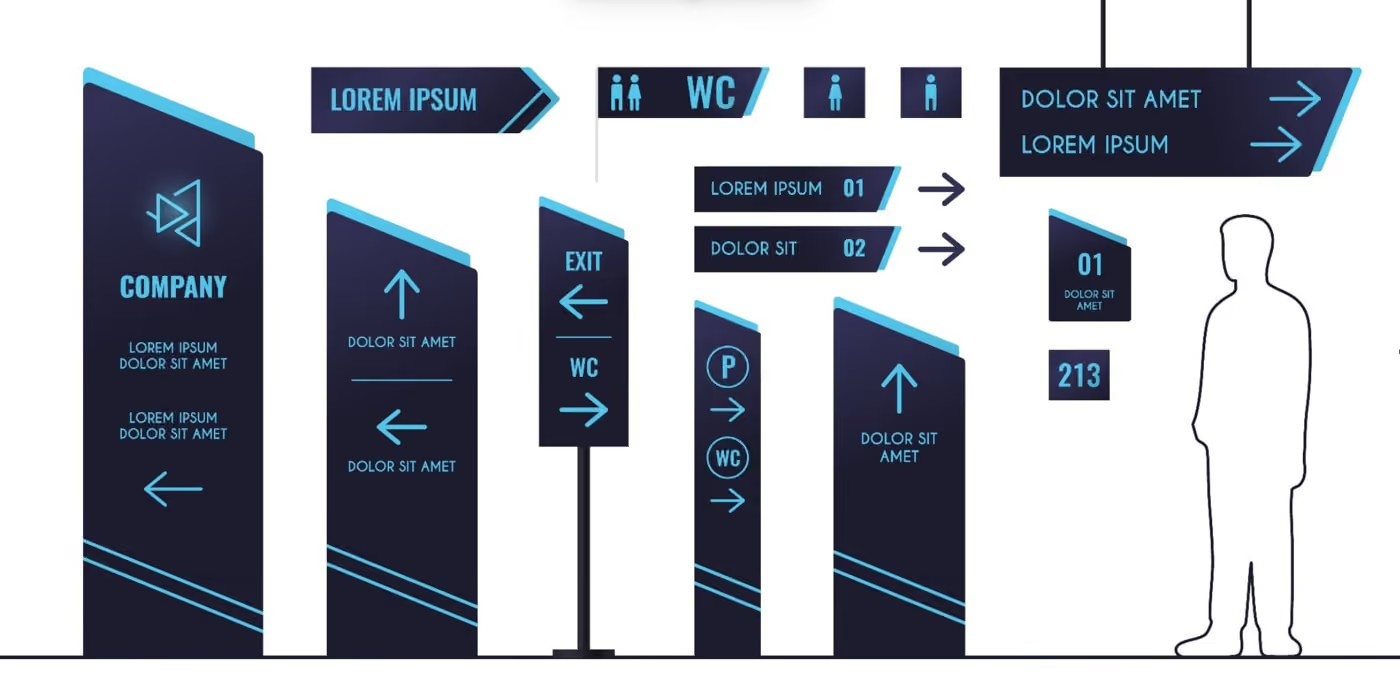
It’s actually quite simple. Internal signage is any kind of sign, physical or digital, that displays information pertinent to the building/workspace you’re in. It can be as easy as an arrow pointing down the hall with the name of the office it’s leading to, or as a reminder for an upcoming event located in a specific room in the building. Typically the most basic forms of internal signage you’ll first experience is outside the classroom doors in school displaying the teacher’s name.
It’s small, but essential communication because without it we would be lost, and we mean that literally. Think of something like a hospital or doctors office, and remove any kind of signs inside the building. Now try to navigate your way to the exact wing and/or section you need to get to. It’ll be almost impossible right? Those buildings already feel like mazes even with signs, so taking those away would be pandemonium.
Already you can see from a sheer base functional level that having internal signage is essential for the workplace, especially if the size of your space is as big as a doctor’s office. But it’s not just beneficial for bigger buildings, any size of business can take advantage, especially for newcomers and customers alike.
We want everyone to feel welcome and confident, so internal signage is good for many things like:
- New hires, clients, contractors, and vendors being able to navigate their way through your workplace efficiently so they can get to where they need to go without any confusion.
- Reminders and updates on important events taking place. When there’s a meeting, seminar, or visiting speaker coming, having signs displaying the date, time, and room it’s taking place is very useful.
- Changes in schedule or meeting rooms. Sometimes there’s a last minute change regarding the previously mentioned event, a meeting that’s been cancelled, or moved to a different room. Having signs up detailing these changes will eliminate the confusion in those moments.
- Emergency and safety information. Any office no matter the size will need applicable emergency and safety signs up all throughout the workspace for every level of employee to know what to do should something happen.
- Business branding and advertising to prospective buyers. It’s common to see internal signage displaying the name of the company and reminders on what everyone’s here to do. Keeping the slogan shown both outside and inside is a great opportunity for inspiring good workplace etiquette.
- Speaking of advertising, if you’re not just a behind the scenes business but one that runs a shop for customers to come in during work hours, then having displays regarding what’s on sale, new discounts and deals, and where to go to buy x and y is maybe the most important part of internal signage. This way there won’t ever be confusion regarding what’s available to the public.
These are just some examples of what internal signage is good for, there are plenty more that’s more specific to the workspace depending on what type of business it is.
Examples of Internal Signage in the Workplace
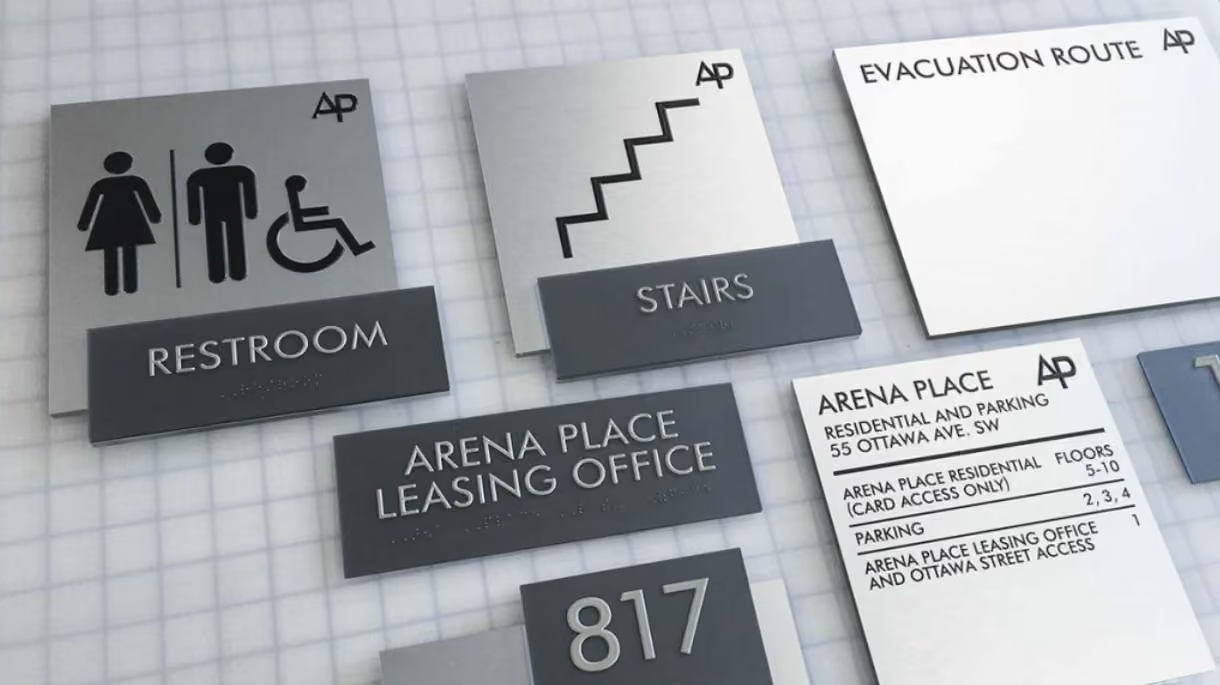
Now that we know a little bit more on what internal signage truly is and what it’s good for, we can take a look at some examples of it in the workplace:
Lobby, Reception, and “First Impression” Signage:
You know the popular saying: “never judge a book by its cover?” As much as we’d love to follow that as human beings, it can be hard not to, especially when we see things and subconsciously already pick up on a, for a lack of a better term, “vibe” of the place within the first five seconds of entering somewhere.
A classic example of this in our modern era is dating apps. You can through many profiles in a day and get a feeling of whether you want to reach out (or swipe right) just from a less than thirty second look. So apply that into a place where a customer or client is potentially wanting to do business and you see where we’re going with this. The first few signs in the lobby and reception are the profile, they need to be welcoming, informative, and eye-catching in a good way, not a bad.
Navigation, Directional,and Wayfinding Signs:
This is the type of signage we’ve touched on the most so far but it’s worth repeating. Having simple arrows and office display names throughout the building is the best way to avoid any unnecessary lateness, confusion amongst visitors, and new hires trying to get the way of the land.
Company Policy Signs:
There are always going to be “no’s” in the corporate world, no matter how big or small your modern workspace is, everyone has a policy to follow which means gentle reminders of the do’s and don’ts is expected throughout the office space. Not all policy signs are going to be “no blank” or “don’t do x”, there will be parking guidelines, smoking and quiet only permitted areas, office hours, and reminders of new enforcements should the need arise.
Safety Signage:
Keeping in line with the previous example, safety signage is of the utmost importance for any modern workplace. This can include anything from wet floor signs to fire exits, you’ll find safety signs all the time if you begin to look for them and having them written out boldly and clearly is paramount.
Internal Communication Signage:
When things need to be communicated to many employees, signage, or more accurately digital signage is going to be what’s going to get your messages across in the most efficient way possible. When higher ups need something done and they need it done within a specific time limit, sending out notices and instructions through widespread internal signage.
Why Internal Digital Signage is Superior

While a lot of internal signage can be done using regular metal, plastic, and paper-made signs from local distributors, a lot of the time it will stay outdated when things have changed in the workplace. Think of the last minute, “um actually, we’re meeting in conference room B downstairs instead of up,” and not being able to get that message across to who needs it because you rely on paper signage and un-read Slack messages.
When you set up digitized display screens throughout the office, you can send those last minute change notices so they can see it before they even leave their deskspace.
What is digital signage? A small recap
Digital signage is a connected network of display screens like televisions, tablets, phones, kiosks, and digitized menus, that provides information, advertising, merchandise, and/or training regarding a business, school, or another type of similar environment. It takes the place of regular physical internal signage and thrusts it to the modern era. Think modern era = modern workplace.
But in order for every screen to be connected and run together so messages go out on the screens you want, certain employees get their pertaining information, and other essentials in the office, you’re going to need software to run that.
That’s where a DSS comes in. DSS, digital signage software, is like the main menu of a video game, where you can control the graphic settings, the resolution, the subtitle size and color, and every other little detail of how your game runs. When put into business terms, it is the “hub” where you can control all of the digital content displayed on every screen that’s linked up.
You’re able to display what you want, when you want, from a few clicks of a button- (or taps of screen).
No more running around taking down previously posted internal signs and replacing them with updated information so no confusion arises. No more dusty and falling apart lobby signs. Now you have sleek, beautiful, and optimized internal digital displays.
A Look at into Digital Signage Softwares with Shift
Shift is known for bridging that gap between management and employees. No matter where you are in your modern workspace, you can use many of its functions to offer real-time updates once and send it out to everyone in the office immediately.
We’re looking at:
- Seamless, Centralized Communication
- Automated Content Creation
- Visualized, Real-Time Data
- Easy, Scalable Deployment
- 11% increase in revenue
- 21% increase in operational profitability
- 25% improvement in employee retention
With the Content Navigator tool, Shift can efficiently update any digital signage screens to give updates on company news, spotlight employees, and give updates on current projects.
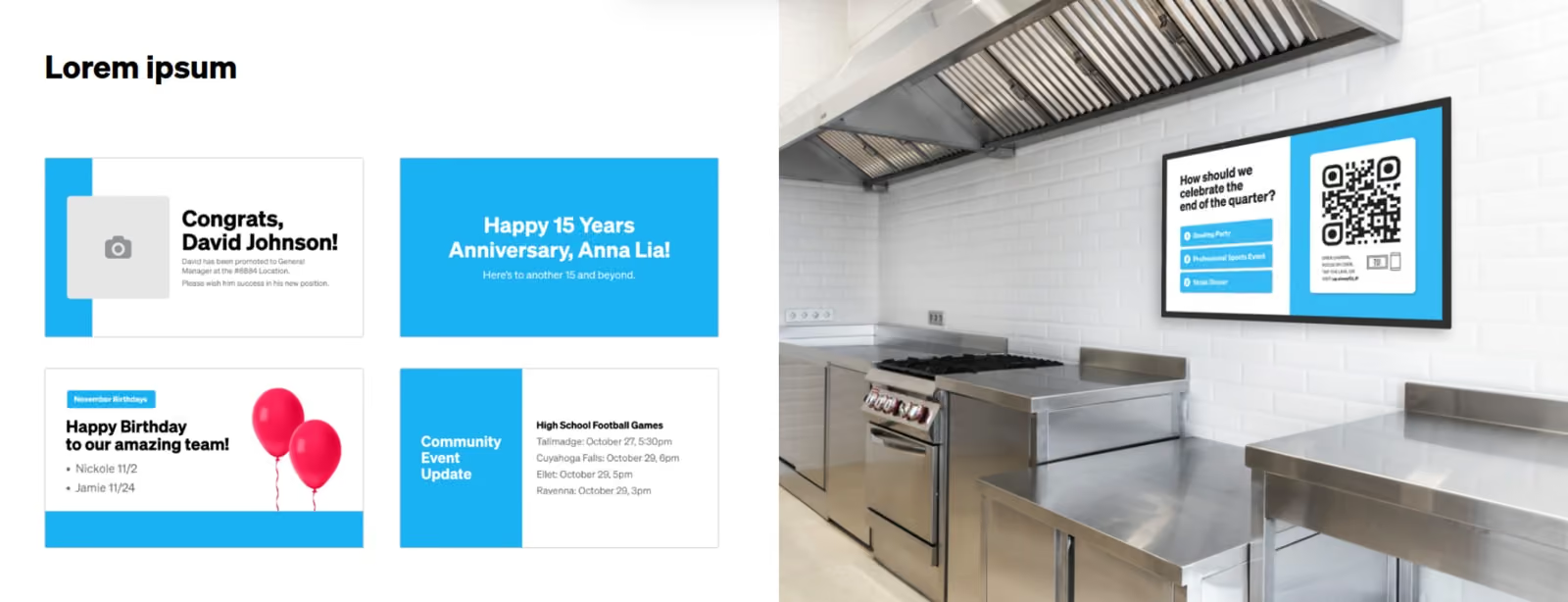
Shift is always building new integrations and API connections so you can know that you’ll always have reliable resources to fall back on. Try a risk-free 60 day pilot and see how it works so you can introduce microlearning in HR in the most streamlined way possible.
The Complete Guide to Internal Signage for Modern Workplaces
There’s nothing quite like modernizing your modern workplaces, and that is exactly what internal signage does. It creates communication opportunities that can’t be misconstrued through a lack of awareness, especially if you are using digital signage as your tool. You’re able to make it so everyone, from interns, to recent hires, and seasoned employees get the same level of understanding. Internal signage is just one of the many ways you can make your business flourish.








.avif)