

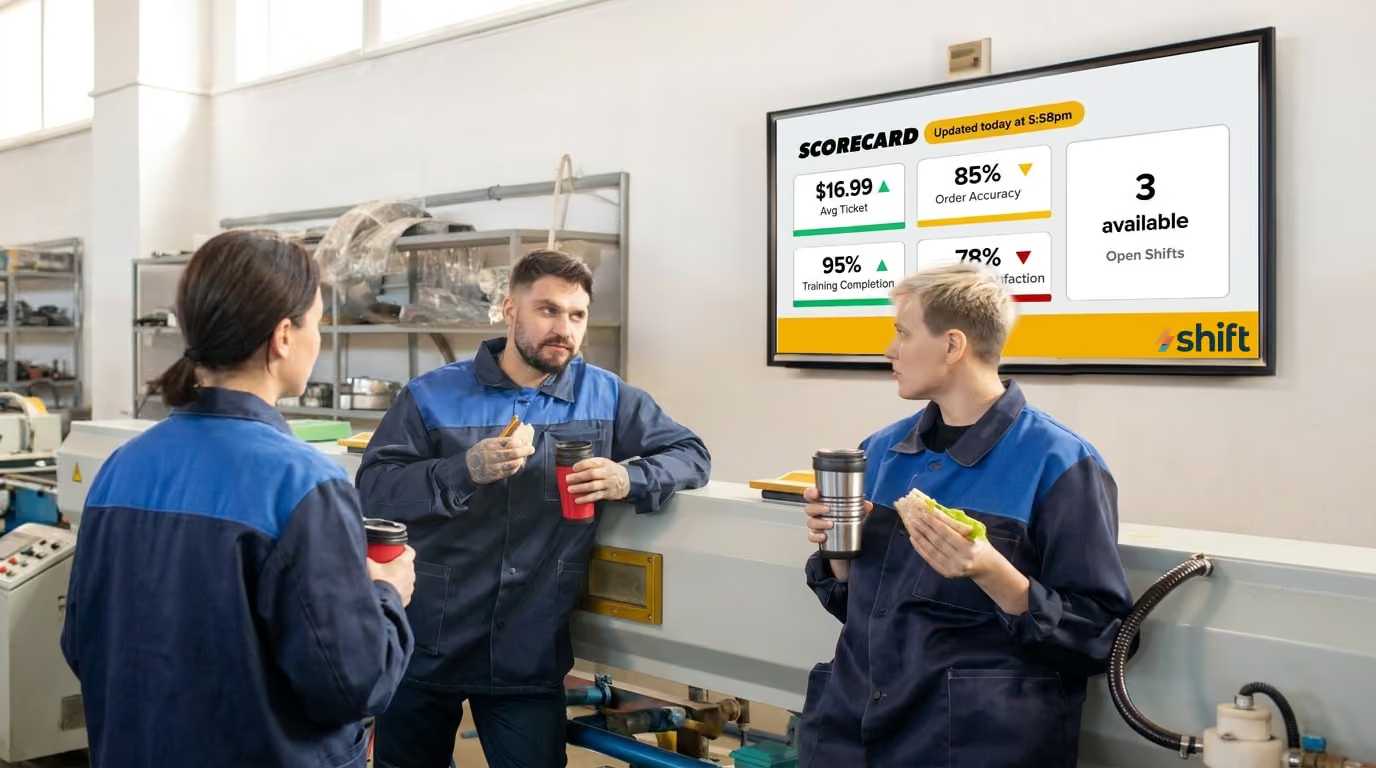
For most packaging operations, internal signage is invisible infrastructure. It's everywhere, but nobody owns it. There's rarely a strategy behind it or a budget dedicated to it. Instead, it accumulates reactively — a hazard gets flagged, a sign goes up; a supervisor wants workers to remember a new procedure, a handwritten note appears above the station. Over time this creates a patchwork of inconsistent, outdated, and sometimes contradictory visual information that workers learn to tune out. Signage that technically exists but functionally disappears.
What's changing is that forward-thinking packaging companies are beginning to treat signage as a strategic asset rather than a compliance afterthought. Driven by lean manufacturing initiatives, tighter regulatory scrutiny, labor pressures that demand faster onboarding, and the rise of affordable digital displays, these operators are moving from reactive to intentional — building visual systems that guide behavior, reinforce safety, and deliver real-time information at the point it's needed most.
In this article, we’re going to lay out:
- Why digital signage is important to packaging companies
- How packaging companies are using internal signage to improve floor operations
- The best digital signage system for your packing company
Why Digital Signage is Essential for Packaging Companies
There are lots of reasons why packaging companies should include a robust digital signage strategy
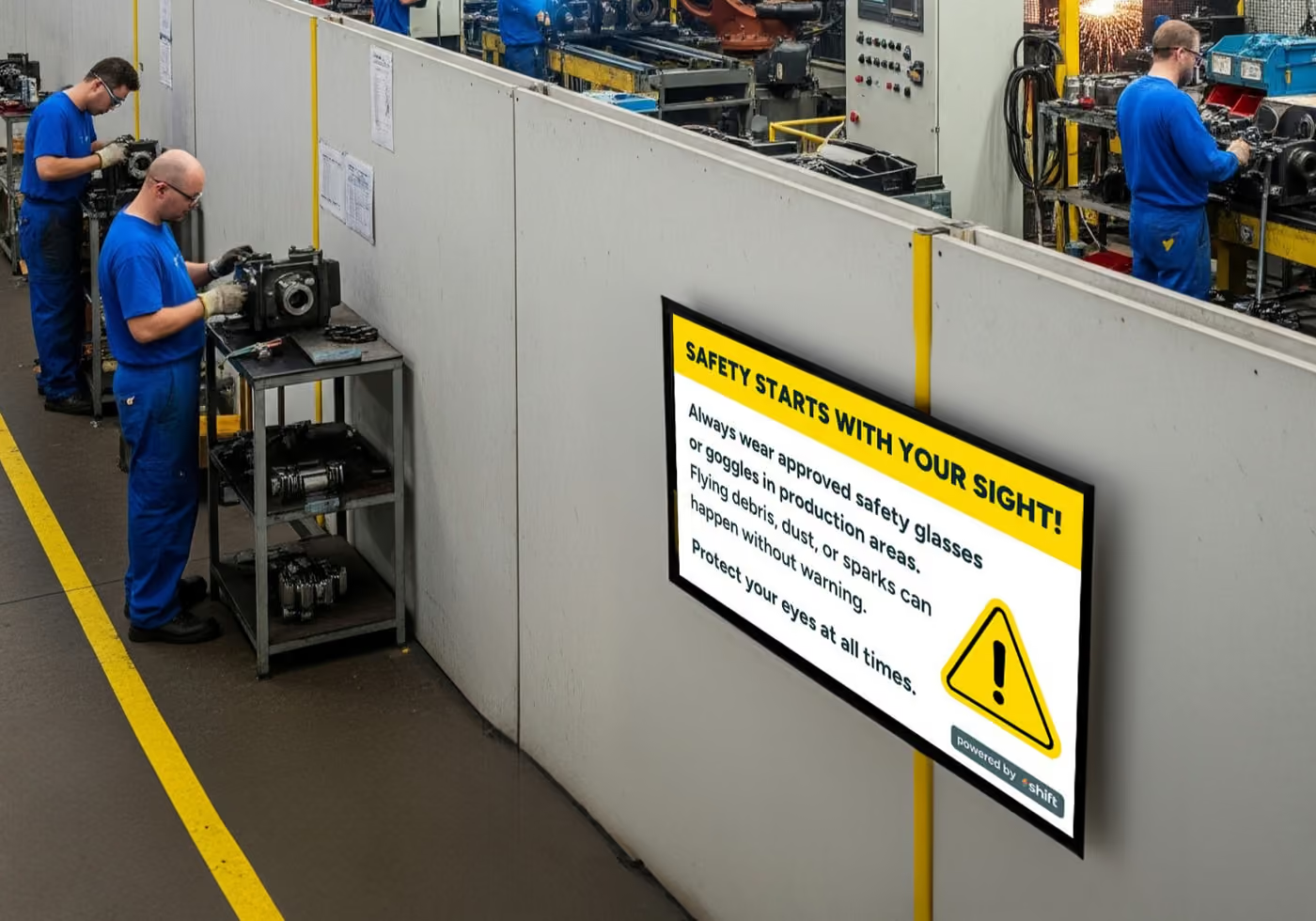
Digital signage matters to packaging companies because the information that drives a packaging floor changes constantly — and static signs can't keep up. Production targets shift between shifts. Quality holds need to be communicated instantly. Line speeds change based on demand. When that information lives on a printed sign or a whiteboard, it's outdated the moment conditions change. When it lives on a digital display connected to the facility's systems, it's accurate in real time.
The operational benefits are significant. Digital displays can pull live data from ERP and MES systems to show workers exactly what's happening on the line — units produced, downtime events, quality metrics, efficiency against target. This kind of visibility drives accountability and focus in a way that a static goal poster never can. When a team can see in real time that they're running behind pace, behavior changes. When a line goes down, a digital alert reaches every corner of the facility instantly rather than relying on someone to physically notify the right people.
There's also a safety and compliance dimension. Packaging facilities deal with frequent changeovers, new products, and updated procedures. Digital signage allows safety instructions, allergen alerts, and work instructions to be updated centrally and pushed to the right displays immediately — eliminating the lag between a process change and the moment workers are informed of it. In food and beverage packaging especially, that lag can be the difference between a clean audit and a serious incident.
Finally, digital signage reduces the long-term cost and labor of maintaining a physical signage system. Reprinting, laminating, and replacing signs across a large facility is a hidden operational burden. A well-implemented digital system shifts that burden to a few clicks from a central dashboard.
5 Ways Packaging Companies are Utilizing Digital Signage to Boost Floor Operations
Packaging companies can take advantage of all the benefits of internal signage in 5 major ways
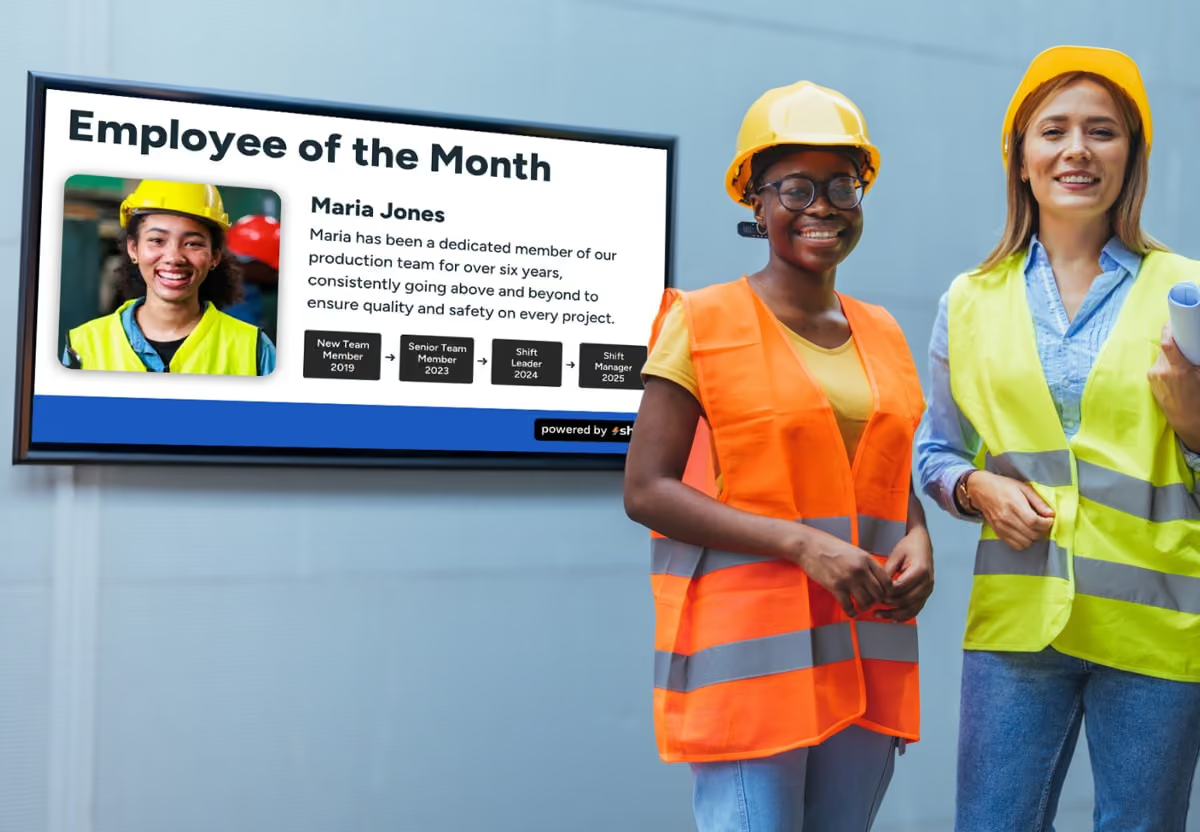
1. Safety and Compliance
In environments where heavy machinery, moving vehicles, pressurized systems, and industrial chemicals share space with a high-volume workforce, the visual communication of safety information isn't optional, it's foundational.
The baseline is OSHA compliance. Federal standards govern not just what must be displayed, but how — specific colors and signal words carry defined meanings under ANSI Z535. Red means danger. Yellow means caution. Green means safety. A facility that applies these inconsistently, or has accumulated so many signs that the visual hierarchy has broken down, is speaking a garbled safety language to its workforce. Workers who can't instantly parse the severity of a hazard from a glance are workers more likely to make a costly mistake.
Lockout/tagout is another area where signage plays a legally mandated and potentially life-saving role. Effective LOTO visual systems go beyond a laminated sheet taped to a machine. They include step-by-step visual instructions posted at each piece of equipment, energy source identification labels, shadow boards showing which locks belong to which machine, and floor markings that define LOTO zones. When this system is consistent and integrated into the physical environment of the equipment itself, compliance improves and the risk of accidental energization drops significantly.
What separates high-performing facilities isn't just whether safety signage exists — it's whether it functions as a coherent system. That means consistent use of color and iconography, regular audits to identify damaged or outdated signs, and clear ownership so someone is accountable for every sign on the floor. It also means designing for the actual workforce
2. Operational and Production Signage
If safety signage tells workers what not to do, operational signage tells them what to do — and how, and when, and where. It's the visual layer that sits directly on top of the production process, translating procedures, priorities, and performance expectations into information workers can act on in real time. In a packaging environment where lines run fast, SKUs change frequently, and the cost of errors compounds quickly, operational signage is one of the most direct levers a facility has for driving consistency, reducing waste, and protecting quality.
The most fundamental form of operational signage is line and station identification. In a facility running multiple lines across multiple shifts, clear and consistent labeling of every line, zone, workstation, and piece of equipment is the foundation on which everything else is built. It sounds basic, but the absence of it creates real friction — new employees struggle to orient themselves, supervisors lose time directing people to the right place, and errors occur at handoff points where workers aren't certain which instructions apply to which line. A well-labeled facility reduces that friction before a single procedure is even communicated.
Production performance visibility is another critical function of operational signage. Workers who can see how their line is performing against a target in real time behave differently than workers who find out at the end of a shift that they fell short. Using digital signage creates a shared awareness of line performance that drives accountability and focus without requiring a supervisor to be physically present at every station.

3. Lean Manufacturing and 5S Integration
For packaging companies that have adopted lean manufacturing principles, internal signage isn't a peripheral concern — it's central to the entire methodology. Lean is built on the idea that waste in all its forms — wasted motion, wasted time, wasted materials, wasted effort — can be identified and eliminated through disciplined process improvement. Visual management is the mechanism that makes that possible. You cannot sustain a lean operation without a visual environment that makes the standard immediately obvious, deviation immediately visible, and corrective action immediately actionable. Signage, in a lean facility, is how the standard lives on the floor rather than in a binder on a shelf.
The foundation of lean visual management in most packaging facilities is 5S — a methodology originating in Japanese manufacturing that organizes the workplace through five sequential disciplines: Sort, Set in Order, Shine, Standardize, and Sustain. Each stage has a direct and practical relationship with digital internal signage, and a 5S implementation that doesn't take signage seriously will struggle to hold its gains.
The broader principle underlying all of these tools is what lean practitioners call visual control — the idea that the workplace itself should communicate its status to anyone who walks into it, without requiring explanation, without requiring access to a computer system, and without requiring a supervisor to interpret what they're seeing.
4. Culture, Branding, and Employee Engagement
There's a version of internal signage that goes beyond safety warnings and production metrics — one that speaks to employees not as operators of equipment but as members of an organization. In packaging facilities, where physical working conditions can be demanding, turnover can be high, and the pace of daily operations leaves little room for formal communication, the visual environment plays an outsized role in shaping how workers experience their workplace and how connected they feel to the company they work for. The facilities that understand this use signage not just to direct behavior but to build culture.
Inside the facility, values and mission signage serves a function that goes beyond decoration. When a company's commitments — to quality, to safety, to its customers, to its people — are expressed visually on the production floor itself, they become part of the daily environment rather than something workers only encounter during onboarding or annual reviews. This kind of signage works best when it's specific and authentic rather than generic.
Packaging companies can use internal digital signage to promote their brand and engage with employees in packing facilities in a variety of ways:
- Employee of the month notices
- Safety milestones
- Production achievement call outs
- Team performance rankings
5. Real-Time Updates
The most immediate and visible application of digital signage in packaging operations is real-time production performance display. Andon boards — large screens mounted above production lines showing live metrics like units produced, target pace, efficiency percentage, and downtime status — have been a feature of lean manufacturing environments for decades. What's changed is the sophistication and accessibility of the technology behind them. Where early andon systems were custom-built and expensive, modern digital display solutions can pull live data directly from ERP and MES platforms, and update in real time.
Beyond production metrics, digital signage creates a platform for communicating the full range of operational information that a packaging facility needs to push to its workforce in real time. Quality alerts can be triggered instantly when an out-of-specification condition is detected, reaching every display in the affected area simultaneously rather than relying on a supervisor to physically notify each station. Line changeover instructions can be pushed to workstation displays the moment a new production run is scheduled, ensuring workers have the correct setup information before the changeover begins rather than hunting for a printed spec sheet.
Digital Internal Signage is the Way Forward for Packaging Companies
Packaging companies can benefit from using digital signage to improve floor operations
Digital internal signage outperforms static signage in packaging environments for one fundamental reason: packaging operations are dynamic, and static signs are not. They also help packaging companies by improving:
- The speed of communication
- Accuracy on the production line
- Operational visibility
- Flexibility
- Workforce reach
And when you’re ready to employ digital signage on your packaging floor, turn to the experts at Shift. Shift is a CMS platform that is designed to bring all kinds of content to help improve packaging floor operations. It comes with pre-made templates and an easy to use Content Navigator that makes uploading safety information, employee shout outs, company policies, as well as updates to lines in real-time effortless. Daily goals and updates can be adjusted as they happen, and safety shut downs and maintenance information can spread to the workforce instantly.
The plug and play nature of this CMS system ensures that there’s no complicated IT set up, just connect the system to your digital screens, and you’re ready to start creating content!
The packaging industry is under more pressure than ever — tighter margins, faster changeovers, more complex regulatory requirements, and a labor market that makes attracting and retaining qualified workers a persistent challenge. In that environment, every tool that drives consistency, reduces errors, accelerates onboarding, and keeps people safe deserves serious attention. Internal digital signage, done well, does all of those things simultaneously.







.avif)