
Universities are complex communication environments. A mid-sized campus might serve 20,000 or more students, thousands of faculty and staff, and a constant flow of visitors — all moving across dozens of buildings and facilities, each with its own calendar and priorities. Coordinating information across that landscape using bulletin boards, mass emails, and printed flyers is increasingly inadequate for the expectations of a digitally fluent student body.
Digital signage (like Shift) addresses this directly. Networked displays installed throughout campus — in dining halls, academic buildings, residence halls, and common spaces — give universities a dynamic channel that reaches people where they already are, can be updated instantly, and reinforces a consistent institutional voice.
But how can Shift specifically help colleges and universities? In this article, we’ll be discussing further:
- Why communication is so challenging for universities
- How Shift can help solve this issue
- The top places to put digital signage on campus so it benefits everyone
Why Communication is Challenging for Universities
There’s a lot going on everyday on college campuses, making communicating to students and staff difficult

A successful communication system on a university campus needs to be dynamic, campus-wide, audience-aware, and capable of delivering the right information in the right place at the right time. Image courtesy of U.S. News and World Report.
Modern universities have a communication problem that goes deeper than most administrators care to admit. The tools most campuses still rely on — email blasts, printed flyers, bulletin boards, and departmental websites — were never designed to work together, and the cracks in that system are becoming harder to ignore.
Email overload is real, and students have adapted accordingly. The average college student receives dozens of institutional emails per week, covering everything from financial aid reminders to club meeting notices to campus event invitations. The predictable result is selective reading at best, wholesale ignoring at worst.
Printed materials are costly, static, and short-lived. Flyers and posters require design time, printing budgets, and physical distribution — and become outdated the moment details change. A revised event time, a cancelled class, a room reassignment: none of these can be reflected in materials already on the wall.
Campus websites and portals fragment rather than unify. Most universities maintain dozens of departmental websites, student portals, and event calendars that operate in silos. A student looking for what's happening on campus this week might need to check three different platforms and still come away with an incomplete picture.
Large, decentralized campuses make consistent messaging structurally difficult. A single university might encompass a main quad, satellite buildings, a medical school, athletics facilities, and off-campus housing — each with a different foot traffic pattern and audience.
Diverse campus audiences have different communication needs. Students, faculty, staff, prospective students, and visitors are all on campus simultaneously, but they need different information delivered in different ways.
Time-sensitive situations expose the deepest vulnerabilities. When a water main breaks, a class is relocated, or a campus emergency unfolds, universities need to reach people immediately and reliably. Email delays, outdated websites, and unstaffed information desks are not adequate infrastructure for real-time communication.
As you can see, there are some serious challenges to effectively communicating on college and university campuses. But the good news is, there’s a modern, efficient way to help correct this problem!
What is Shift (and How Can it Help University Campuses?)
Using Shift digital signage can alleviate a lot of pain points when it comes to campus communication
Shift is your one stop shop when it comes to digital signage on college campuses.
Shift is a digital signage platform that is designed to improve communication, operations, productivity, and boost university brand and culture. Digital signage is the way forward when it comes to communicating campus-wide with an organized and instantly updated schedule. Gone are the bulletin boards and emails that simply don’t get read, replaced with bright, coherent, real-time content that students, staff, and visitors can all find useful and engaging.
Shift’s system allows users to create automated content seamlessly, which can be updated anywhere, anytime. The media player and content navigator are incredibly easy to set up, and you can manage as many screens as is necessary for your college or university because deployment is scalable.
All you need to do is connect Shift to your HD TVs anywhere campus-wide, and deliver customized content to all screens, or specific set of screens, all featuring university colors, emblems, logos, and branding language. Unlike static information, students, staff, and visitors alike will always find the most up to date information on the screens, as soon as it’s available.
Ways Shift Helps Universities Communicate Across Campus
Digital signage systems like Shift can provide lots of useful (and important) information

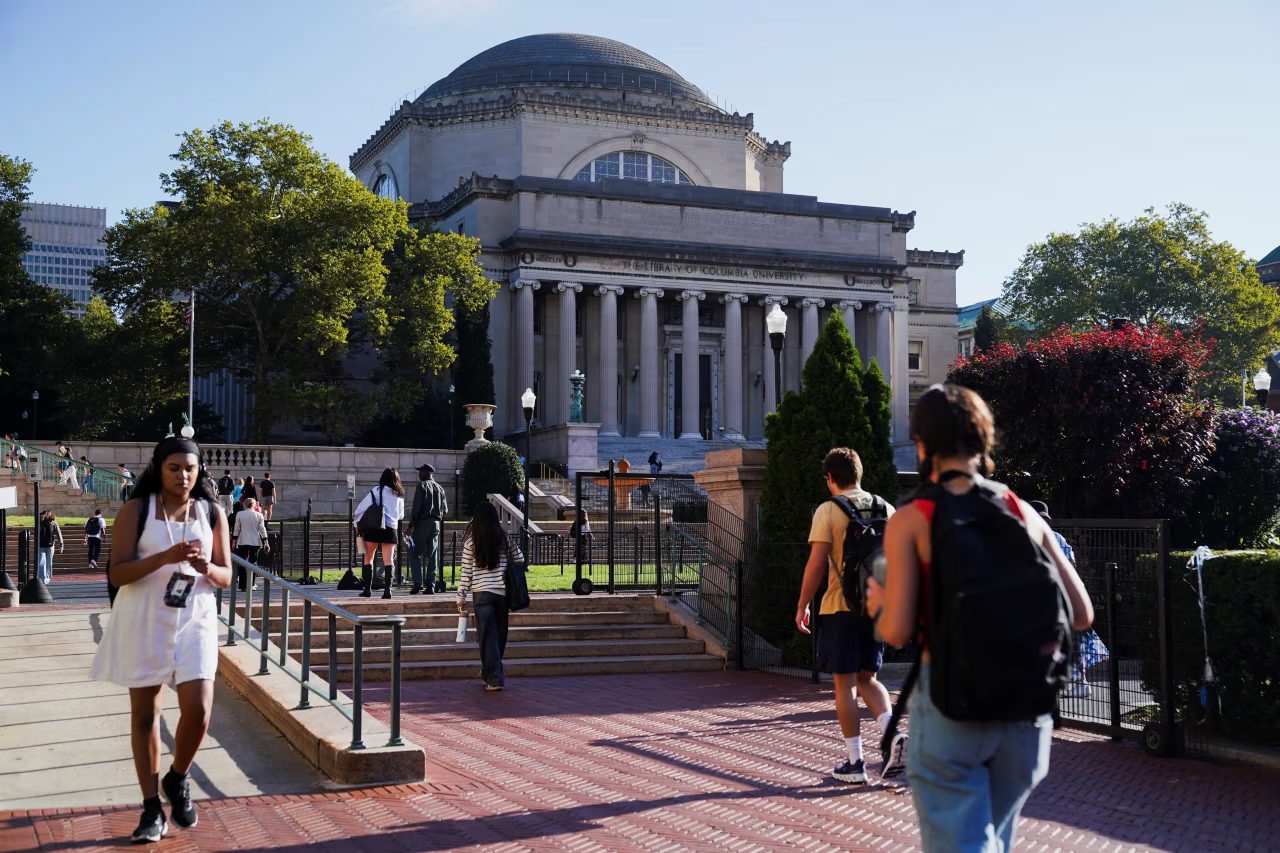
Digital signage has moved from a nice-to-have amenity to a core piece of campus communication infrastructure. Image courtesy of Columbia University.
Digital signage is not a single-purpose tool. Across a university campus, it can serve a wide range of communication functions simultaneously — each tailored to the specific needs of the location, audience, and moment. Here are the primary ways universities are putting it to work.
Wayfinding and Navigation
For a first-time visitor or an incoming freshman, a large university campus can be genuinely disorienting. Interactive wayfinding displays — placed at campus entrances, building lobbies, and major pedestrian crossings — give people an intuitive way to find their destination without flagging down a passerby or pulling out their phone. Beyond static maps, modern wayfinding systems can show real-time information: which buildings are currently open, where accessible entrances are located, how long it takes to walk to a given destination.
For universities that host frequent conferences, prospective student tours, and public events, this kind of frictionless navigation leaves a strong first impression and reduces the burden on front desk and administrative staff.
Event Promotion
Universities generate an enormous volume of events — lectures, performances, athletic competitions, career fairs, club meetings, alumni gatherings — and getting word out in time to drive meaningful attendance is a persistent challenge. Digital signage gives event organizers a high-visibility channel that reaches students and staff in the flow of their daily routines, rather than waiting to be noticed in an inbox.
Displays can pull automatically from a central events calendar, ensuring content stays current without manual updates. Countdowns, featured speakers, and eye-catching visuals can be used to build anticipation in the days leading up to an event — and screens can pivot quickly when details change.
Emergency Alerts and Safety Notifications
This may be the most consequential use case of all. In a campus emergency — an active threat, a severe weather event, a gas leak, a public health alert — the speed and reach of communication can directly affect safety outcomes. Digital signage integrated with the campus emergency alert system can push full-screen notifications to every display on campus within seconds, cutting through whatever content was previously showing.
Unlike phone-based alert systems, which depend on students having opted in and having their devices on hand, signage reaches anyone physically present on campus regardless of their device or notification settings. For campus safety officers, this layer of redundancy is increasingly seen not as a luxury but as a baseline requirement.
Academic Announcements
The day-to-day flow of academic life generates a constant stream of time-sensitive information: class cancellations, room changes, exam schedule updates, registration deadlines, financial aid reminders, advising office hours. Much of this currently travels through email, where it competes with everything else in a student's inbox. Placing this information on screens in academic buildings — outside lecture halls, in departmental common areas, in library entrances — puts it directly in front of the students who need it, at the moment they need it.
Department-specific displays can be managed locally, so the chemistry building shows chemistry department news while the business school surfaces content relevant to its students.
Campus Life and Community Building
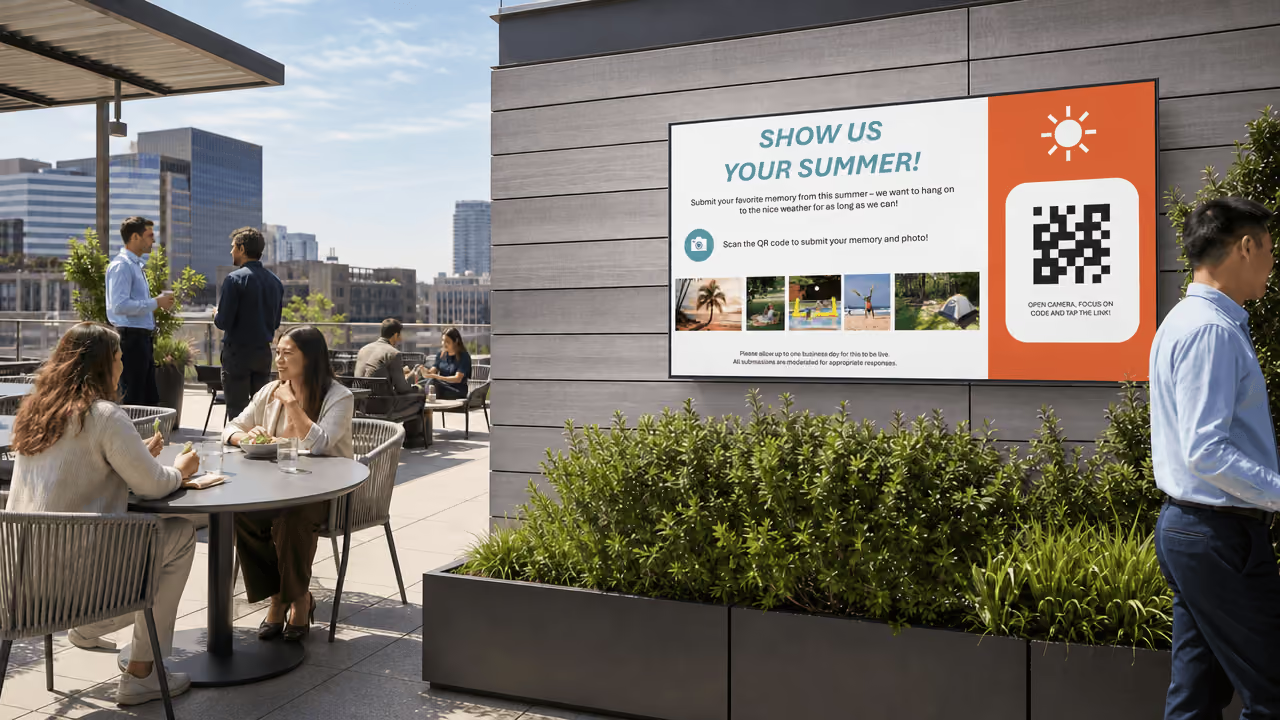
Beyond logistics, digital signage can play a meaningful role in shaping campus culture. Displays in student unions, recreation centers, and dining halls can highlight student achievements, showcase club and organization news, celebrate athletic victories, and promote wellness initiatives. Student-generated content — submitted through a managed portal — gives undergraduates a visible platform and a sense of ownership over campus communication.
Social media feeds, curated and moderated, can extend the energy of online student communities into physical spaces. Done well, this kind of content transforms signage from a notice board into a reflection of campus identity.
Best Places to Put Digital Signage on Campus
While you can put up a screen anywhere there’s an outlet, there are a few strategic places that will give you the best chance of communicating with the most people

In each location, the content shown should be relevant to the specific audience in that space — a network that shows the same generic loop everywhere misses the strategic value that thoughtful placement makes possible.
Effective placement is not simply about putting displays wherever there is wall space — it requires thinking carefully about foot traffic patterns, audience intent, dwell time, and the specific communication needs of each campus zone.
Campus Entrances and Wayfinding Corridors
The first screen a visitor, prospective student, or new employee encounters sets the tone for everything that follows. Large-format displays at main campus entrances and key pedestrian corridors serve a dual purpose: welcoming arrivals and orienting them quickly. These locations are ideal for interactive wayfinding kiosks, event highlights, and institutional messaging that reinforces brand identity.
Because the audience at entry points skews toward people who are unfamiliar with the campus, clarity and navigational utility should take priority over dense informational content.
Student Unions and Common Areas
Student unions are among the highest-traffic locations on any campus, drawing students throughout the day for meals, studying, socializing, and organization meetings. Screens here have the luxury of a captive, relatively relaxed audience with higher-than-average dwell time — making them well suited for event promotion, student life content, club announcements, and community-building messaging.
A mix of display sizes works well in these environments: large anchor screens for high-visibility announcements, and smaller displays near seating areas for more targeted or conversational content.
Dining Halls and Food Service Locations
Dining facilities represent one of the most reliable daily touchpoints on campus. Students visit multiple times per day, often in a relaxed frame of mind, and spend meaningful time in the space. Digital menu boards are the obvious application, but the opportunity extends further. Screens in dining halls can carry wellness content, sustainability initiatives, upcoming events, and student recognition programming — content that benefits from repeated, low-pressure exposure.
Academic Buildings and Departmental Spaces
Screens placed in the lobbies, hallways, and common areas of academic buildings serve a more targeted audience than those in central campus hubs. A display outside a lecture hall can show the day's class schedule, flag room changes, and promote department events. Screens in faculty office corridors can surface research highlights, seminar announcements, and administrative notices relevant to that discipline.
Libraries
Libraries occupy a unique position in the campus communication landscape. They draw students from across disciplines, host a range of programming from research workshops to author talks, and serve as a central hub for academic support services. Screens at library entrances and near service desks can promote hours, upcoming events, research resources, and study space availability — the kind of practical, immediately useful information that students visiting a library are primed to absorb.
Residence Halls
Residence halls offer access to students in a context that few other campus locations can match: their home. Screens placed in lobbies, mail rooms, laundry facilities, and common lounges reach students in a relaxed, off-hours setting — making them ideal for wellness messaging, community programming, housing administrative notices, and content that might not break through during a busy academic day.
Residence life staff should have the ability to push content specific to each hall, fostering a sense of local community while the broader network carries campus-wide messaging.
Go with Shift to Improve Communication Across Colleges and Universities
Using digital signage from Shift pays off in ways that are both measurable and intangible: fewer missed announcements, faster emergency response, stronger campus culture, and a more polished institutional presence. More than a technology upgrade, a well-deployed signage network represents a fundamental shift in how a university shows up for its community every single day.







.avif)
.avif)
