

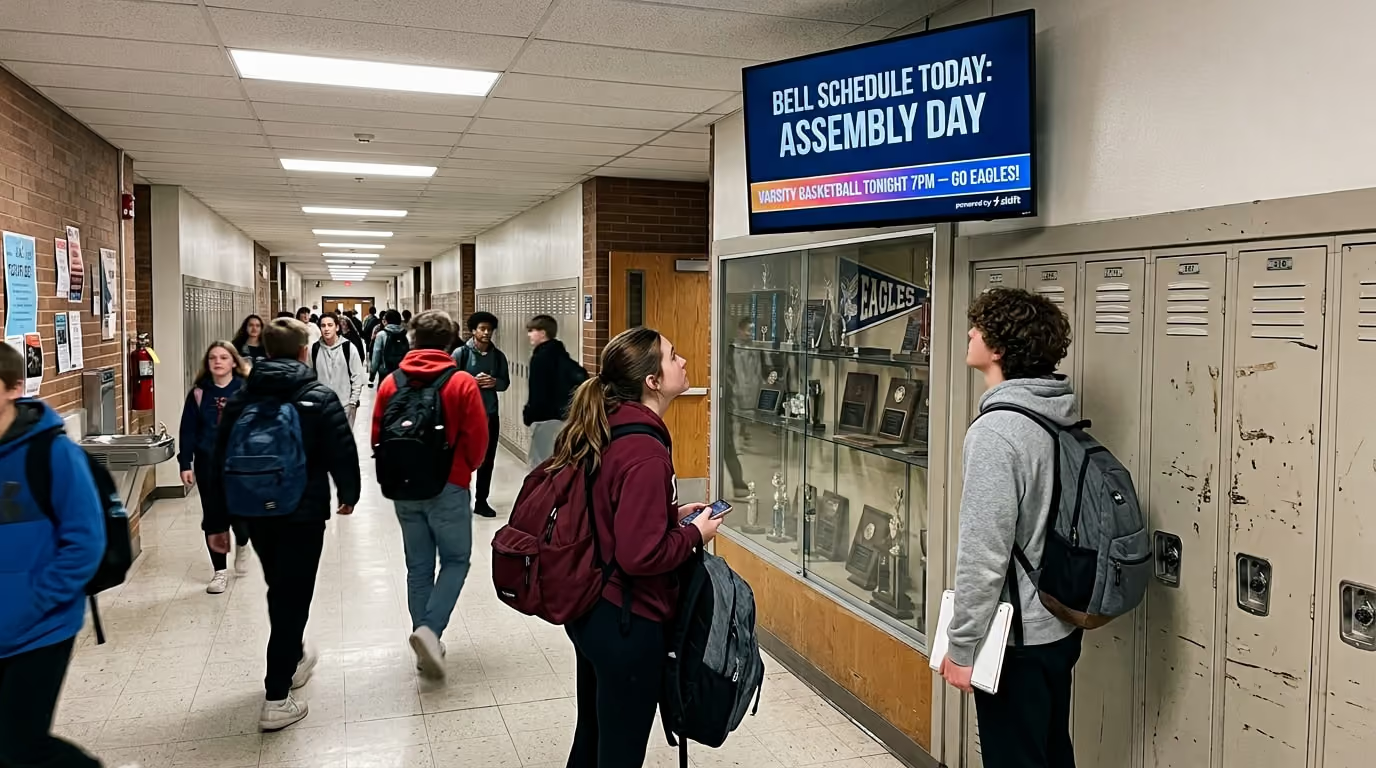
Digital signs and interactive maps that guide students through campus provide a convenient and dynamic wayfinding experience. These systems can also display event schedules, emergency notifications, building directories, and personalized routes. These systems help improve the efficiency of the campus and make it more accessible to users with disabilities.
Today's digital signs and building directory displays are designed to provide a more dynamic and convenient wayfinding experience. They can also help users identify their locations and navigate to their next destination. In addition, these systems can feature various features such as real-time room inventory and zoomable layouts, which can help improve the flow of information on campus.
Getting around campus can be a bit challenging, whether you're new to the area or have already been there. This is especially true when there are multiple buildings and structures with multiple levels. Many colleges all over the U.S. already have systems in place that provide campus wayfinding. As digital technology continues to become more prevalent, the need for more effective networks will also increase.
Why is Wayfinding Signage so Valuable?
A digital signage system is a convenient way to view the layout of a university's various facilities and academic buildings, which can be accessed through your smartphone or through interactive kiosks located around campus. This feature allows you to easily identify the various landmarks and facilities that are important to your college experience.
The interface of digital signage is designed to be user-friendly and clear. It provides you with quick access to information about the various locations and activities on campus, and this feature also helps you plan your trip and ensure that you don't miss out on any of the activities that the university has to offer.
With digital signage, students can easily find their way around campus, making it an integral part of their college experience. It offers a variety of features that make it a convenient and engaging tool.
Safety Aspect
Wayfinding is essential on campus, as it plays a vital role in times of crisis. In addition to convenience, it's also about connectivity and safety. Digital systems often have emergency instructions and warnings, which can help faculty and students evacuate safely.
The importance of time is also apparent during emergencies. Digital wayfinding can provide real-time updates to help people avoid dangerous locations and get to safety quickly. This is a vital tool that can help ensure that all students and faculty members are aware of the situation.
Most Important Features of School Maps
A school map is a central repository of information about a school, providing a comprehensive view of its resources and layout. It also includes important safety features such as evacuation routes and exits.
School maps are ideal for facility managers and school administrators, as they allow them to collaborate and make changes to the layout of their facilities in real time. With a map editor, anyone can easily create and modify dynamic 3D models of schools. This allows them to keep track of the latest changes to their facilities and properties.
Accessibility
Equipped with accessibility features, interactive school maps can help accommodate the varying needs of staff members and students. Administrators can make sure that pupils with disabilities have easy access to the appropriate facilities and navigation aids, such as elevators and ramps. Inclusiveness and equal access to education are also supported by this.
One of the most critical factors that a school's administrators must consider when it comes to improving its operational efficiency and safety is the allocation of resources. With the help of school maps, they can easily visualize the various aspects of their facilities, allowing them to make informed decisions.
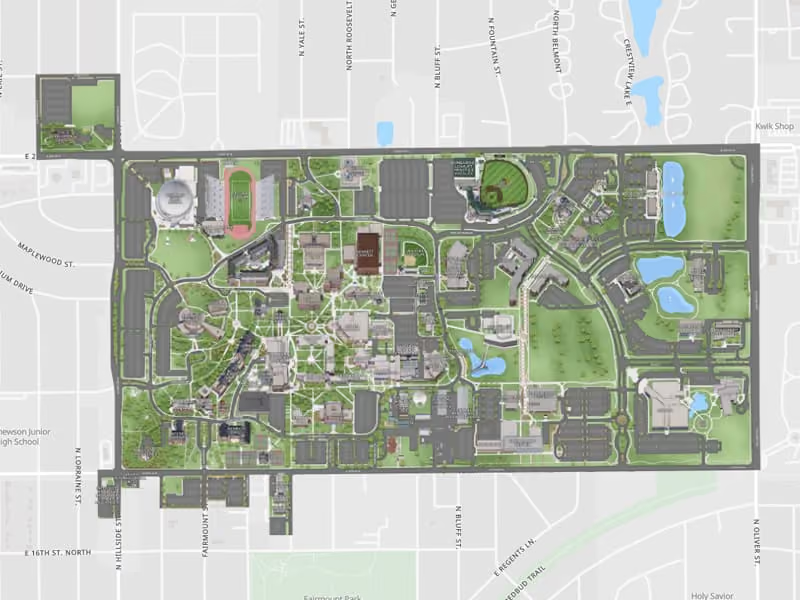
School maps are made with the help of tools that allow administrators to customize them and ensure that the people who are allowed to access the information are able to do so safely. Map templates allow them to create their own unique and predefined designs, making the process of mapping easier. Image courtesy of WSU News.
Signs to Focus On
To accommodate varying needs of users, different design and signage features should be utilized. These should be used to make sure that the environment is accessible and inclusive for individuals from all walks of life. Some of the key accommodations include the use of large font sizes and high-contrast colors, ensuring that the signs are mounted properly, and incorporating digital features.
Directional Signs
A directional sign is the essential component of any wayfinding system. It goes beyond simple arrows by utilizing a combination of information and visual cues to direct people to their intended destination. These signs are typically placed at intersections, pathways, and decision points, and they utilize contrasting colors and typography to ensure legibility.
A directional sign typically features an arrow with varying sizes and text that indicates the estimated walking time or distance to the destination. In addition, some directional signs come with floor plans or miniature maps that give a more general sense of navigation.
Placing and mounting directional signs are two of the most crucial factors that must be considered when it comes to their effectiveness. They should be positioned in areas that are well-lit and eye-level to maximize their visibility. Depending on the type of architecture and layout on campus, these can be mounted on poles, walls, or structures.
Map Signs
A map sign provides a comprehensive view of a campus, letting visitors and newcomers know its overall layout and relationships between landmarks and buildings. These signs typically feature three-dimensional models or detailed illustrations, and they highlight various areas and facilities.
Map signs can be made in various sizes, and they can feature interactive features such as QR codes or touchscreens.
A map sign's effectiveness depends on its placement. Ideally, these should be placed in areas where people will most likely need help navigating, such as main entrances and gathering places across a campus. Numerous map signs placed throughout a campus can help reinforce spatial awareness and provide guidance.
Emergency Signs
Wayfinding systems rely on emergency signs to guide users on important information during disasters such as natural calamities or active shooter scenarios.
The emergency signs should follow strict guidelines and regulations to ensure their effectiveness and visibility. They should be equipped with bright colors and reflective materials, and they should be strategically placed to make them easily visible from different directions.
Identification & Interactive Signs
These signs are used to label various areas and buildings within a university. They help individuals find their way around the campus and identify the various departments and buildings, which are usually mounted near the entrances or facades of buildings. The names of the departments or buildings are clearly written in a prominent font.
The design of these signs is usually based on the university's branding guidelines. Aside from the typeface and colors, the materials used for their construction can also vary.
The use of interactive signs is regarded as the latest technology when it comes to campus wayfinding. These display technologies allow users to interact with the signs and get a personalized and engaging experience.
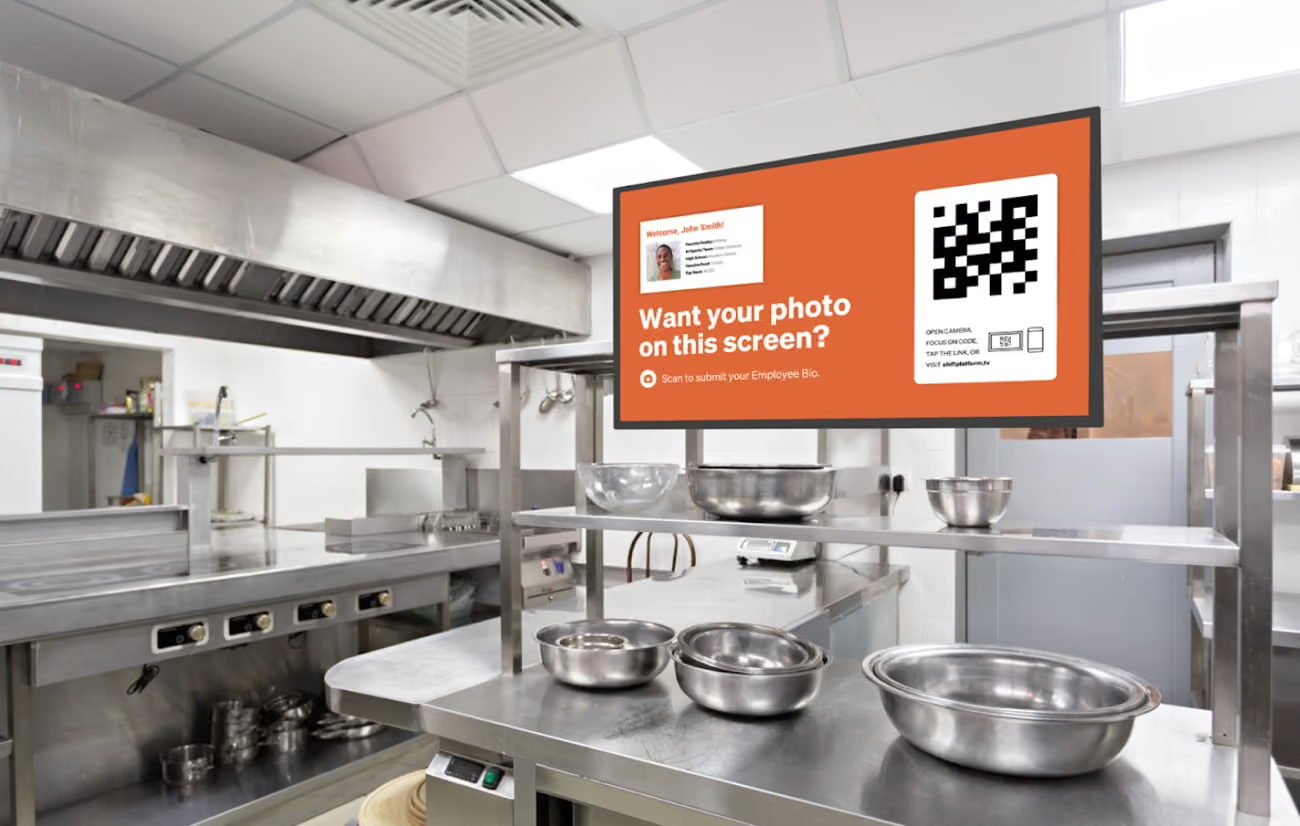
The design of interactive displays should be focused on making them easy to navigate and user-friendly. They should also be placed in areas where people are most likely to search for information. Image courtesy of Shift Platform.
Transformative Impact on Schools All Across the Country
Wayfinding signs have a proven track record of improving the experience of users on campus, both nationally and globally. In addition to making navigation easier, they can also lower stress levels, enhance safety, and reinforce the institution's brand identity.
Aside from making navigation easier, wayfinding signs can also help a university establish its professionalism and brand identity which can be used to create landmarks and attract more students.
The University of North Carolina at Chapel Hill
The University of North Carolina has a new wayfinding system that features digital kiosks, maps, and mobile applications. This system has made it easier for visitors, faculty, and students to find their way around the campus.
The University of Oxford
Oxford University has a vast campus that features a variety of historic buildings and modern elements. To help visitors get around the area, the university has created a wayfinding system that includes interactive maps, digital signage, and audio guides. The system has significantly improved the overall accessibility and satisfaction of its visitors.
Emory University
Emory University has successfully integrated digital tools into its physical signs, which is a departure from the traditional approach. For instance, a pilot project at its Midtown hospital included a wayfinding system that was linked to updated physical signs. A mobile app was also used to provide users with turn-by-turn instructions. This approach ensures that people with different tech-savvy needs can easily find the information they require. The university's signage is designed to create a professional image and is made to be highly legible and intuitive for people with limited English proficiency or literacy.
The university uses large-scale elements to create striking and memorable features in its facilities. Its projects are focused on areas where clarity is of utmost importance, like the emergency room.
The Future of Digital Wayfinding
The advancement of digital wayfinding has led to the creation of new and more user-friendly wayfinding systems. These solutions utilize advanced technologies to provide a variety of benefits over traditional methods, such as enhanced navigation features, personalized guidance, and real-time updates. These innovations have made navigation easier and more efficient.
One of the main advantages of digital wayfinding is its ability to accommodate the needs of users, such as those with disabilities. Its various features, such as high-contrast displays and audio guidance, can help people find their way around a space more easily. The future of this technology is expected to be shaped by innovations that aim to make it more engaging.
Augmented Reality
Digital wayfinding has started to take advantage of the potential of augmented reality, which overlays various digital information such as points of interest, directions, and pathways onto a person's actual view. This technology is particularly useful in complex environments where the use of GPS is not ideal.
Smart Signage
Smart signage utilizes advanced technologies such as artificial intelligence, mobile integration, and real-time data to provide a personalized and dynamic navigation experience. These signs also function as communication hubs, allowing them to adapt to their surroundings.
A smart sign can be updated and centrally managed to reflect changes in a location, which is helpful in communicating emergency messages or redirecting traffic around a closed road.
Through the use of artificial intelligence, traffic flow around events on campus for example can be improved and the user experience can be enhanced by offering customized routes based on the user's preferences and crowd density.
Increased Sustainability Efforts
In the future, digital wayfinding will become more sustainable due to its efforts to reduce waste, improve energy efficiency, and adopt circular economy principles. While it offers a distinct advantage over paper signage in terms of its ability to eliminate waste, future-focused programs will also cover the entire life cycles of the technology.
Digital displays can help raise awareness about sustainable practices and encourage people to adopt green habits, such as walking instead of using elevators. They can also reduce their power consumption by minimizing animations and dark backgrounds.
Enhance Your Digital Signage Experience with Shift
Wayfinding on campus can be improved with digital signage, which provides clear directions and maps that are tied to event schedules and directories. With advanced features like touchscreens and kiosks, learning institutions can offer an interactive wayfinding system that lets students and visitors alike easily find their way around the campus.
Campus digital signage from a platform like Shift can be utilized to improve wayfinding by delivering interactive maps, updates in real-time, and integration with mobile applications to provide everyone on a campus with individualized directions. This type of system can also easily be integrated with building directories and schedules.








.avif)
.avif)