.avif)
The department of human resources is the glue that holds yours and everyone’s company together. They are in charge and manage many different aspects of the job like compliance with labor laws and the union, as well as overseeing employee’s wellbeing, performance, onboarding and offboarding, cultivating team-building activities, reviewing PTO, and much more.
Human resources should always feel like a safety net to every level of employee, they are the ones you can come to with any complaint, question, or inquiry. They help you navigate workplace disputes by investigating your complaints or incidents at work, as well as making sure you are treated fairly every moment you’re with them.
Another aspect of the HR department that’s not as often talked about is its need to constantly adapt to change. Since the rise of social media and the fast paced climate of internet culture, we have moved in so many different directions and have definitely changed the way we handle a lot of things including our work.
Human resources look at this and accommodate to strengthen their department which in turn strengthens the rest of the company. One such way they adapt is taking trending education techniques like microlearning and bringing it in to better themselves on more efficiently running so many gears in a business as a whole. We’re going to breakdown microlearning, microlearning in HR, and the tools to use for it.
- What is Microlearning and Its Effectiveness
- Microlearning in HR
- How Digital Signage Can Benefit Microlearning in HR

Introducing new and better ways to learn in the workspace is an effective way to bridge the gap.
What is Microlearning and Its Effectiveness
Before we go into what the human resources department can take away from microlearning, we have to take a closer look at what the concept is as you might have only heard it as a hot buzzword up until now. Unlike most concepts and/or techniques, there is no set definition for “microlearning” as of right now.
Many articles and responses targeting the new learning method have designed their own definitions, here is what we’ve decided best sums up the word: “small or “bite-sized” pieces of pertinent information delivered in an efficient way for people to understand the skill and/or lesson that’s being taught to them.”
Microlearning is the direct opposite of what most corporations and office workers know of seminars, presentation packets, and training videos. When those are often long, drawn out, and sporadic in timing, microlearning is usually under 10 minutes, is catchy, and cuts out the unnecessary fluff that the ladder seems to love. But if you still aren’t sure what constitutes as microlearning, here are some of our favorite examples that pair nicely in a business setting:
Examples of Microlearning
- Short-form videos. When we say the words “short-form videos” together, your mind automatically jumps to doomscrolling through Instagram or TikTok to decompress from work or life stress.
Those quick engaging videos capture our eyes and our attention in the very first millisecond it appears on our phone screen(s); so it’s understandable that bringing in that same feeling we get from watching those videos into a work environment to better our skills or practices is a more than effective way to learn something.
We already are used to that dopamine hit that comes with reels and we are more likely to sit and watch something that’s short and engaging rather than long and boring ten out of ten times.
- “Word” or “Skill” of the day/week. We’re going to bring it back to school for a second here. Do you remember when a teacher, probably an English teacher, would have a “word of the day (and/or) week” on the board? They’d have a new word they’d want you to know/have in your own vocabulary to better prepare you for future tests and outside of school life.
You’d remember those words a lot more easily since they were on the board the entire time you were in school that day/week. Something like this can be used in the workplace too, a constant reminder of something important to the company or to your skillset that you need ingrained in you posted on a board or used in digital signage is a great way to hone your skillset.
- Introduce Infographics Regularly. Nothing causes the eyes to glaze over quite like a big wall of text. When we see something that’s densely packed it makes us want to scroll down to the bottom of the page and check mark “yes” like most do seeing a Terms & Conditions page.
So having that be a regular way to communicate info in the workspace is obviously not going to be effective, but adding infographics is. Pictures, diagrams, graphs, and more are all going to be a lot more engaging and will help those on the other side retain it than having to read paragraph after paragraph.
- Quizzes and Games. Everyone loves a game, even if it's work-related. The idea of proving yourself in your chosen field and getting a little competitive, even if it's just with your own mind, is a great way to get the memory working. Kahoot! And Jeopardy are two fun ways to really engage with the team and keep the information gained flowing. You can also add a quiz to the end of your short-form videos or erase the “word of the day/week” and have people fill it in so you can test their knowledge efficiently.
- Action-Based Learning. Sticking in line with our previous microlearning example, “doing” is very much the new “seeing” and we want it to be known that in almost all instances it’s better to work on the job or produce a simulated experience of the job rather than just sitting and reading about it. When we’re hands-on we get a better idea of ourselves in the space, rather than seeing random footage or animations of others doing it.
- Introducing: Effective Retention. We often find ourselves forgetting things we just learned five minutes ago all the time and think how that continues to happen the more time goes on. What’s fresh in our minds on Monday won’t be the same at the end of the work week. Having reminders or quick two to three minute microlearning sessions is super effective in retaining the skills needed for the job.
All of these examples of microlearning can be used in all different kinds of settings. It isn’t just successful in one scenario, with just a little bit of adjustment, any kind of business can benefit from this method of education.
There are some really insightful statistics regarding the effectiveness of microlearning, for example, eLearning Industry reported that “learners who received spaced-out reinforcement of the lessons had 150% better retention.” And the microlearning market itself is booming, with it reaching “$3.32 billion in 2026” and its forecast “to grow to $5.81 billion by 2031,” we can see how investing in it now is well worth the early doors access.

Long over are the days that we need to pick up a packet and follow along with a three hour presentation. With microlearning we can achieve greater retention and success all around.
Microlearning in HR
We’ve seen the examples and we’ve seen how big the microlearning movement has become, so how can the department of human resources utilize this booming educational technique?
There are many ways we can use microlearning in HR:
Deliver Effective Skill Training
We learned in the intro how many avenues the HR department covers and when you’re looking to successfully cultivate a team that works efficiently, making the microlearning opportunities aligned with HR’s goals? That’s how you properly build a strong company culture, through the backbones of its quick-witted seminars.
Helps Onboarding and Employee Retention
From High 5 Test: “In the U.S., nearly 30% of new hires depart within their first 90 days, while companies typically spend $4,700 per hire on recruitment and onboarding . Yet organizations with structured onboarding programs see up to 82% higher new‑hire retention.” HR is a big part of the onboarding process, and having a consistent flow of new hires quit before they really ever started stacks up more work for them, leaving a clog of other responsibilities to build up. Using microlearning as a “structured onboarding program” means you’ll be able to feel that 82% wholly.
Everyone is Different
As much as we, or general corporations, like to lump all of their employees together in one big soup, that just isn’t realistic in the slightest. Everyone is different, and we don’t just stop becoming people when you walk into the building everyday. Instead of creating these big meaty presentations that don’t effectively help the individual and just sending them off to their desks or remotely on the job, we create these specialized microlearning opportunities to target them separately. This way they will feel catered to and they will be more efficient at what they’re here to do.
Adapting to an Ever-Changing Environment
Similar to what we touched on in the intro and the previous point, the human resources department is constantly growing and adapting to better reach their audience: which is the employees and management. So instead of investing all of this time (and money) into ineffective piles of data and long-overdue learning systems, you can take what you know from the people at the job and adapt to their specialized needs. Instead of scrambling to keep-up, change the game entirely and make something for your company that wants to progress forward instead of back.
Integrating Remote Workers
Ever since the COVID-19 pandemic, the landscape of our workspaces has never been the same. Many who were in-office workers now reside completely at home or are there for half the work week. While that’s great and helps benefit the job just as much as the employee’s mood regarding work, there can be a disconnect, especially when more intensive skills are needed. Proper remote-worker integration can be lost behind the computer screen, but creating a microlearning product specifically designed for these employees is a huge step to build retention and make them feel like they are equally a part of the team as those who are in the office do.
Workplace Rules Reminders
HR is all about building trust between the person and the business, and when one feels unbalanced the whole relationship can come tumbling down which can lead to bigger turnover and an unhappy environment all around. Having moments of showing that trust, i.e. incorporating lessons and reminders of healthy workplace relationships through microlearning techniques is a big way to further fortify the company culture.
How Digital Signage can Benefit Microlearning in HR

Having strong communication through reliable signage can be a big game changer in any business.
Digital signage, like microlearning, is a new-ish way to drastically improve your business in every avenue possible. Communication is the key to an effective HR department and when there’s a lack, or the previous ways you have been communicating aren’t up to your needed standards, you need a change. That’s where digital signage can help.
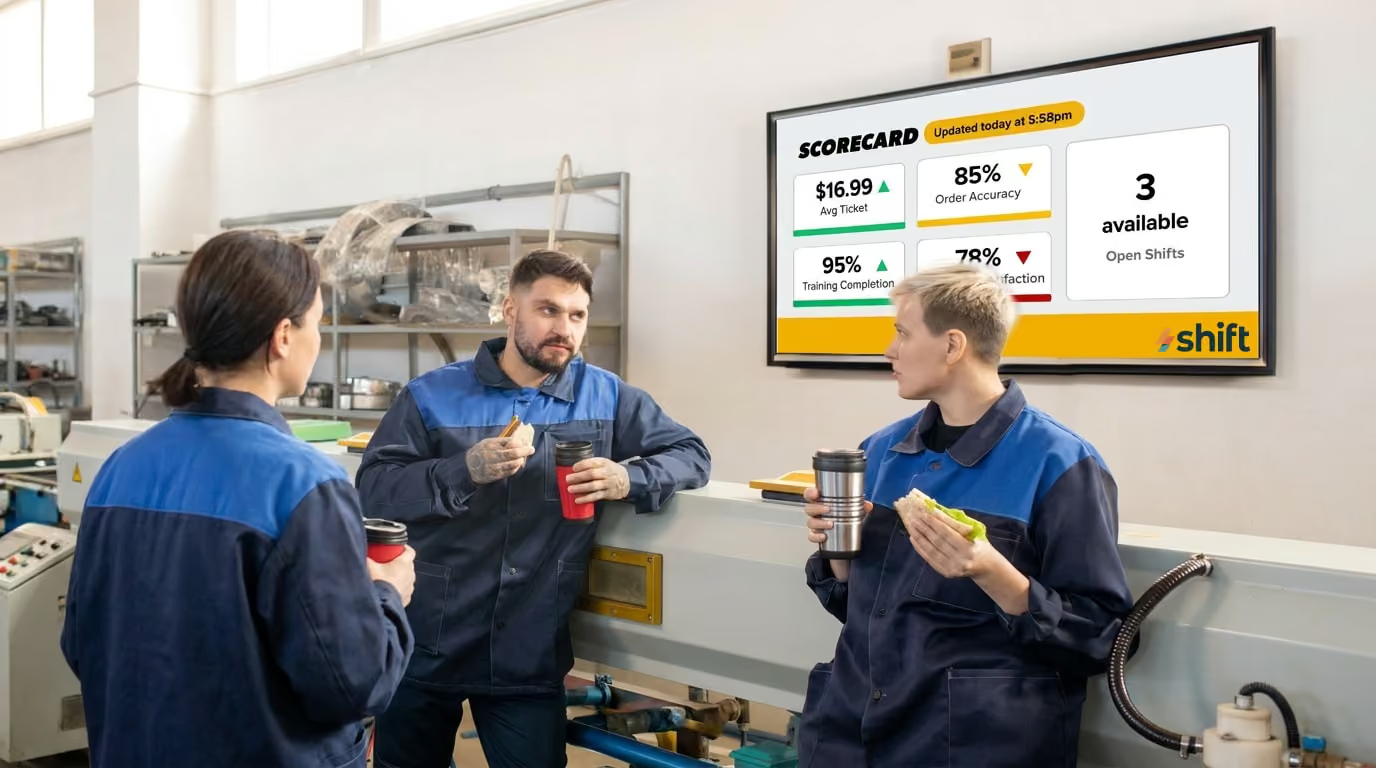
Big for advertising, creating clean eye-catching menus through devices like kiosks and display screens, sharing information almost immediately, giving employees shout-outs when they do something good, and boosting productivity almost immediately- a DSS (digital signage software) can help make all of your microlearning examples come true. And having a platform like Shift can make that happen.
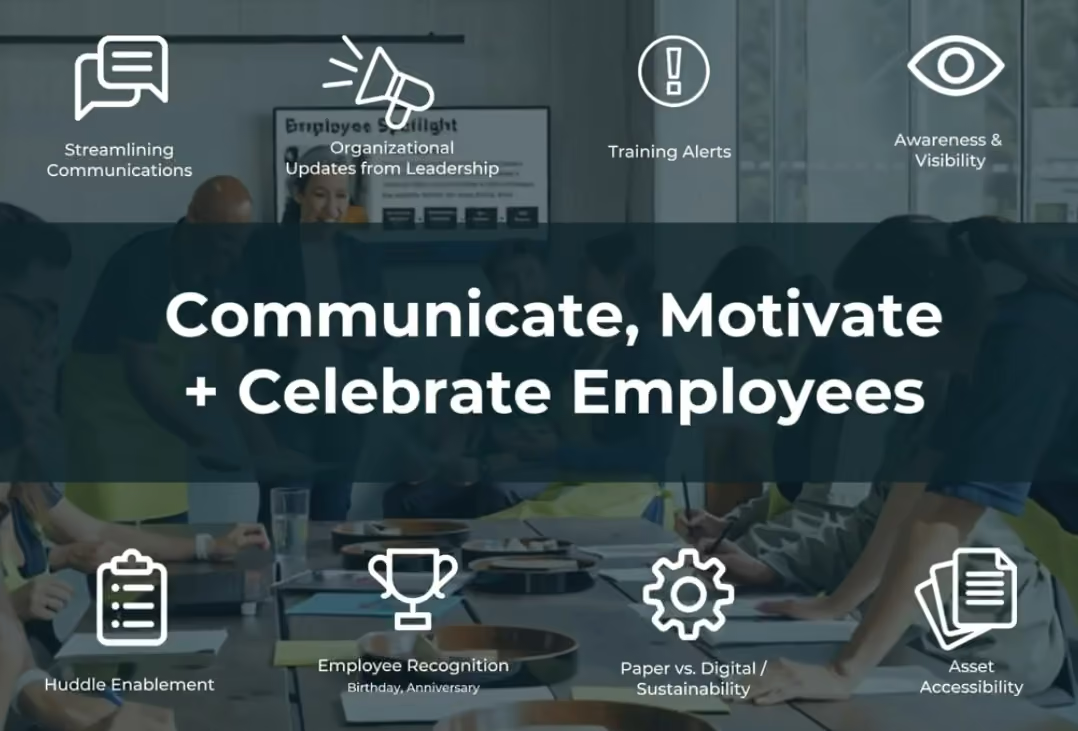
Shift takes the old and brings in the new. All of the normal screens in your office, from televisions, to computers, and phones, can be a tool for your digital signage needs. Shift is known for bridging that gap between management and employees. HR struggles to keep a clear line of communication between the two and this can help make that shaky foundation more stable. For too long we’ve seen what a lack of communication and care can do to a company: increased turnover and unsatisfied employees for one.
We’re looking at:
- Seamless, Centralized Communication
- Automated Content Creation
- Visualized, Real-Time Data
- Easy, Scalable Deployment
- 11% increase in revenue
- 21% increase in operational profitability
- 25% improvement in employee retention
Shift is always building new integrations and API connections so you can know that you’ll always have reliable resources to fall back on. Try a risk-free 60 day pilot and see how it works so you can introduce microlearning in HR in the most streamlined way possible.






.avif)