
If you run marketing, operations, or IT for a company that owns more than one brand or more than one location, you already know the problem this article is about. A single piece of content — a promotion, a menu update, a new store hours notice — has to somehow show up correctly on hundreds of screens, in dozens of markets, under logos and brand voices that don't all look the same. Do it manually and, not only is it time consuming, but you get inconsistency, delay, and a support ticket queue that never empties. Do it with the right digital signage strategy and it becomes one of the most reliable, scalable marketing channels a multi-brand organization has.
This guide is here to cover:
- What a multi-brand group is
- Why digital signage is uniquely well-suited for these types of organizations
- How to manage it well
- The top digital signage platform that can do it all
What Are Multi-Brand Groups?
Multi-brand groups are a little different than multi-location groups, but sometimes they can be both!
A multi-brand group is a company that owns, operates, or franchises more than one distinct brand, banner, or location format under a single corporate umbrella. The defining feature isn't just having many locations — a single-brand chain with 500 identical stores is a multi-location business, but not necessarily a multi-brand one. A multi-brand group adds a second level of complexity: each brand under the umbrella may have its own name, logo, color palette, tone of voice, product mix, and customer base, even while sharing back-office systems, real estate, staff, or ownership.
Common examples include:
- Automotive dealer groups that operate Ford, Toyota, and Honda rooftops under one holding company, each with manufacturer-mandated branding requirements layered on top of the group's own standards.
- Restaurant and hospitality groups that run several distinct restaurant concepts, or a hotel portfolio spanning luxury, boutique, and budget brands.
- Retail holding companies that acquire or launch multiple retail banners targeting different customer segments.
- Franchise organizations where a parent brand licenses its name to independently owned locations that still must follow strict brand guidelines.
- Healthcare and financial services groups operating multiple clinic or branch brands acquired through mergers, each with a legacy identity the group hasn't fully consolidated.
What ties these together operationally is an issue every multi-brand group has to manage— centralized efficiency versus brand-level distinctiveness. Corporate wants one system, one dashboard, one team pushing updates. Each brand wants its own look, its own promotions, and control over what appears in its own locations. Digital signage is in a unique place to offer solutions to this common problem.
How Digital Signage Helps Multi-Brand Groups
Physical, in-location communication doesn't go away just because a company operates under multiple names. If anything, it increases. Every restaurant, branch, or store still needs to communicate hours, promotions, safety notices, menus, pricing, wayfinding, and brand storytelling to the people standing in front of it. Digital signage has become the default way to do that because it can be updated instantly and remotely, unlike printed posters or static menu boards.
Research shows the commercial upside of getting this right. Roughly two-thirds of consumers say digital signage influences their purchasing decisions, and digital signage has been linked to a meaningful lift in brand awareness for the locations that use it — studies point to gains approaching 50%. For a multi-brand group, that needs to happen consistently across every brand and every location, not just the flagship store that gets the most attention from headquarters.
The stakes of getting signage wrong are also higher in a multi-brand environment. A pricing error on one screen might affect one store. A brand-guideline violation, an out-of-date promotion, or a broken screen at a dealership or restaurant location reflects not just on that single site but on the credibility of the whole group — and, in franchise or manufacturer-branded settings, it can create real consequences.
What are the Challenges of Multi-Brand Signage Management?
While it seems simple in practice, aligning all those digital screens across a multitude of brands can be difficult
Before getting into solutions, it's worth naming the specific problems multi-brand groups run into that a single-brand, single-location business simply doesn't face.
- Brand fragmentation. Each brand has its own templates, fonts, colors, logos, and legal disclaimers. A system built for one brand's look doesn't automatically change to a second or third without becoming either rigid or chaotic.
- Inconsistent local execution. Scaling signage across many locations runs into problems with hardware consistency, screen uptime, reliable connectivity, and keeping branding aligned — and every one of those problems worsens when different locations are also different brands with different local managers making judgment calls.
- Permission and approval sprawl. Who is allowed to change what? A corporate marketing team, a regional brand manager, and an individual store or dealership manager all have a legitimate reason to touch signage content, but giving everyone the same access invites both brand and operational errors.
- Content duplication. Without shared infrastructure, teams often end up rebuilding the same type of asset — a hiring flyer, a seasonal promotion, a safety notice — separately for every brand, wasting design time and creating small inconsistencies that add up.
- Reporting blind spots. When each brand or region manages its own signage in isolation, corporate loses the ability to see, at a glance, which screens are live, which are down, and which locations are running outdated or non-compliant content.
- Vendor and hardware fragmentation. Multi-brand groups frequently grow through acquisition. Each acquired brand may arrive with its own signage vendor, its own hardware, and its own content library, and consolidating all of that is a project in itself.
How to Manage Digital Signage for Multi-Location, Multi-Brand Companies
Your business can definitely be successful with digital signage across your multi-brand company!
The organizations that do this well tend to follow a similar playbook, regardless of industry. Here's what that playbook looks like in practice.
1. Centralize the platform, not the content
The most important architectural decision a multi-brand group makes is choosing one signage platform to run every brand and every location, even though the content on each screen will differ. Centralizing the platform — rather than each brand licensing its own tool — gives corporate one dashboard for uptime monitoring, one point of IT support, one hardware standard, and one place to pull performance data across the whole portfolio.
The single biggest reason a group should care about this kind of centralized control is that without it, a company with five brands or locations is really running five separate signage projects instead of one network.
Content, on the other hand, should stay decentralized enough that each brand retains its own identity. The platform should support shared infrastructure underneath, brand-specific presentation on top.
2. Build a group and sub-group structure that mirrors the business
Rather than treating every screen as an individual item to manage, organize the signage network the way the business itself is organized. A practical structure has brand-level groups at the top, location-level sub-groups beneath each brand, and zone-level groups within each location (for example, a showroom, a service area, a lobby, or a checkout counter). This kind of structure lets a small marketing team target the right screens without touching every location individually, whether they're pushing a new manufacturer campaign or a single store's local promotion.
This structure also makes onboarding new locations much faster. When a new site joins the group it inherits the brand's existing templates, permissions, and content library instead of starting from a blank slate.
3. Use templates to protect brand consistency without bottlenecking local teams
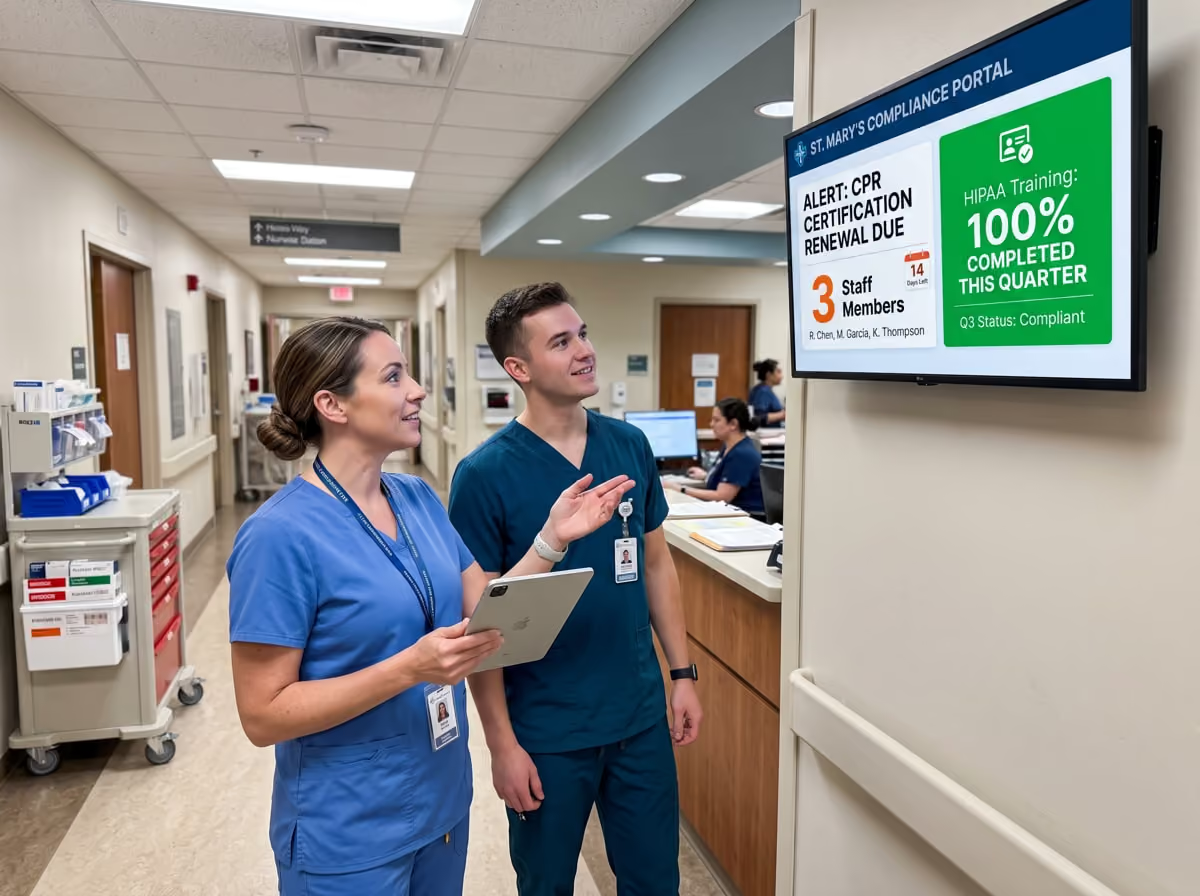
Templates are the tool that lets local or regional staff update variable information — prices, dates, store hours, staff names, local offers — inside a design that's locked down at the brand level. A promotional template built once with location-specific variables like pricing, terms, and a store's phone number can be configured centrally and then reused as the group grows, turning what used to be a design project for every new location into something closer to filling out a form.
This is the single most efficient device for a multi-brand group because now everything is on-brand, and still locally relevant.
4. Set tiered permissions that match real organizational roles
Effective signage governance usually has three levels of access. Corporate or brand marketing owns master templates, top-level brand guidelines, and group-wide campaigns. Regional or brand managers can adapt approved templates and schedule brand-specific promotions within their territory. Local location staff can update only the fields they're authorized to touch — pricing, hours, local events — without being able to alter a logo, a color scheme, or a disclaimer.
This tiered model prevents both worse case scenarios: a fully locked-down system where local managers can't respond in time, and a fully open system where brand consistency erodes at each location.
5. Schedule content by time and by audience, not just by date
Multi-brand groups often serve different customers at different times inside the same location — a service department in the morning versus a showroom in the afternoon, a lunch crowd versus a dinner crowd, a weekday commuter versus a weekend shopper. Scheduling can be set to flip specific content automatically at set times of day, pushing certain messaging harder during peak traffic windows and lighter during slow ones, without anyone touching a screen manually. This same logic scales cleanly whether it's applied to one brand or five.
6. Monitor uptime and compliance centrally
A live view of which screens are online, which are showing the correct, current content, and which have gone dark is non-negotiable at scale. Without a real-time monitoring layer, a broken screen or an out-of-date promotion at a remote location can go unnoticed for weeks — a much bigger risk when it's happening under one of several brand names corporate is responsible for.
7. Plan for growth and acquisition from day one
Because multi-brand groups frequently expand by acquiring new brands or locations, the signage platform and governance model should be built to onboard a new brand without a rebuild. That means keeping brand assets, templates, and permission structures modular, so adding brands to the group is a configuration task.
Choosing the Right Platform with Shift
Not every digital signage platform is built for this kind of complexity. A tool designed for a single retail chain with one look and one content calendar won’t work for multi-brand groups. That’s why if this sounds like your business structure, turn to the experts at Shift digital signage. Shift makes it easy to grow and scale your business as you acquire new brands or expand your existing locations. Its plug and play design means you don’t need an IT department to set it up, and the content navigator can be used to adjust and monitor content from any device.
You also get 60 days of full access to learn the ins and outs of the platform before making any final decisions. Its powerful software can handle multiple brands and locations, and offers a bunch of other uses that benefit both employees and customers:
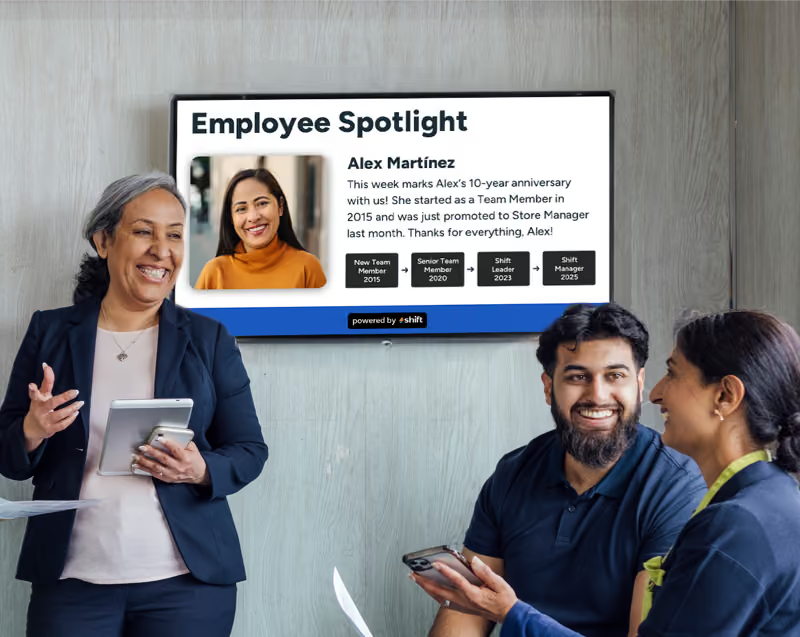
- Employee recognition through spotlights, work anniversaries, achievements, and birthdays
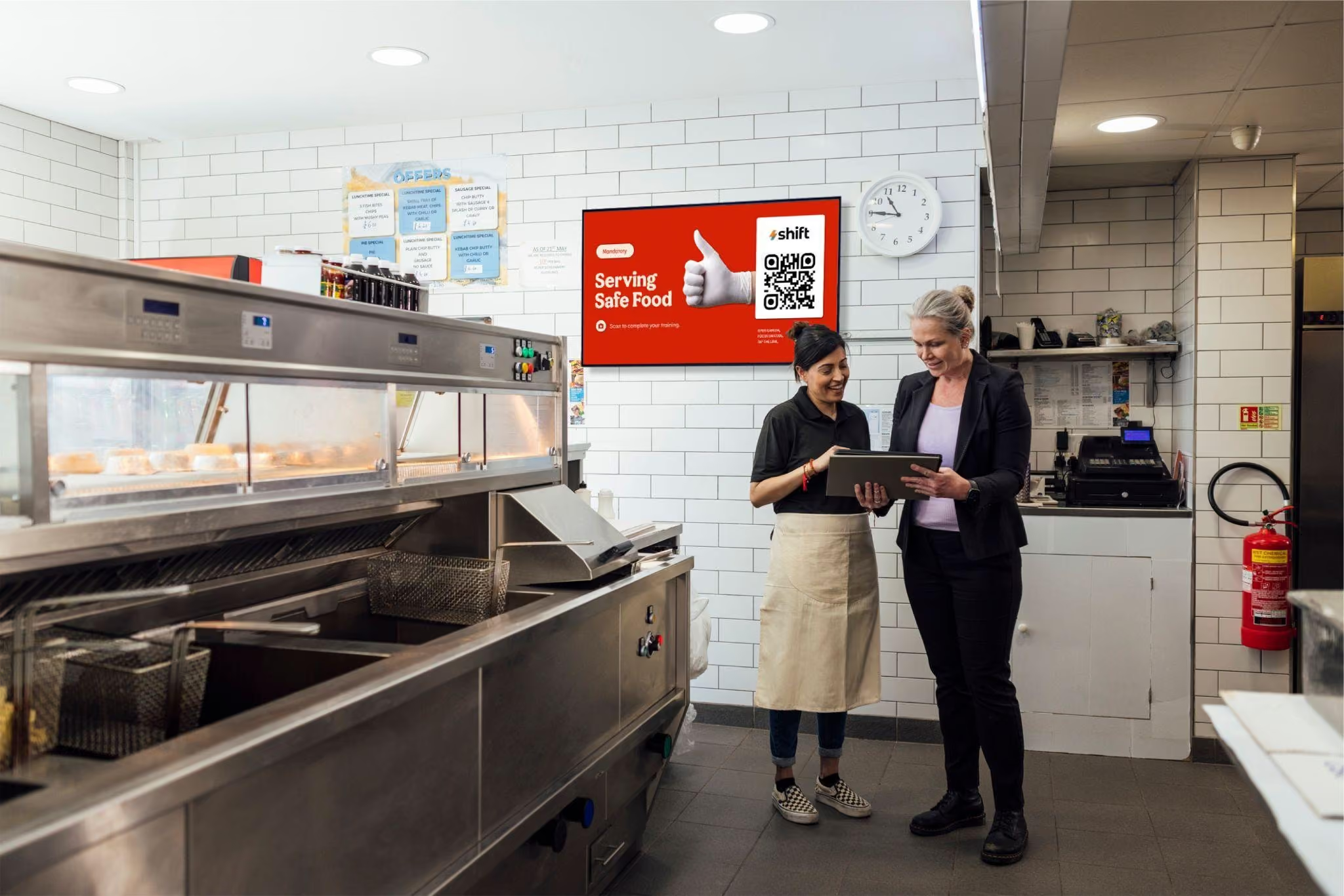
- Access to training materials
- Assisting with onboarding (for both employees and locations)
- Wayfinding
- Internal company communications
- Posting safety or emergency alerts
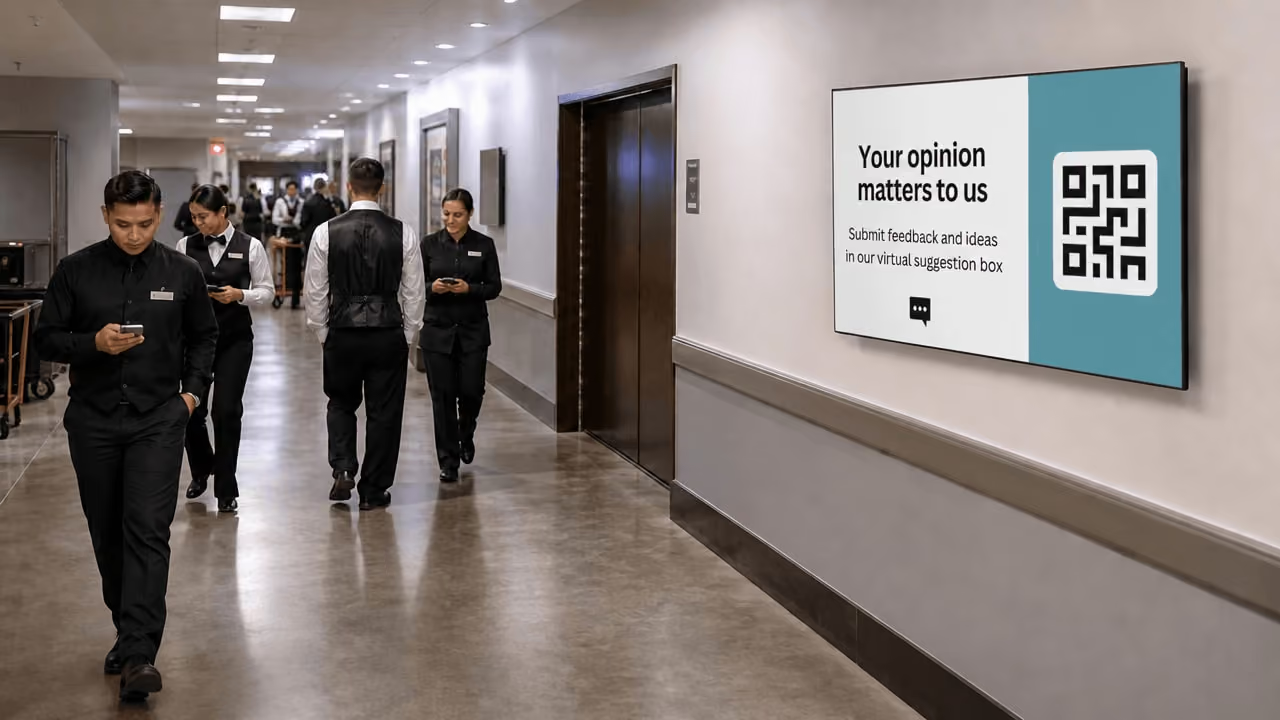
- Surveys for staff through QR codes
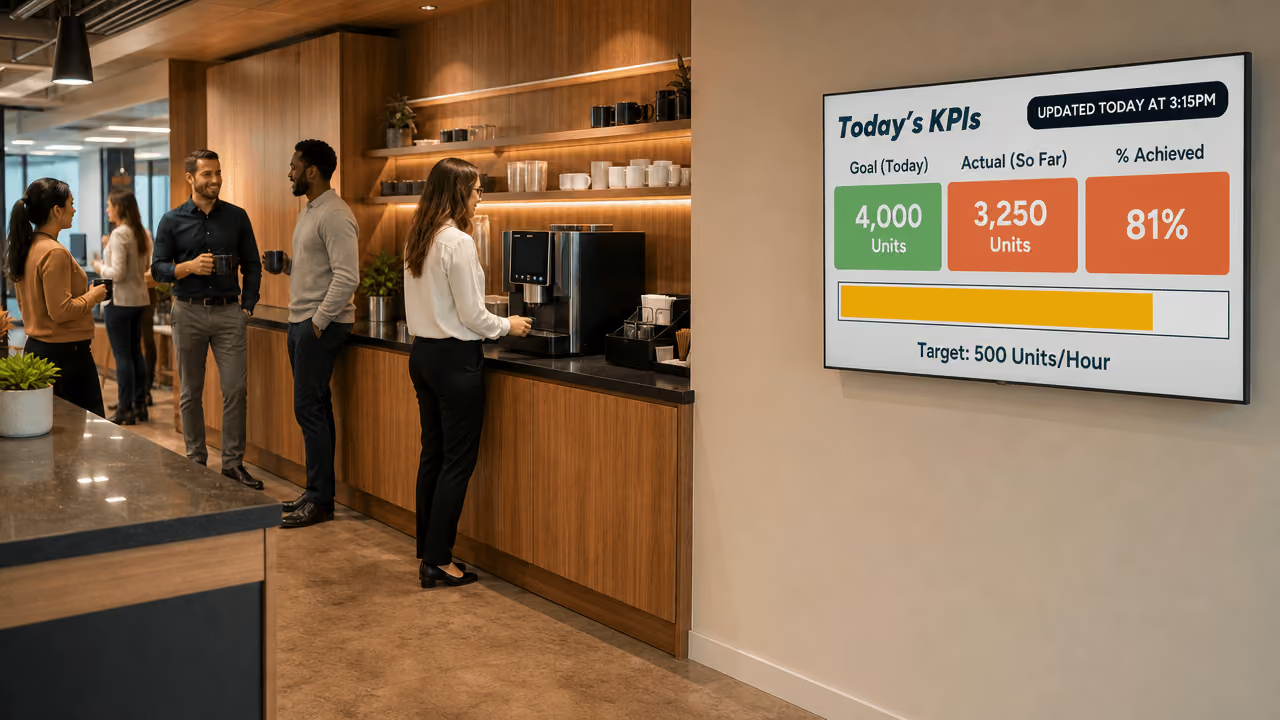
- Real-time leaderboards and inventory lists
Digital Signage for Multi-Brand Groups is the Future
Multi-brand groups don't need to choose between consistency and flexibility on their screens. The organizations that manage this well treat the signage platform as shared infrastructure and treat brand identity as something that lives on top of it, protected by templates and permissions rather than by manual oversight. Get the architecture right — one platform, a group structure that mirrors the business, locked templates, tiered permissions, and centralized monitoring — and digital signage stops being a per-location headache and becomes exactly what it should be.