
Safety has always been part of running a restaurant, but it has never been under more scrutiny than it is today. Customers expect visible proof that a location is clean and well-run. Employees expect clear, current guidance on how to do their jobs without getting hurt. Regulators expect documentation that policies aren't just written down somewhere, but actively communicated. For quick-service restaurants (QSRs), where crews are large, turnover is high, and the pace never really slows down, meeting all of those expectations at once is a constant challenge.
Static signage — laminated posters, taped-up reminders, binders in the back office — has traditionally carried this load. It's cheap and it's familiar, but it's also slow to update, easy to ignore, and impossible to ensure every shift sees it and understands it. Digital signage solves the problems static signage can't. It turns safety communication from a passive, one-size-fits-all exercise into something dynamic, current, and impossible to miss.
QSRs have unique safety needs, which is why in this article we’ll be covering:
- Why digital signage is perfect for restaurant safety in general
- How it can especially benefit the unique operating environment of QSRs
- What specific safety content QSR operators should be putting on their screens
- The digital signage platform that will keep your QSR’s safety content running smoothly
Why Digital Signage Is a Natural Fit for Restaurant Safety
Restaurants of all varieties should be taking advantage of digital signage

There are lots of reasons why digital signage is a natural fit for restaurants, especially those that want an engaged staff that’s more productive on each shift!
Digital signage keeps information current without added labor
Restaurant safety requirements change more often than most people realize. Health codes get updated. Allergen guidance shifts. New equipment comes with new handling instructions. A recall notice can appear with no warning and needs to reach every location immediately. With printed signage, updating that information means someone has to design a new poster, print it, ship it to every location, and physically replace the old one — a process that can take days or weeks, during which staff are working off outdated guidance.
Digital signage eliminates all that time-consuming leg work. A safety message can be pushed from a central content management system to every screen in every location simultaneously. If a health inspector flags an issue at one store that likely applies system-wide, corporate can have a corrective reminder live on every screen in the network before the end of the day. Outdated safety information isn't just unhelpful — it can be actively dangerous.
It reaches all employees, no matter where they work in the restaurant
One of the notable failures of traditional safety programs is that the information lives in places people don't look. Handbooks sit in a drawer. Posters blend into the wall after the first week. Training modules get completed once and forgotten. Digital signage placed in break rooms, near time clocks, in kitchens, and at prep stations puts safety content directly in employees' line of sight during the moments that matter — right before a shift starts, while waiting for a fryer to heat, or during a break.
Because screens can rotate content, the same TVs that display today's specials or a marketing message can also carry a handwashing reminder, a slip-and-fall warning, or a note about a new cleaning protocol. This is a meaningful shift from safety communication as a separate, easily ignored obligation to safety communication as a woven-in part of the daily environment. And it’s one of the best ways to keep employees safe.

It supports visual learning and language diversity
Restaurant crews are often multilingual, and safety instructions that rely heavily on text in a single language can leave those employees in the dark. Digital signage can display short videos, animated diagrams, and icon-based instructions that communicate procedures — like proper knife handling or correct PPE use — far more effectively than a paragraph of text ever could. Screens can also rotate through multiple languages automatically, ensuring that a diverse crew all receives the same guidance in a form that will actually stick with them.
It builds documented, auditable communication
When health inspectors, insurance auditors, or corporate compliance teams ask whether a location communicated a given safety protocol, "we posted a sign" is a weak answer if no one can say for certain the sign was up, current, or even noticed. Digital signage platforms typically log what content played, where, and when. That creates a communication trail that static signage simply can't offer — useful both for proving compliance and for identifying gaps before they become liabilities.
It reinforces safety without requiring extra effort on behalf of busy employees
Traditional training requires someone to seek it out: open a binder, log into a portal, sit through a video. Digital signage works the opposite way — it pushes relevant information into an employee's environment without requiring them to go looking for it. Over time, that passive repetition is what actually changes behavior. Seeing a reminder about proper glove use every day at the prep station does more for compliance than a single onboarding session ever will.
Why Digital Signage Is a Perfect Fit for Safety in the QSR Industry Specifically
Improve the well-being of employees by using digital signage content to keep them safe and informed
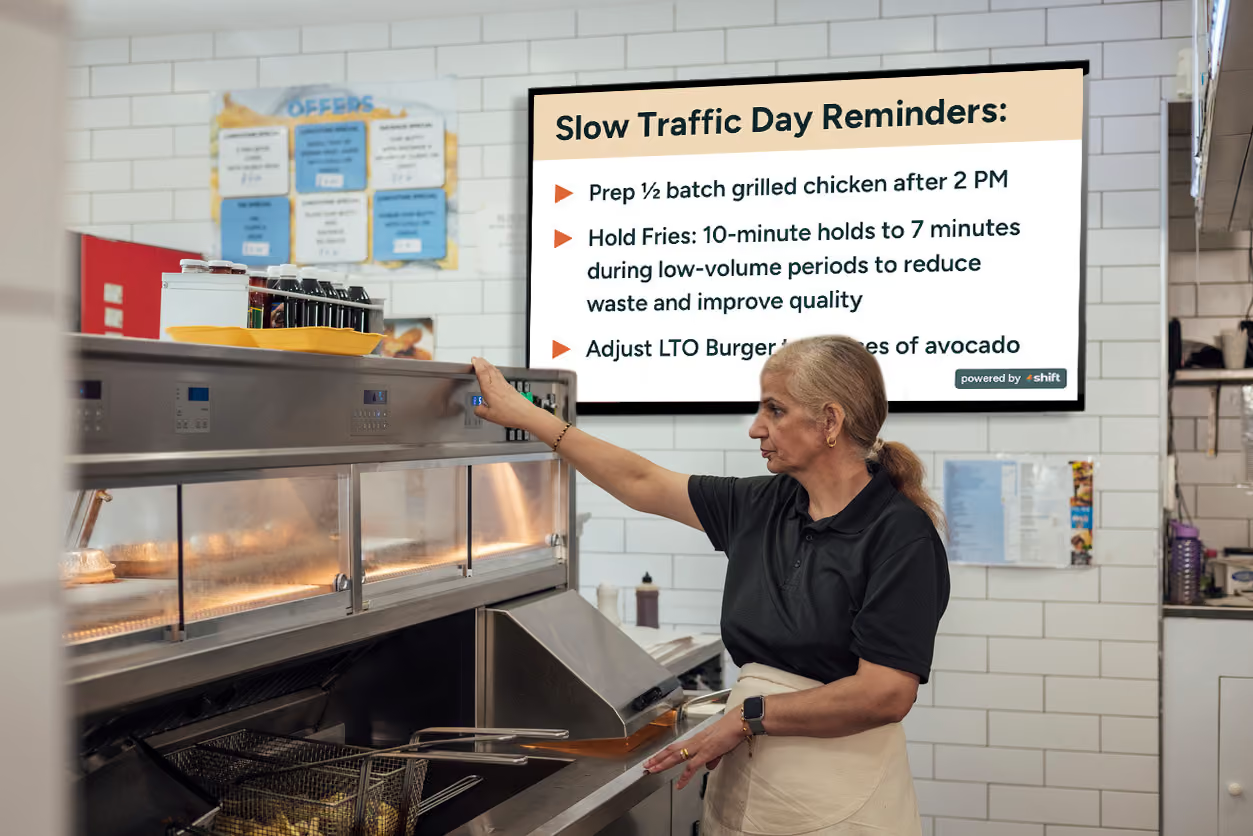
Every restaurant benefits from the advantages above, but QSRs have operating characteristics that make digital signage not just useful, but close to essential.
High turnover means safety training never stops
QSR staffing is defined by constant churn. Many locations see annual turnover rates well above the norm for the broader restaurant industry, which means a meaningful share of any crew is always new. Formal onboarding can't be relied on to cover everything, and it's rarely reinforced consistently after day one. Digital signage functions as an always-on refresher course. New hires absorb safety norms simply by working in an environment where those reminders are constantly visible, and returning staff get continual reinforcement without anyone needing to schedule a retraining session.
Speed of service in QSRs create safety pressure points
The entire QSR business model is built around speed — fast prep, fast cook times, fast handoffs. That pace is exactly where safety shortcuts tend to happen: skipped handwashing, rushed fryer handling, hurried floor mopping without a wet-floor sign. Static posters lose their effect quickly in a fast-moving environment because people stop registering them. A screen positioned at a specific station — say, above the fryer or next to the handwashing sink — can display targeted, timed reminders that cut through the routine and catch attention at the exact point of risk.
Multi-location consistency is a built-in requirement
Most QSR brands operate dozens, hundreds, or thousands of locations, often through a mix of corporate-owned and franchised stores. A safety issue identified at one location — a piece of faulty equipment, a new recall, an updated cleaning chemical protocol — needs to reach every other location fast and needs to look and say the same thing everywhere. Digital signage networks are built precisely for this kind of centralized, consistent, multi-location content push. Franchisees don't need to design their own signage or interpret guidance secondhand; they receive the same content from corporate, on the same schedule, as every other store in the system.
Small physical footprints demand efficient space use
QSR kitchens and back-of-house areas are tightly designed for maximum efficiency, with little spare wall space for a rotating library of printed safety posters. A single digital display can carry an entire library of safety content — handwashing steps, equipment safety, allergen protocols, emergency procedures — cycling through automatically, without consuming any more physical space than one screen.
Drive-thru and customer safety matters too
QSR safety isn't confined to the kitchen. Drive-thru lanes, parking lots, and dining areas all carry their own risks — vehicle traffic near walk-up windows, wet floors near entrances during weather events, choking-hazard posters near play areas. Digital signage extends safety messaging into these customer-facing zones as naturally as it does the kitchen, letting brands protect both employees and guests from a single content system.
Specific Safety Content Ideas for QSR Digital Signage
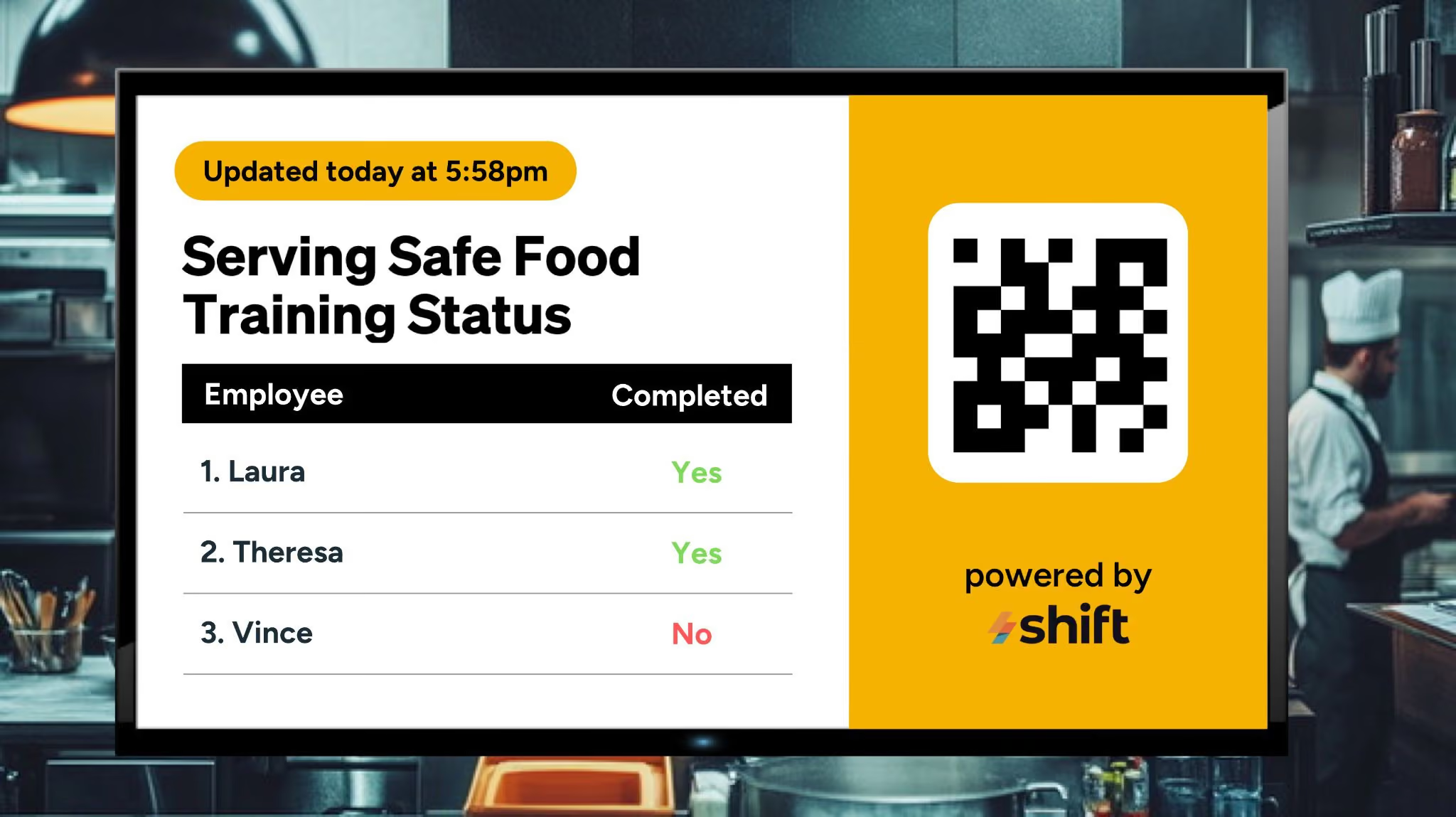
Digital signage is only as effective as the content running on it. For QSR operators, the most useful safety content tends to fall into a few clear categories:
- Handwashing and hygiene reminders — proper handwashing steps, timing, and frequency, especially near sinks and prep stations, plus glove-use and glove-change protocols between tasks.
- Fryer and hot-equipment safety — safe oil handling, burn prevention, proper use of splash guards, and cool-down procedures, displayed directly at or near fryer stations.
- Slip, trip, and fall prevention — wet-floor alerts tied to mopping schedules, proper footwear reminders, and guidance on immediately addressing spills.
- Knife and cutting equipment safety — correct grip and cutting techniques, safe storage and cleaning practices, and reminders about reporting damaged blades.
- Allergen awareness and cross-contact prevention — the location's specific allergen list, cross-contact prevention steps, and reminders about how to handle allergy-related customer requests.
- Food safety temperature protocols — safe holding temperatures, cooling procedures, and reminders about logging temperature checks at required intervals.
- Chemical handling and cleaning product safety — proper dilution ratios, required PPE for specific cleaning chemicals, and reminders never to mix certain products.
- Fire safety and emergency procedures — location of fire extinguishers and suppression system pull stations, evacuation routes, and steps for reporting equipment malfunctions.
- Drive-thru and parking lot safety — reminders for staff about vehicle awareness near walk-up windows, and customer-facing signage about pedestrian and vehicle traffic patterns.
- Recall and product safety alerts — immediate, network-wide notices when a specific ingredient, product, or piece of equipment is recalled or flagged.
- Seasonal and weather-related hazards — ice and snow alerts for entrances in winter, heat-related hydration reminders for kitchen staff in summer.
- Active shooter and workplace violence protocols — brief, clear guidance on run-hide-fight procedures and emergency contact information, particularly relevant for late-night and drive-thru-only locations.
- New employee orientation loops — a rotating set of foundational safety content specifically for locations with new hires on shift, reinforcing what was covered in onboarding.
None of this content needs to run constantly or dominate every screen. Much of its power comes from being woven into a rotation that also includes menu promotions, employee recognition, and operational updates — appearing often enough to stay top of mind without becoming background noise.
Using Shift to Power Safety Signage in Your QSR
If you’re looking for an easy to use digital signage platform, turn to the experts at Shift. Their plug and play platform is designed to do just that, have you up and running content in your QSR immediately, and with no IT department required. Shift is loaded with templates that are suited for QSRs, ranging from employee spotlights to essential safety messages. This means that you can start a content loop to inform your staff from day one.
There’s a 60 day free trial as well, allowing potential customers to try out the platform for themselves, get a feel for how it works, and measure the impact it has on staff. If you’re looking to improve safety compliance, boost employee morale, and reduce turnover, then Shift digital signage is a step in the right direction.
Shift can help with a lot of content, specific to QSRs, including:
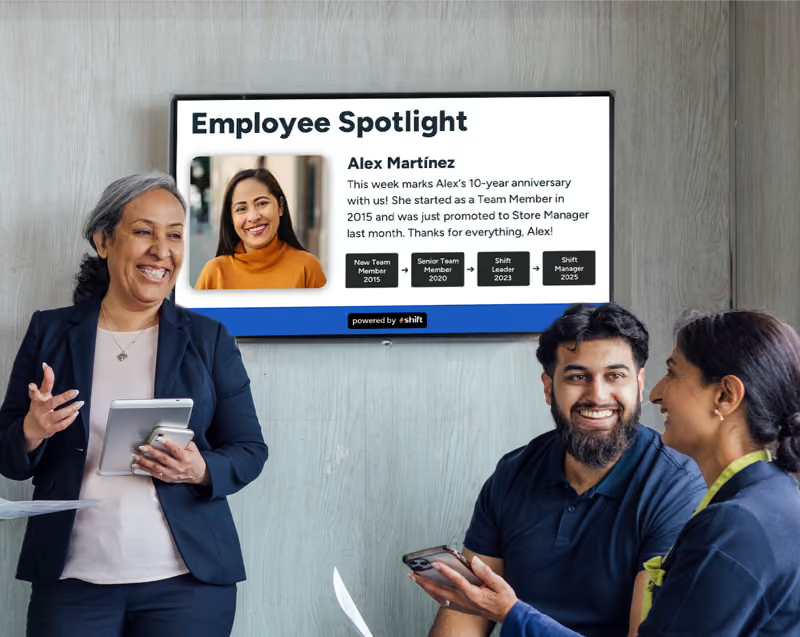
- Employee recognition through spotlights, work anniversaries, achievements, and birthdays
- Access to training materials and quick QSR refreshers
- Assisting with onboarding (for both employees and locations)
- Wayfinding
- Internal company communications specifically for QSR restaurants
- Safety information for specific stations such as knife cutting and operating fryers
- Surveys for staff through QR codes
- Real-time leaderboards and inventory lists
- Showing current promotions and discounts
- Ways to promote cross-selling and upselling opportunities to customers
A digital signage platform like Shift built with safety content in mind gives QSR brands a way to protect employees and guests without slowing down the pace that makes the business work — turning safety communication from a compliance checkbox into a genuine part of daily operations.