Hotels are operationally complex in ways few businesses match. A single property runs 24/7 across dozens of departments, with staff cycling through multiple shifts and little time for formal briefings. Housekeepers need to know priority rooms. The front desk needs VIP details before guests arrive. Engineering can't afford to lose 20 minutes tracking down a supervisor. Information needs to move fast, reach everyone, and leave no room for error.
Digital signage is stepping in to fill that gap. Moving beyond lobby displays and wayfinding, hotels are now deploying screens in break rooms, service corridors, and housekeeping stations — pushing real-time updates, operational data, and staff communications directly to the people who need them. Connected to property management systems and updated automatically, these displays are replacing the bulletin board chaos with something that actually works.
That’s why today we’re delving deeper into how hotels are:
- Using digital signage to streamline internal communication
- Deploying digital signage into key areas
- Using content to streamline communication
- Seeing the benefits of utilizing digital signage
- The only digital signage platform you need for your hotel
There are lots of Problems with Traditional Internal Communication
Hotels and resorts have been relying on outdated communication methods for too long
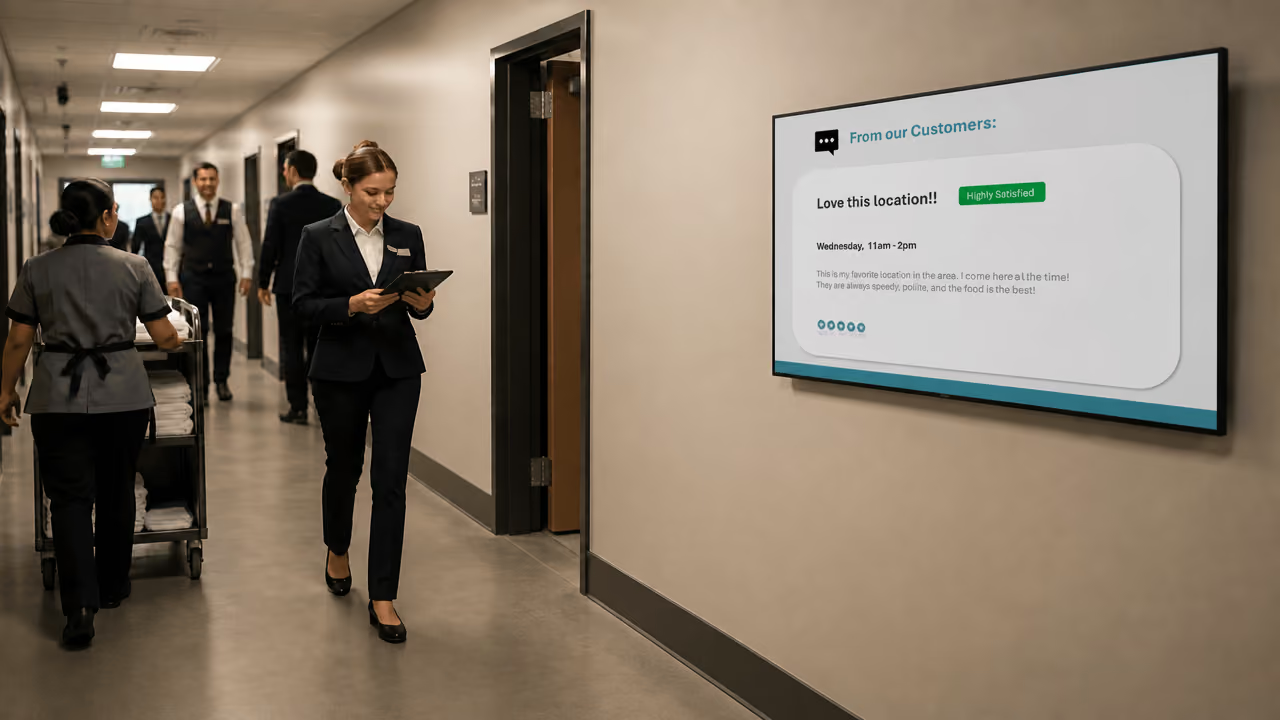
Fixing internal communication isn't a back-office concern. It's a service quality issue.
For all the technology hotels invest in guest-facing experiences — mobile check-in, smart room controls, AI concierge services — the way most properties communicate internally has remained stubbornly analog. The result is a persistent undercurrent of miscommunication that costs time, damages service quality, and frustrates staff.
Paper-Based Systems Are Slow and Unreliable Printed memos, shift logs, and bulletin board notices have an obvious flaw: they're static. Once posted, they can't be updated, and there's no way to know who actually read them. A critical note about a VIP guest pinned to a crowded board at 6am may go unnoticed by the housekeeper who starts her shift at noon. In a fast-moving hotel environment, information that's even a few hours old can already be out of date.
Email Doesn't Work for Deskless Workers The majority of hotel staff — housekeepers, maintenance workers, food and beverage staff, bellhops — don't sit at a computer during their shift. Email-based communication, however well-intentioned, simply doesn't reach them in any practical way. Even when staff do check messages, important updates get buried under administrative noise, and there's no guarantee of timely delivery when it matters most.
Shift Handoffs Create Information Black Holes Hotels never close, which means information has to survive the transition between shifts — and it often doesn't. Verbal handoffs are inconsistent and subject to memory gaps. Written logs get skimmed or skipped entirely. A problem flagged by the morning team may never make it to the evening crew, and by the time it surfaces again, it's become a bigger issue.
Departmental Silos Compound the Problem Housekeeping, front desk, food and beverage, engineering, and security all operate with their own rhythms and priorities. Without a shared communication channel, these departments function in isolation, reacting to each other rather than coordinating proactively. A last-minute room block change, a maintenance issue affecting guest floors, or an unexpected group arrival can ripple across departments — but only if the information gets there in time.
The Hidden Cost of Manager-as-Messenger When formal communication channels fail, the burden falls on supervisors and managers to relay information manually — briefing each employee individually, answering the same questions repeatedly, and chasing down staff to confirm that updates were received.
Together, these failures don't just create operational problems — they erode trust, contribute to staff frustration, and ultimately show up in the guest experience.
Where are Hotels Deploying Internal Digital Signage?
Knowing the right places to put digital signage is essential
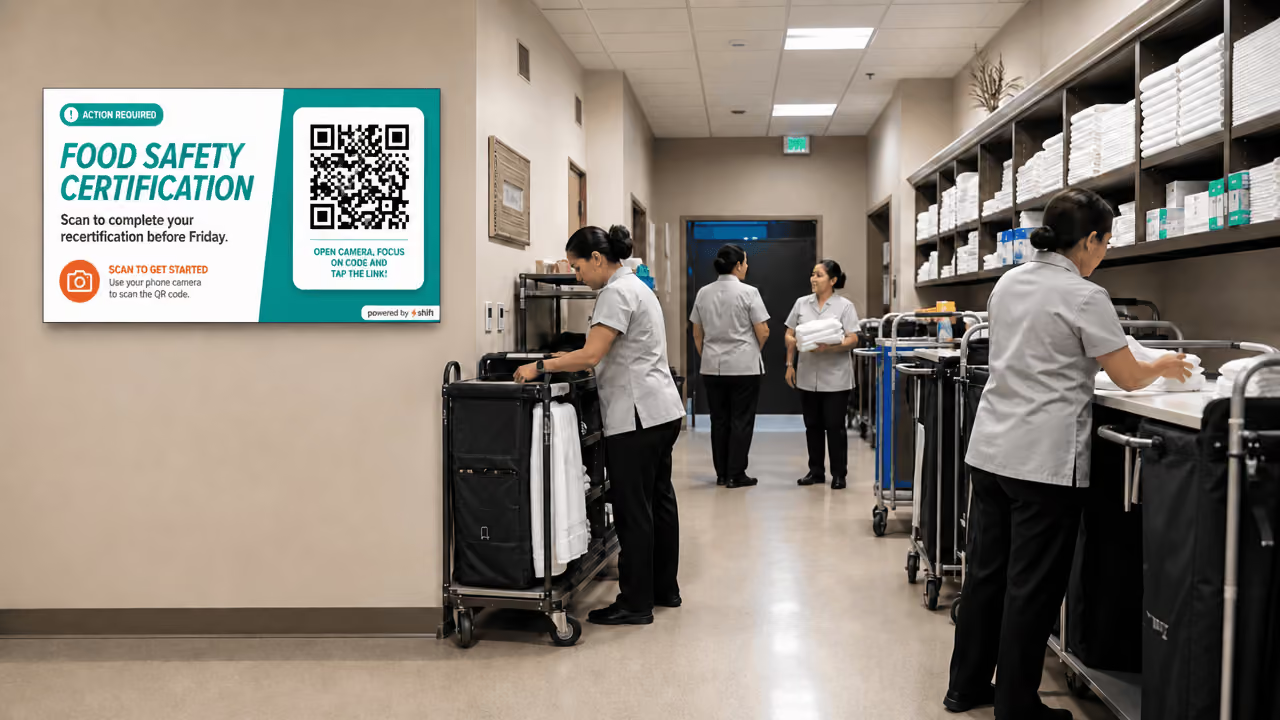
Effective internal signage isn't about putting screens everywhere — it's about putting the right information in the right place at the right moment.
The most successful hotel deployments are thoughtful about location, matching content to context and placing displays where staff naturally pause, gather, or transition between tasks.
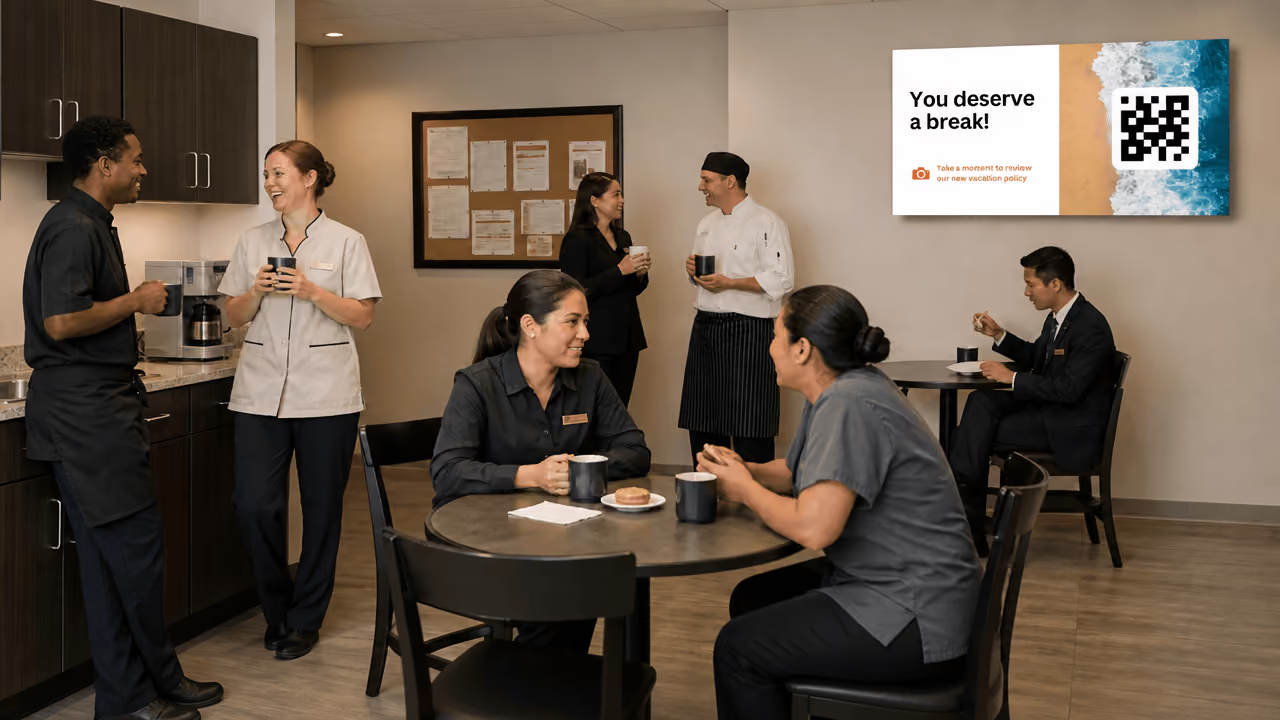
Staff Break Rooms and Locker Areas
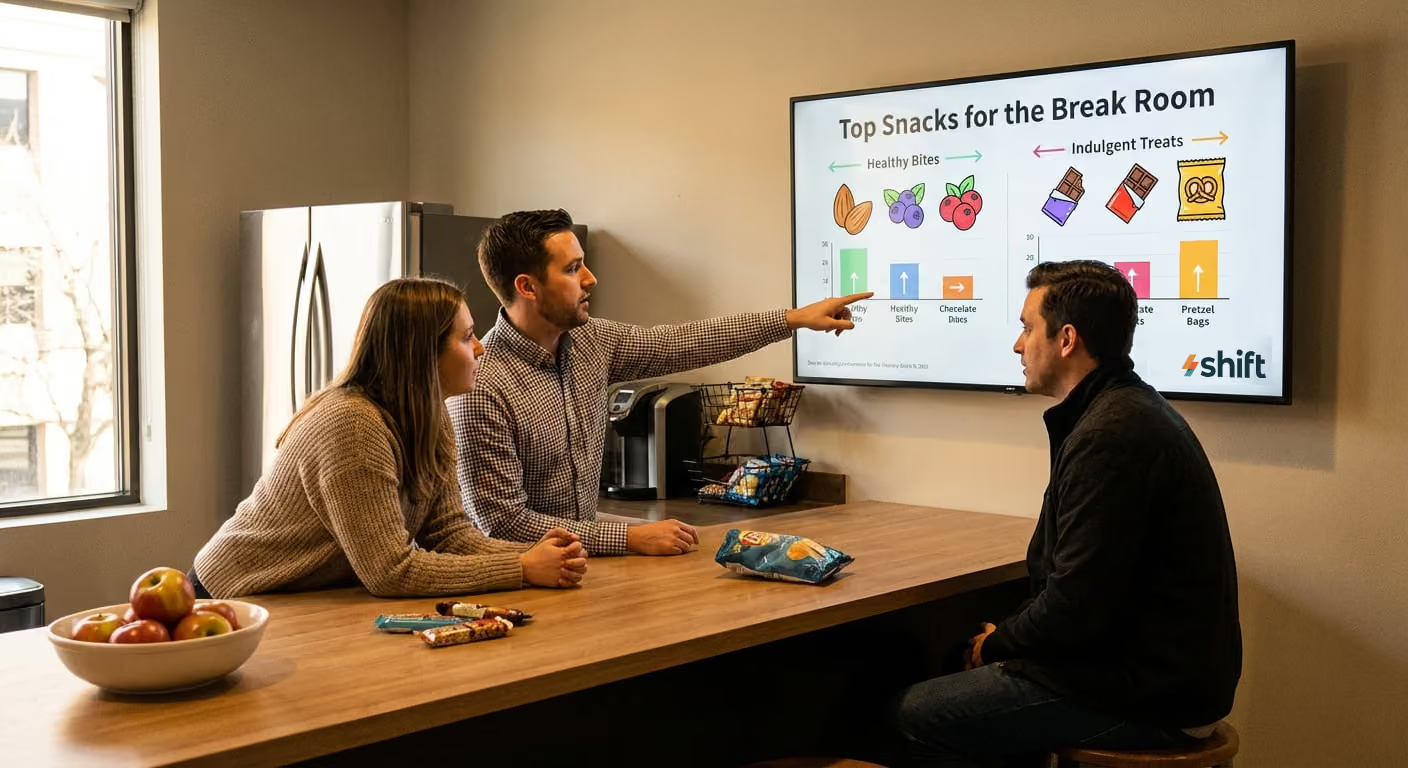
Break rooms are one of the highest-impact locations for internal signage. They're one of the few places where staff from different departments converge, and where employees have a moment to absorb information rather than passing by in a hurry. Screens here are well-suited for broader communications — HR announcements, recognition programs, upcoming training sessions, company news, and daily property highlights. Because staff visit these spaces at the start and end of shifts, break room displays are also effective for reinforcing key priorities before employees head onto the floor.
Back-of-House Corridors and Service Hallways
The service corridors that connect a hotel's operational areas see constant foot traffic throughout the day. Screens placed at key junctions — near elevator banks, at entries to kitchen areas, or along heavily traveled routes between housekeeping and guest floors — can deliver quick, scannable updates that staff absorb in passing. Content here tends to be brief and operational: room status summaries, alerts, priority tasks, or safety reminders. The emphasis is on visibility and immediacy rather than depth.
Housekeeping Stations and Linen Rooms
Housekeeping is one of the departments most dependent on real-time information and most underserved by traditional communication methods. Dedicated screens at housekeeping stations can display live room assignment boards, priority turns, out-of-order rooms, VIP flags, and inspection checklists — pulling directly from the property management system so the information is always current.
For a department where timing and accuracy directly drive guest satisfaction scores, having a live operational display can meaningfully reduce errors and the need for supervisor intervention.
Kitchen Pass-Throughs and Food & Beverage Areas
In food and beverage operations, communication breakdowns between the kitchen, floor staff, and event coordinators are a constant source of friction. Screens positioned at kitchen pass-throughs or in pre-shift staging areas can display banquet event orders, menu changes, allergy alerts, cover counts, and timing updates. This keeps the entire F&B team operating from a single source of truth without requiring printed packets that go out of date the moment they're distributed.
Staff Entrances and Time Clock Areas
The moments just before and after a shift are prime windows for communication. Screens near staff entrances, time clocks, or badge-in stations catch employees at a natural transition point — when they're arriving and mentally preparing for their shift, or wrapping up and reflecting on the day. These locations are ideal for shift-specific briefings, daily priorities, safety reminders, and recognition messages that set the tone before staff ever reach their department.
Training and Meeting Rooms
Hotels with dedicated training spaces are increasingly using digital displays to support onboarding and ongoing education. Rather than relying on printed materials or static PowerPoint decks, signage in these rooms can display updated brand standards, service protocols, and compliance training in a format that's easy to refresh as policies change. Some properties use these screens to run scheduled micro-training content during slower periods, turning downtime into a development opportunity.
Hotels that get the most value from internal signage treat each screen placement as a deliberate communication decision.
Top uses of digital signage to assist with internal communication for hotel employees
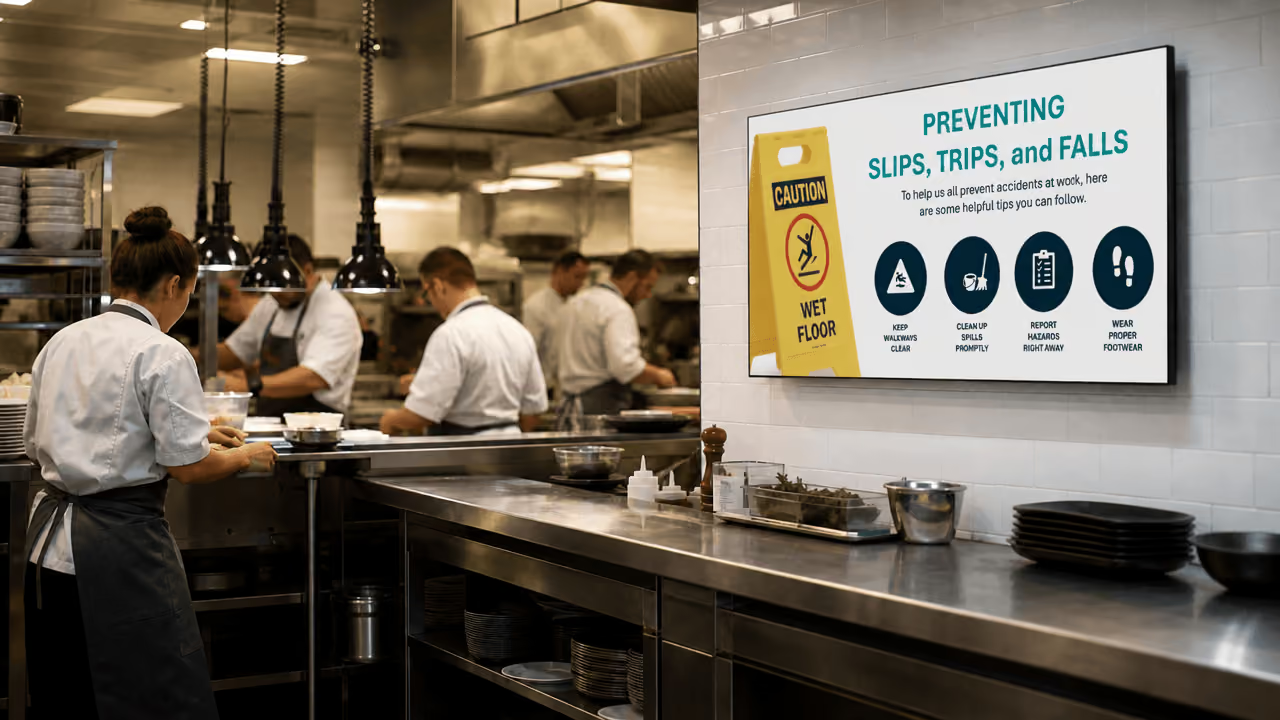
Each screen solves a specific problem, but the cumulative effect is a property where information flows freely and staff operate with confidence.
Once the screens are in place, the real value comes from how they're used. The most effective hotel deployments go well beyond scrolling announcements, treating digital signage as a dynamic operational tool that serves a different purpose in every department. Here are the core use cases driving adoption across the industry.
Shift Briefings and Daily Priorities
In a traditional hotel operation, the pre-shift briefing is a five-minute huddle that not everyone attends and few people remember in detail by hour three. Digital signage extends that briefing throughout the shift, keeping key priorities visible and current. Screens can display the day's occupancy levels, anticipated check-in and check-out volumes, group arrivals, VIP guests requiring special attention, and any property-wide priorities the GM or department heads want to emphasize. When connected to a property management system, this information updates automatically — meaning staff are always working from the most current picture, not a snapshot from 7am.
Maintenance and Engineering Updates
Maintenance issues left unresolved — or worse, unknown — are one of the fastest ways to generate guest complaints. Digital signage in engineering areas can display active work orders, priority repairs, and preventive maintenance schedules pulled directly from the property's maintenance management system. Staff can see at a glance what's open, what's been assigned, and what's urgent, without relying on radio dispatch or a supervisor to triage requests. When a room goes out of order or a critical system needs attention, that information can be pushed to relevant screens across the property instantly.
Safety, Compliance, and Emergency Protocols
Hotels operate under a significant compliance burden — fire safety, food handling regulations, OSHA requirements, harassment policies, and more. Keeping staff current on these requirements through periodic training sessions alone is rarely sufficient. Signage provides a low-friction way to reinforce compliance continuously, cycling safety reminders, protocol updates, and regulatory information into the regular content rotation.
In an emergency, the same network can be used to push immediate alerts — evacuation instructions, severe weather warnings, or lockdown procedures — to every screen on the property simultaneously, reaching staff who may not have a radio or phone nearby.
Employee Recognition and Culture Building
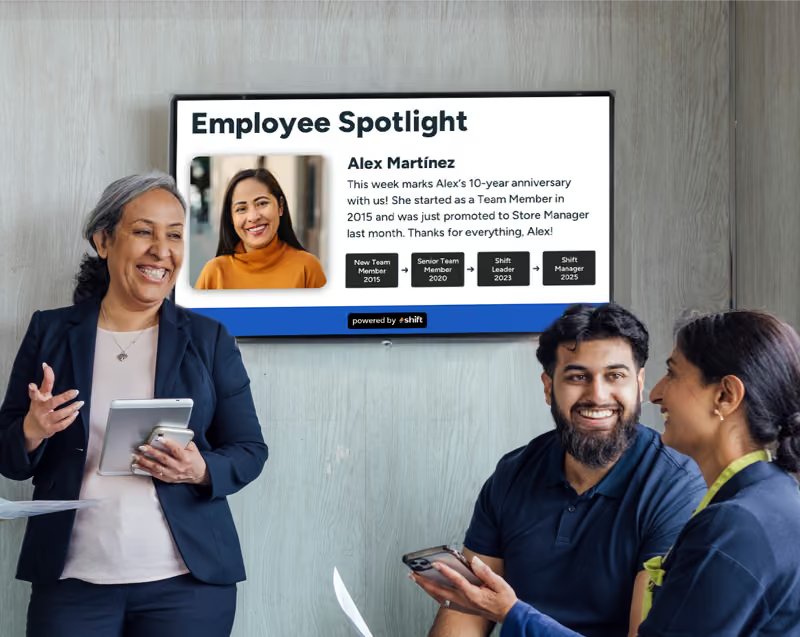
Internal communication isn't only about operations — it's also about people. Hotels with high turnover rates, a persistent industry challenge, are increasingly using digital signage as a tool for staff engagement and retention. Screens can spotlight employee of the month honorees, celebrate work anniversaries and birthdays, recognize teams that received positive guest feedback, and highlight internal promotions.
In properties with staff from many different backgrounds, seeing your name or face on a screen is a meaningful gesture of inclusion that email newsletters and paper certificates simply don't replicate. Some hotels extend this further, using signage to share team photos, count down to company events, or display motivational content aligned with the property's brand culture.
Operational KPIs and Performance Metrics
Transparency around performance data can be a powerful motivator when handled thoughtfully. Hotels are using internal signage to display department-level metrics — guest satisfaction scores, room turnaround times, check-in wait times, food and beverage revenue against targets — giving teams real-time visibility into how they're performing.
When staff can see the direct connection between their work and measurable outcomes, it creates a sense of ownership that's difficult to build through quarterly reviews alone. The key is presenting data in a way that informs and motivates rather than pressures — aggregated team metrics tend to land better than individual performance tracking on a shared screen.
The Benefits of Digital Signage for Internal Hotel Communication
Setting up digital signage for your hotel staff has a variety of advantages
- Faster, More Reliable Information Flow. The most immediate and universally reported benefit is simply that information moves faster. Updates that previously took hours to circulate.
- Reduced Miscommunication and Fewer Errors. Verbal handoffs and paper-based systems introduce error at every step — information gets misheard, misread, or simply forgotten between the briefing room and the guest floor. Digital signage reduces that.
- Improved Staff Morale and Engagement. Communication quality has a direct relationship with how valued employees feel. Staff who are kept informed, recognized publicly, and included in the operational picture are more engaged than those who feel like the last to know.
- Stronger Compliance and Safety Outcomes. Regulatory compliance is a persistent challenge in hotel operations, particularly around food safety, fire protocols, and labor law requirements.
- Decreased Dependence on Managers as Information Gatekeepers. When daily priorities, schedule changes, and operational updates are displayed automatically, managers are freed from the role of human bulletin board.
Trust Shift to Manage Internal Communication at Your Hotel
If you’re ready to transform the employee experience at your hotel with digital signage, go with the pros at Shift. They offer everything you’ll need to get started creating content, making it easier than ever to communicate with staff. Not only can you plug and play on your digital signage as soon as you’re ready, you can effortlessly update the screens from any device with the content navigator. This allows for adjustments to real-time data, which can improve productivity, profitability, as well as employee retention.
There’s no risk, so try Shift free for 60 days and see if it’s the right fit for your hospitality brand!