
Main image courtesy of The Robin Report.
When retailers think about digital signage, the sales floor usually comes to mind first. After all it kind of makes the most sense: that's where customers are, where promotions go live, and where the buying decisions happen. But limiting digital signage to customer-facing areas means missing out on one of its most powerful applications — communicating with your own team.
The truth is, this isn't really an either/or question. Backroom and sales floor signage serve different purposes, different audiences, and different goals, and the strongest retail operations use both strategically. Understanding what each location does best — and where signage strategies commonly go wrong — can help you build a system that actually increases sales, efficiency, and employee engagement.
That’s why in this article we’re discussing:
- Why digital signage belongs in both the backroom and sales floor
- How to avoid common mistakes with content
- The best digital signage system you need for both locations
Backroom vs Sales Floor: Different Audiences, Different Goals
Both locations can benefit from different types of content on digital signage
Before deciding where to place a screen, it helps to step back and ask a simple question: who is this screen talking to, and what do I want them to do next?
Sales floor signage speaks to customers. Its job is to influence a purchase decision, communicate a promotion, build brand experience, or guide someone through the store. The content needs to be fast, visual, and persuasive, because shoppers are moving and their attention span is short.
Backroom signage speaks to employees. Its job is to inform, train, motivate, or align a team around shared goals. The content can be denser and more detailed, because employees are a captive, engaged audience who actually want the information — assuming it's relevant to their job.
Treating these as the same use case is one of the most common reasons digital signage programs underperform. A screen that works in a break room will likely fail on the sales floor, and vice versa.
How Digital Signage Is Changing Sales and Inventory Management
Beyond communication, digital signage is increasingly tied into the systems retailers already use to run their business, and that integration is changing how sales and inventory get managed day to day. When signage connects to point-of-sale and inventory data, screens can automatically update to reflect what's actually happening on the shelf — pulling a promotion the moment an item sells out, surfacing a markdown as soon as a clearance decision is made, or highlighting overstocked items to move them faster. This removes the lag between a business decision and the customer or employee seeing it reflected in-store.
On the backroom side, that same data connection means staff can see live stock levels, incoming shipment schedules, or restock priorities on a screen instead of digging through a separate system. That reduces time spent searching for information and helps prevent the classic problems of overselling out-of-stock items or letting inventory sit unnoticed in a corner of the stockroom.
In effect, signage is becoming less of a standalone display and more of a real-time interface into the retailer's broader operations — one more way data gets translated into action, for customers and employees alike.
Why Sales Floor Signage is Essential
Using digital signage on your sales floor is the way to go
The sales floor is prime real estate, and digital signage earns its place there by doing things static signs simply can't.
It drives immediate purchase decisions. Digital displays can highlight limited-time offers, cross-sell complementary products, or spotlight a bestseller right at the point of decision. Because content updates instantly, a promotion that starts at 9 a.m. and ends at noon can actually reflect that timing — no printed sign ever managed that.
It creates a stronger brand experience. Motion, color, and video capture attention in a way static posters can't. A well-designed screen near the entrance sets a tone for the whole shopping experience, signaling that this is a modern, well-run business worth spending time in.
It supports wayfinding and store navigation. In larger format stores, digital wayfinding signage helps shoppers find departments, locate specific products, or discover where a sale is happening, reducing frustration and the "I couldn't find it so I left" scenario.
It reduces perceived wait times. Near checkout lines or fitting rooms, engaging content — new arrivals, loyalty program perks, social proof — makes waiting feel shorter and gives customers something productive to look at instead of their phones (or worse, walking out).
It adapts to real-time conditions. Weather-triggered promotions, inventory-based messaging (highlighting what's actually in stock), and time-of-day content are all possible with connected digital signage, something that's simply not possible for printed materials.
It reinforces upsell and cross-sell opportunities. Screens near specific product categories can recommend complementary items, effectively giving your best salesperson's pitch to every customer who walks by, consistently and without fatigue.
The sales floor is where digital signage can really boost revenue, which is why it typically gets the lion's share of a retailer's attention and budget. But that’s not the only place you should employ it.
Digital Signage Belongs in the Backroom Too
Your employees can benefit from robust digital signage content as well
The backroom, break room, and other employee-only spaces are often treated as an afterthought in signage strategy — if they're considered at all. This is really a missed opportunity, because this is where a huge amount of operational and cultural value lives.
It keeps employees informed without extra meetings. Shift changes, policy updates, new product launches, safety protocols — all of this information has to get to employees somehow. A screen in the breakroom or backroom can deliver consistent, up-to-date messaging without relying on printed memos that get ignored or emails that go unread on a shift when someone doesn't have computer access.
It supports training and onboarding. Looping training videos, new hire welcome messages, or refreshers on procedures can run passively in break areas, reinforcing what's covered in formal onboarding sessions. Repetition matters for retention, and a screen delivers it effortlessly.
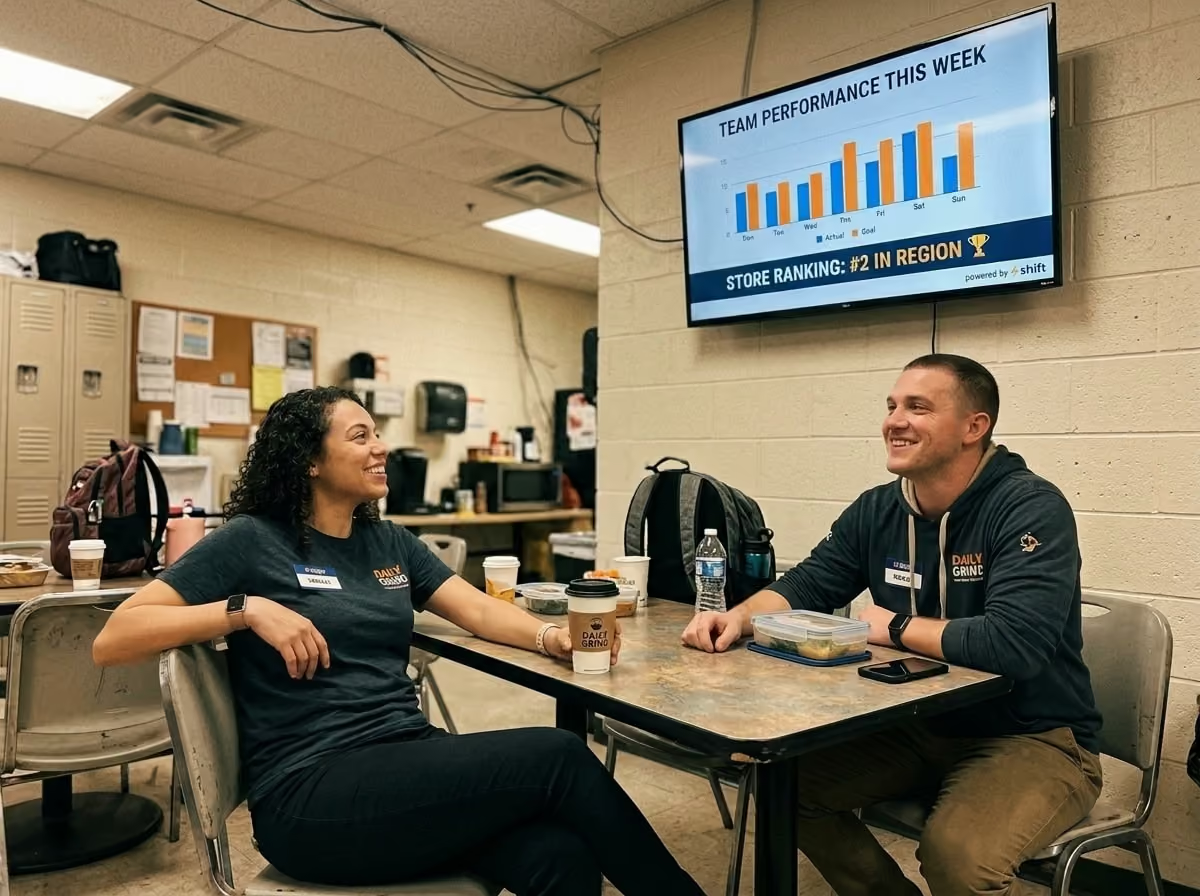
It builds visibility into performance. Real-time dashboards showing sales targets, individual or team KPIs, or store rankings can turn abstract goals into something visible and motivating. Gamifying performance this way, even subtly, tends to improve engagement more than a spreadsheet ever will.
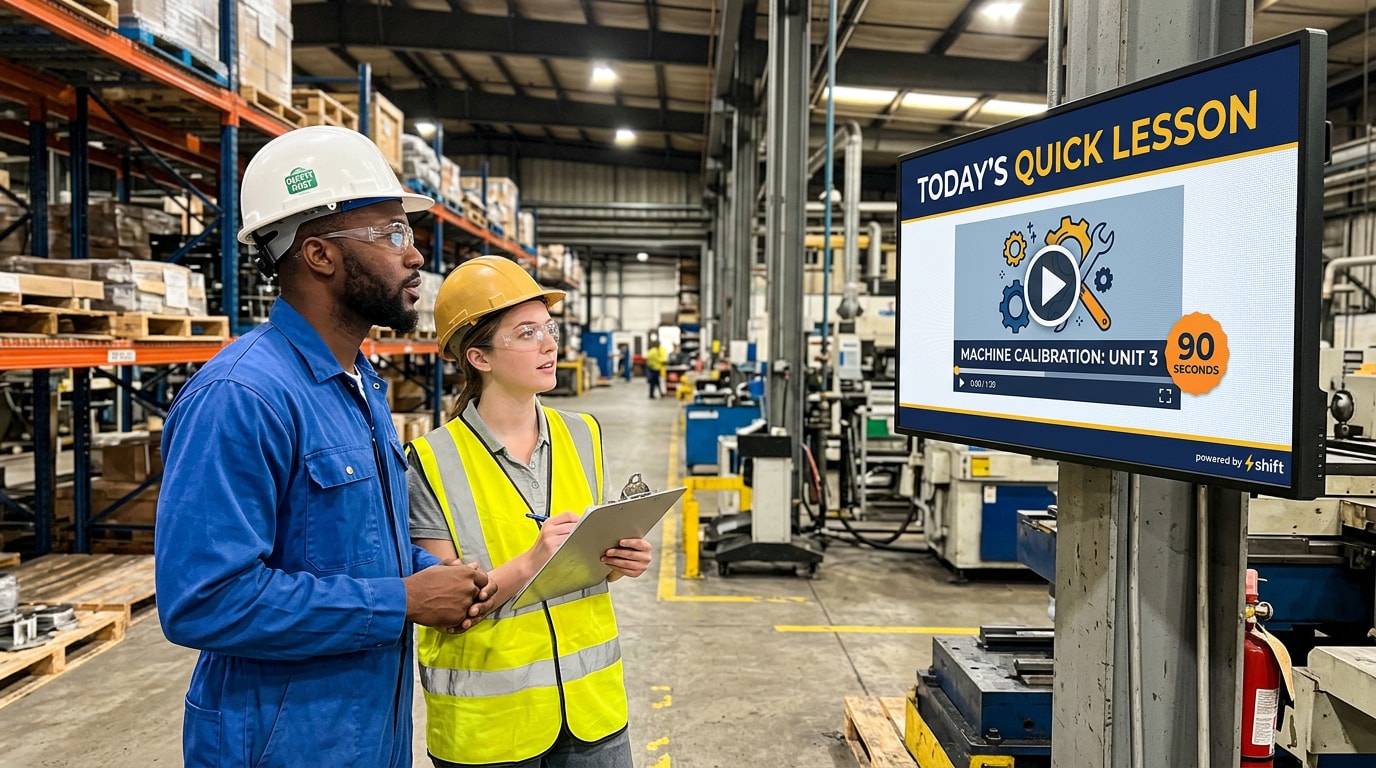
It reinforces safety and compliance. In backrooms especially — where forklifts, stock rooms, and heavy inventory movement are common — safety reminders displayed prominently and consistently can reduce incidents. This is content that genuinely benefits from repetition rather than being seen once and forgotten.
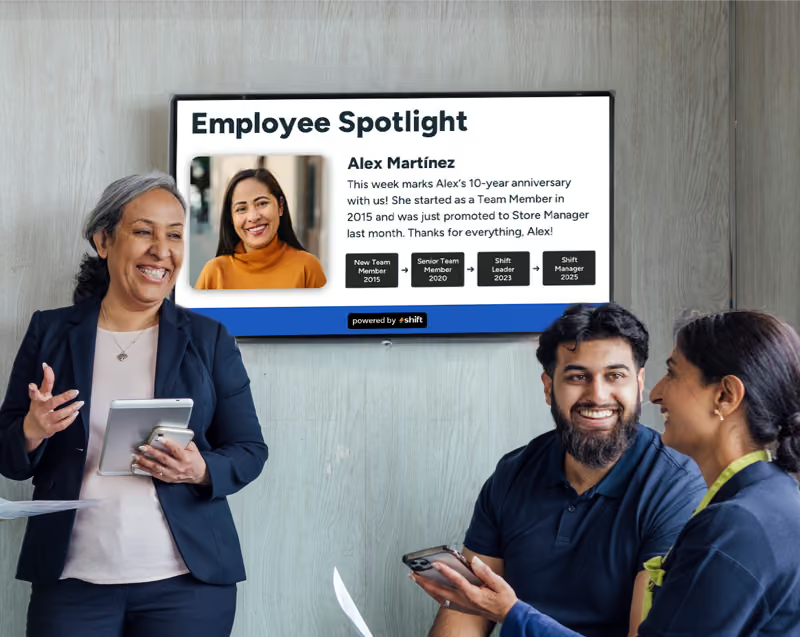
It boosts morale and recognition. Employee-of-the-month recognition, birthday shoutouts, team milestones, or even just a rotating feed of positive customer reviews can make the backroom feel less like a utility space and more like a place where people feel appreciated.
It centralizes communication across shifts. Retail runs on shift work, and the classic problem is that the morning team and the closing team rarely overlap. A well-maintained screen becomes a shared source of truth that doesn't depend on one manager remembering to pass along a message.
In summary: the sales floor sells to customers, and the backroom sells the mission, the culture, and the operational clarity to employees. Both are forms of communication, and both have a measurable return — one shows up in basket size, the other shows up in turnover rates, safety incidents, and employee satisfaction scores.
So, Where Should Signage Go? In Both Locations!
Rather than choosing one location over the other, the smarter approach is to treat backroom and sales floor signage as two separate content strategies running on the same platform. The technology can be identical — the same content management system, the same network of screens — but the content, tone, and goals should be built independently for each audience.
A useful way to think about it: sales floor screens should answer "why should I buy this, right now?" while backroom screens should answer "what do I need to know to do my job well today?" If a single screen is trying to do both jobs at once, it's probably doing neither one well.
Retailers who get the most value from digital signage typically start with a clear map of their space: customer zones (entrance, aisles, checkout, fitting rooms) and employee zones (breakroom, backroom, stockroom, office). Content is then built specifically for each zone's audience and purpose, rather than repurposing a single "one-size-fits-all" playlist across the whole store.
Common Digital Signage Mistakes to Avoid
Whether signage lives on the sales floor, in the backroom, or both, a handful of mistakes show up again and again — and they're worth pointing out.
1. Treating digital signage like a static poster. The biggest advantage of digital signage is that it can change. Retailers who upload one graphic and let it run for months are wasting the platform's core strength. Content should be refreshed regularly to stay relevant and keep both customers and employees actually paying attention.
2. Overloading screens with too much information. Whether it's a wall of text on a sales floor promo or a backroom dashboard cramming ten metrics onto one screen, cognitive overload kills engagement. Good signage content picks one clear message per screen and communicates it simply.
3. Ignoring the audience's context. Content built for a fast-moving shopper (short, bold, visual) doesn't work for an employee reading a screen during a break (more detail is fine). Using the same content style in both places usually means it underperforms in at least one.
4. Poor screen placement and viewing angles. A screen mounted too high, too low, in glare, or outside natural sightlines won't get seen no matter how good the content is. Placement should be tested from the actual vantage points people occupy — a customer walking past an endcap, or an employee clocking in near a time clock.
5. No content calendar or update cadence. Signage programs often start strong and then go stale because no one owns ongoing content updates. Without a plan for who updates what and when, screens become the same static poster problem all over again.
6. Not measuring performance. Many retailers install signage and never revisit whether it's actually working. Tracking metrics like promotion lift, dwell time, or even simple employee feedback on backroom content helps justify the investment and points to what to improve.
Avoiding these pitfalls isn't complicated, but it does require treating digital signage as an ongoing communication channel rather than a one-time installation project.
Use Shift to Transform Your Sales Floor and Backroom
Shift is the only digital signage platform your business needs to communicate to customers on the sales floor, as well as employees in the backroom. It’s easy to create content for multiple screens with the Content Navigator, which comes with plenty of templates that would prove helpful to boosting sales on the floor, and keeping employees up to date in the backroom. It’s simple plug and play software means you don’t need an IT department to set it up, and it comes with a free 60-day trial so you can really get a feel for the platform.
The content possibilities are endlessly adaptable to your needs, and include features like:
- Employee recognition through spotlights, work anniversaries, achievements, and birthdays
- Access to training materials
- Assisting with onboarding (for both employees and locations)
- Wayfinding
- Internal company communications
- Posting safety or emergency alerts
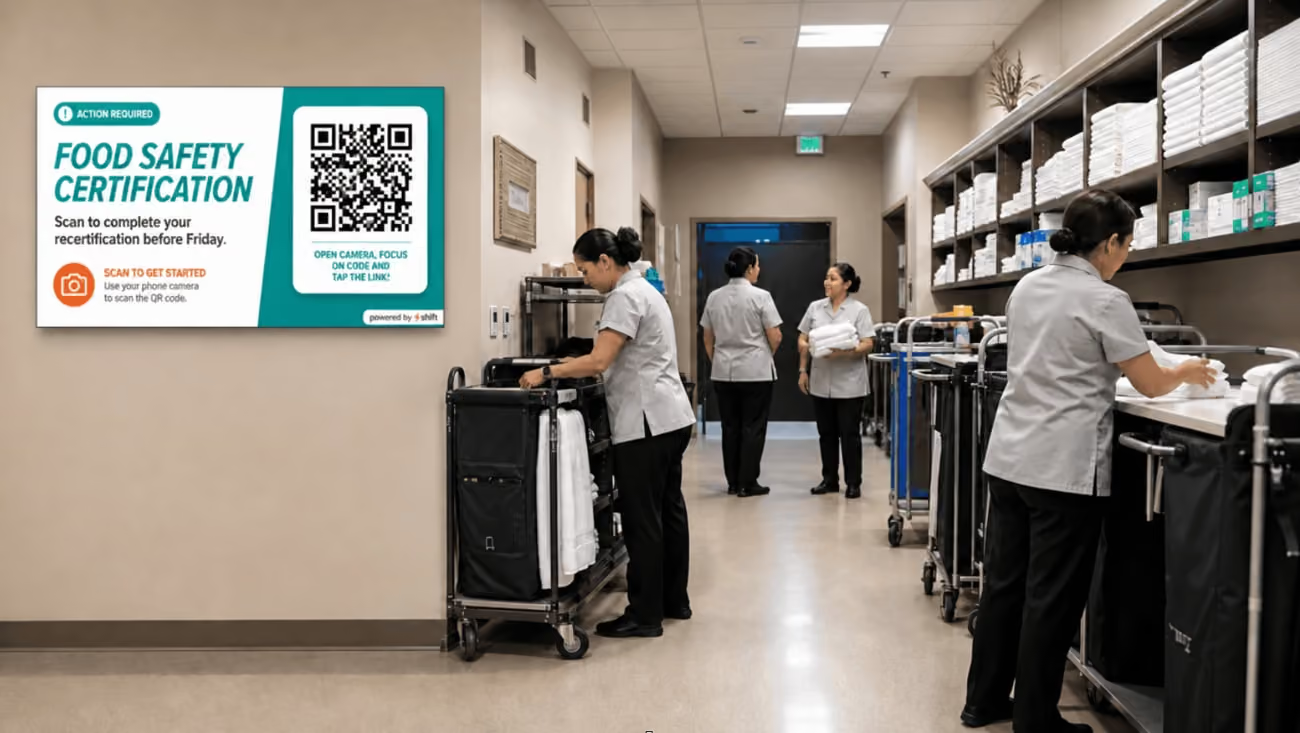
- Surveys for staff through QR codes
- Real-time leaderboards and inventory lists
- Showing sales, promotions, and discounts
- Promotes cross-selling and upselling opportunities to customers
Digital Signage Belongs on Both the Sales Floor and the Backroom
Digital signage isn't a sales-floor-only tool, and it isn't just a nice-to-have for the backroom either. Both spaces benefit enormously from the flexibility, immediacy, and visual power that digital displays offer — they just benefit in different ways. Sales floor signage drives revenue by influencing customer decisions in real time. Backroom signage drives operational excellence by keeping employees informed, trained, safe, and motivated.