
Hotels run on people, and people can only deliver great service when they know what to do, how to do it, and why it matters. Yet traditional training models — day-long onboarding sessions, printed manuals, occasional refresher workshops — were built for a workforce that no longer exists in most properties. Hotel staff work variable shifts, rotate between departments, and rarely have time to sit through a 45-minute e-learning module between checking in guests and turning over rooms.
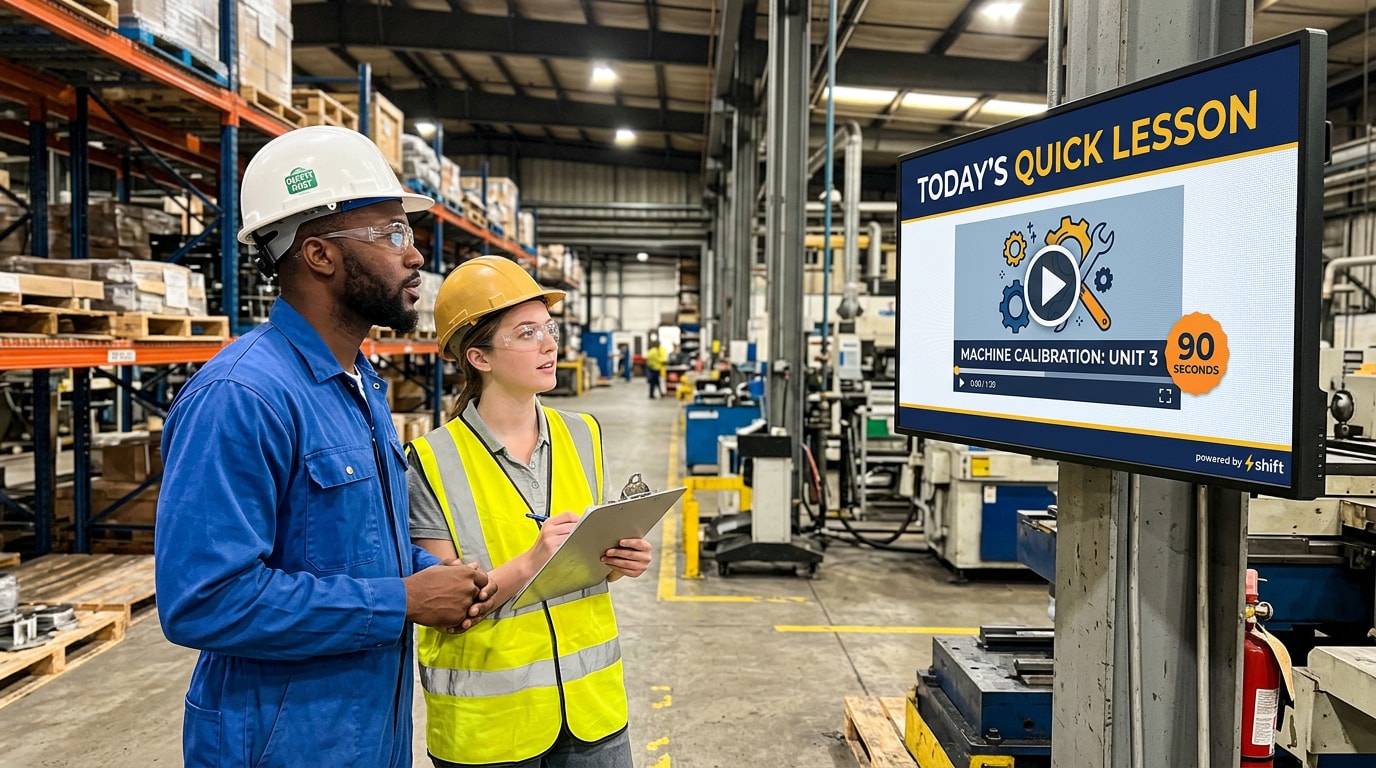
This is why microlearning, delivered through the digital signage already installed throughout a property, is a much better fit. Instead of pulling staff away from the floor for training, digital signage brings bite-sized, relevant lessons directly to the break room, the back-of-house corridor, the staff kitchen, or the concierge desk — exactly where and when employees have a spare two minutes to absorb something useful.
But what is microlearning, and how can using it through the medium of digital signage benefit your hotel? We’ll be discussing that and more including:
- What microlearning is and why it works so well
- Why hotels in particular are a natural fit for it
- What kinds of microlearning content hospitality teams can put on their screens right now
- A digital signage platform that makes it easy to integrate microlearning into day to day hotel operations
What Is Microlearning, and Why Does It Work In A Variety of Industries?
The learning technique that actually helps staff retain important information
Microlearning is training broken into short, focused units — typically anywhere from 30 seconds to five minutes — each covering a single concept, skill, or task. Rather than trying to teach an entire process in one sitting, microlearning isolates one piece of it: how to fold a towel into a swan, how to upsell a room upgrade, how to respond if a guest reports a safety concern.
The approach isn't just a trendy technique with no proof of success. It's actually grounded in how memory actually works.
It respects the forgetting curve. Psychologist Hermann Ebbinghaus demonstrated over a century ago that people forget the majority of new information within days of learning it unless that information is reinforced. Long, front-loaded training sessions are especially vulnerable to this effect — employees absorb a flood of information on day one and retain only a fraction of it by day thirty. Microlearning counters this by spacing out lessons over time, repeating key concepts in different formats, and reinforcing them in the flow of work rather than in a single isolated session. This gives information time to sink in and is more readily retained in the long run.
It matches modern attention spans. Whether shaped by smartphones, social media, or simply the pace of modern work, most people now engage more easily with short, focused content than with long lectures or dense manuals. A 90-second video on proper glassware handling is far more likely to be watched — and remembered — than page 14 of a 60-page service manual.
It fits into real work schedules. Hotel staff rarely have a spare 30-minute block for training. Shifts are busy and employees are often required all over the hotel property. They have the 90 seconds between a guest checkout and the next arrival, or the few minutes waiting for a shuttle to arrive. Microlearning is designed to be consumed in exactly these windows.
It improves retention through repetition and application. Because each module is short, staff can revisit it easily, and managers can cycle key lessons back into rotation weeks or months later — reinforcing what might otherwise fade from memory. Digital signage makes this repetition effortless: a screen simply keeps a rotation of content on a loop, without anyone needing to schedule a class.
It's easier and cheaper to produce and update. A five-minute video is faster to script, shoot, and revise than a 45-minute course. When a hotel changes its breakfast hours, updates its Wi-Fi password protocol, or introduces a new loyalty program, a 30-second signage update can go live the same day — no need to rebuild an entire training module.
Why the Hotel Industry Is a Perfect Fit for Implementing Microlearning
The hotel industry is uniquely set up to benefit from training staff through microlearning
Every industry can technically use microlearning, but few are as structurally suited to it as hospitality.
High Turnover Demands Fast, Repeatable Onboarding
The hotel industry consistently posts some of the highest employee turnover rates of any sector, driven by seasonal staffing, entry-level wages, and physically demanding shift work. That turnover means properties are almost always onboarding someone new. A microlearning library delivered on the same screens every incoming employee walks past means training doesn't rely on a single HR staffer's schedule — new hires absorb key knowledge simply by being present in the building, and existing employees get continuous refreshers without extra effort from management.
Hotels Have a Deskless, Distributed Workforce
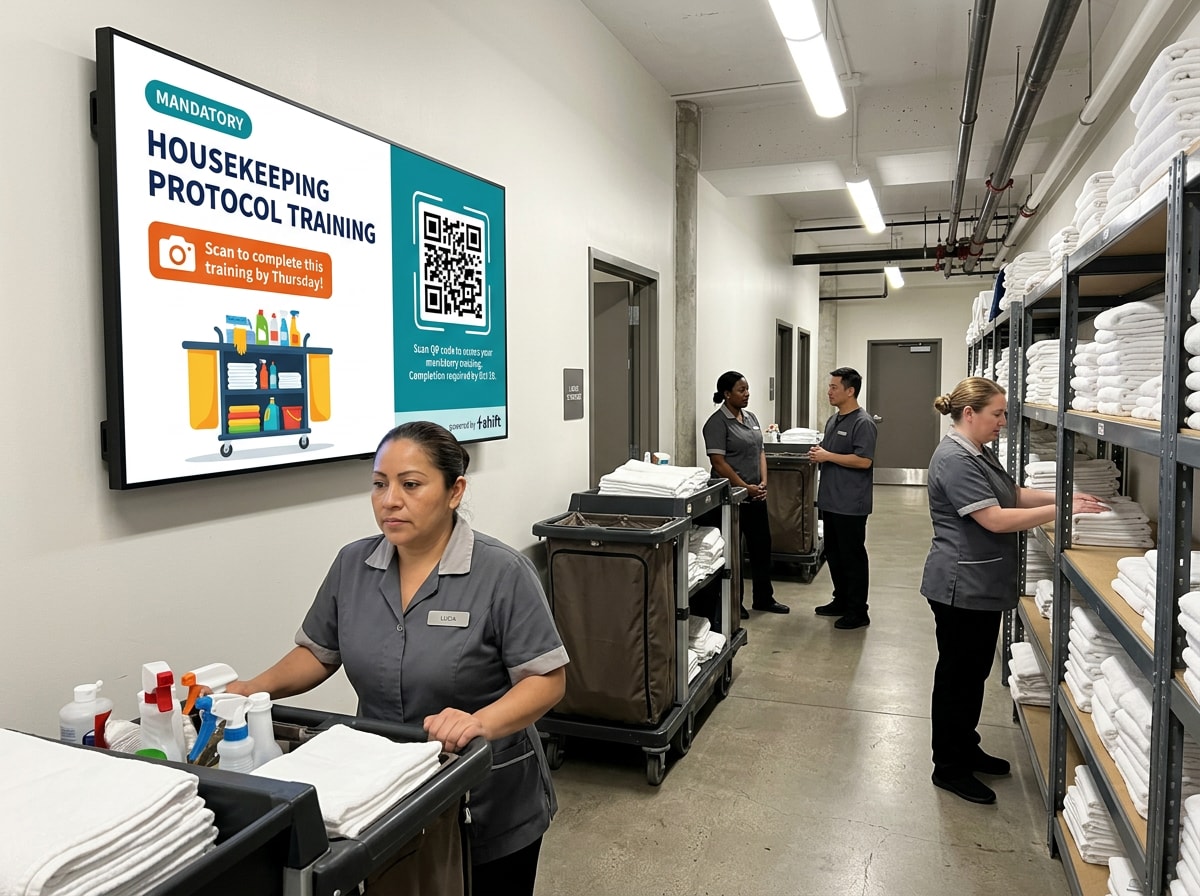
Few employees in a hotel sit at a desk with a computer. Housekeepers move room to room. Engineers move between floors and mechanical rooms. Servers, bartenders, valets, and front-desk agents are almost always standing, often mid-task. Traditional e-learning assumes a login screen and an uninterrupted block of time — neither of which describes a housekeeper's day. Digital signage removes that barrier entirely: the training comes to wherever the screen is, whether that's the staff cafeteria, the laundry room, or the loading dock.

Multiple Departments, Multiple Skill Sets, One Property
A single hotel might need to train front-desk agents on upselling scripts, housekeepers on turnover speed and safety protocols, F&B staff on allergen handling, and engineering on equipment maintenance — often all within the same week. Microlearning's modularity allows each department's screens to display content specific to their role, while shared spaces like the break room can rotate through company-wide announcements, employee recognition, culture content, or cross-training modules that help staff understand what their colleagues do.
Language and Literacy Diversity
Hospitality workforces are often linguistically diverse, and lengthy written manuals can be a genuine barrier for employees who are more comfortable with spoken or visual instruction than dense text. Short video- and graphic-based microlearning, especially when subtitled or offered in multiple languages, communicates far more effectively across a diverse staff than a 40-page PDF ever could.
Guest Experience Depends on Consistency, Not Memorization
Hospitality service standards depend on consistency — the same warm greeting, the same upsell approach, the same response to a complaint, delivered the same way whether it's an employee's first week or fifth year. Spaced, repeated microlearning is far better suited to building that type of memory retention than a one-time orientation session.
Digital Screens Are Often Already There
Many hotels already operate digital signage for wayfinding, event boards, menus, or back-of-house communications. Repurposing or expanding that same network to deliver training content requires no new hardware investment in many cases — just a shift in how the screens are used, and a platform (like Shift) to manage and schedule the content.
Managers Can See the Results
Microlearning can be tied directly to operational metrics. A property that rolls out a two-week rotation on upsell scripts can compare upgrade revenue before and after. A hotel pushing housekeeping safety reminders can track incident reports over the following month. Because each module targets one specific behavior, it's far easier to isolate whether that behavior actually changed — something that's almost impossible to measure after a broad, multi-topic orientation session delivered once, months earlier.
Examples of Microlearning Content for Hotel Staff
Microlearning is applicable to every staff member, helping them thoroughly learn their job so they can feel confident on every shift
The best microlearning content is specific, visual, and immediately applicable. Below are examples hotels can adapt for their own screens, organized by department and purpose.
Front Desk & Guest Services
- A 60-second video demonstrating the property's preferred phrasing for room upgrade offers
- A quick-reference graphic showing how to process a walk-in guest during a sold-out night
- A short scenario clip: "The guest says their room wasn't ready — here's the recovery script"
- A rotating "know your neighborhood" fact card, so agents can confidently recommend restaurants, attractions, and transit options
Housekeeping
- A step-by-step visual guide to the property's bed-making standard, shown as a looping GIF-style sequence
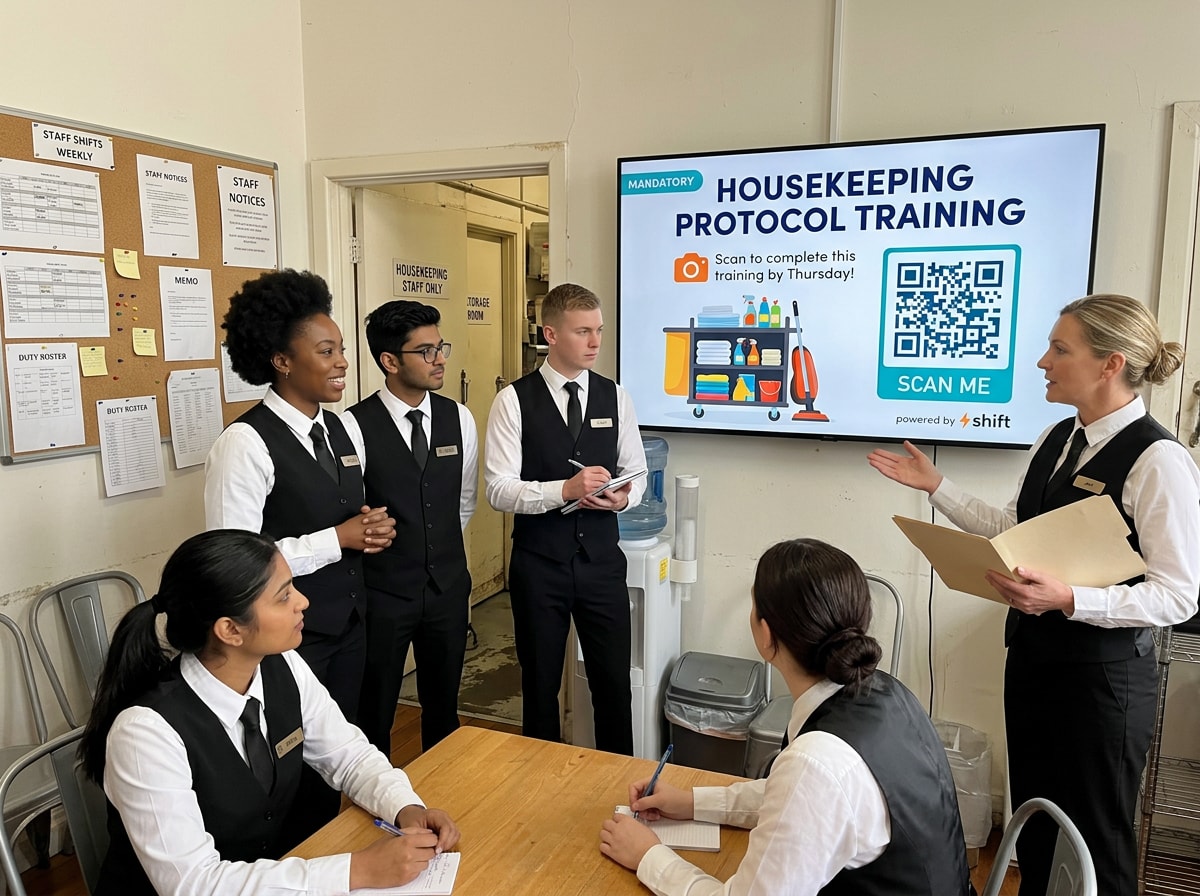
- A safety reminder on proper chemical handling and PPE, refreshed monthly
- A "spot the difference" style visual quiz comparing a correctly turned-down room to a room with common oversights
- A 30-second clip on reporting maintenance issues through the property's system
Food & Beverage
- Allergen-awareness flashcards cycling through the top guest allergy questions and correct responses
- A wine-pairing tip of the week for servers working the restaurant floor
- A short video on proper glass and plate carrying technique for new servers
- POS system shortcuts, shown as quick-hit tips during slow periods
Engineering & Maintenance
- Equipment-specific safety reminders tied to seasonal tasks (pool systems in summer, boilers in winter)
- A short walkthrough of the correct lockout/tagout procedure
- Preventive maintenance checklists rotated by day of the week
Safety, Compliance & Culture
- Emergency evacuation procedures specific to each property wing, refreshed quarterly
- Harassment-prevention and bystander-intervention scenarios, delivered in short scenario format rather than dense policy text
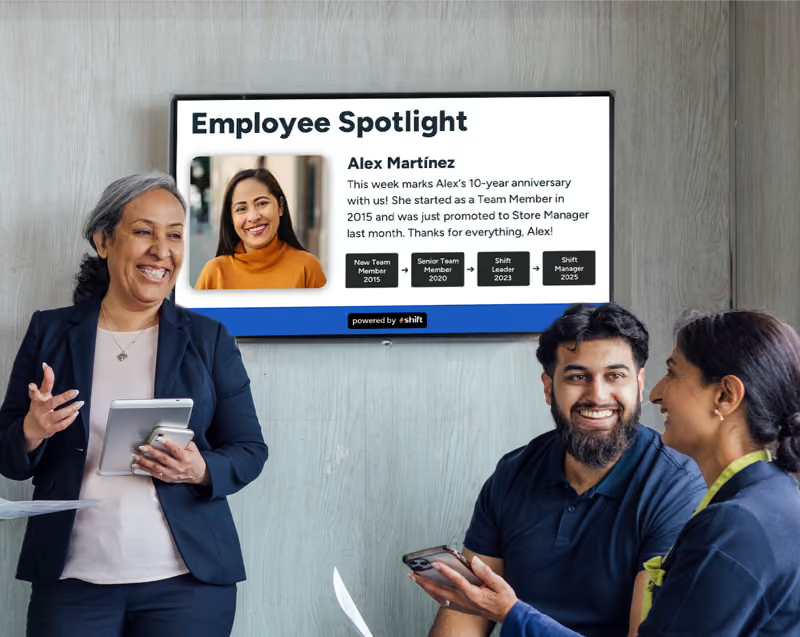
- Employee recognition spotlights, mixed into the same rotation to reinforce that the screens are part of daily culture, not just a training feed
- New benefit or policy announcements, paired with a 20-second explainer so staff don't have to dig through an intranet post
Cross-Training and Career Development
- "A day in the life" clips showing what other departments do, building empathy and readiness for cross-departmental coverage during staffing gaps
- Short interviews with property leaders on career paths within the company, aimed at improving retention by showing growth opportunities
The common thread across all of these examples is brevity paired with specificity. None of them attempt to teach an entire function in one sitting — each isolates a single, useful piece of knowledge that a staff member can absorb in the time it takes to refill a coffee cup, then apply on their very next shift.
Getting Started Without Overwhelming Your Team
Properties that succeed with signage-based microlearning tend to start narrow rather than trying to convert every training topic on day one. A few practical guidelines:
Start with one department and one problem. Pick a specific, measurable pain point — slow turnover times, inconsistent upsell language, a recurring safety issue — and build a short rotation around it before expanding property-wide.
Keep each piece to one idea. The instinct when building training content is often to pack in everything an employee might need to know. One idea, delivered clearly, beats five delivered vaguely.
Refresh on a schedule, not just when something breaks. It's tempting to only update signage content when a policy changes. But the real value of microlearning comes from spaced repetition.
Mix training with recognition and culture content. Screens that only ever display corrective or compliance content start to feel punitive. Interspersing training with shout-outs, milestones, and light culture content keeps staff engaged with the screens rather than tuning them out.
Let frontline managers flag what's not landing. Housekeeping supervisors, restaurant managers, and front-desk leads see day-to-day performance gaps long before HR does. Building a simple feedback loop — even something as informal as a monthly check-in — helps ensure the content rotation stays tied to real operational needs rather than becoming stale.
Shift Can Provide the Digital Signage Platform for Microlearning in the Hotel Industry
Shift makes it easy to create microlearning content
If you’re looking for a simple way to start using microlearning content for your hotel staff, Shift can help you every step of the way. The plug and play design ensures that you can get content up and running from day one, and the built-in templates ensure you don’t need a graphics team to make effective content. Each screen can cycle through targeted content based on where it’s located, ensuring the housekeeping team, the front desk, and custodians all see the correct microlearning opportunities mixed with other content that can include:
- Employee recognition through spotlights, work anniversaries, achievements, and birthdays
- Wayfinding
- Internal company communications specifically for hotel brands
- Posting safety or emergency alerts
- Surveys for staff through QR codes
- Real-time information like occupancy and inventory lists
- Ways to promote cross-selling and upselling opportunities to guests
- Best practices for specific departments
- And more!
Digital signage and microlearning are a natural pairing for the hotel industry defined by constant motion, high turnover, and a workforce that's rarely sitting at a screen by choice. Hotels don't need to abandon their existing training programs to adopt this approach — most properties will get the best results by using microlearning to reinforce and refresh what's already being taught in onboarding, rather than replacing it outright.