Quick service restaurants (QSRs) live and die on speed, consistency, and the quality of every single customer interaction. Brands pour enormous budgets into external marketing — menu launches, loyalty apps, drive-thru promotions, social campaigns — all designed to get customers through the door. But there's a second audience that determines whether any of that spend actually pays off: the employees who greet customers, take orders, and deliver the food.
This is why internal marketing is also essential to QSRs, and it's one of the most underused tools in the industry. Internal marketing applies the same principles used to win over customers — clear messaging, consistent branding, emotional engagement, and ongoing communication — to the people working behind the counter. Done well, it turns frontline staff into engaged brand ambassadors. Done poorly, or not at all, it leaves employees disconnected from company goals, unclear on expectations, and far more likely to deliver an inconsistent customer experience.
In this article, we’ll be covering:
- Why you can’t sleep on using digital signage for internal marketing in the QSR industry
- The benefits of giving your employees the tools they need to improve customer satisfaction
- Content ideas for internal marketing in the QSR industry
- The digital signage platform that can do it all
What Internal Marketing Actually Looks Like in a QSR Environment
Internal marketing and communication is just as important as external strategies in the QSR industry
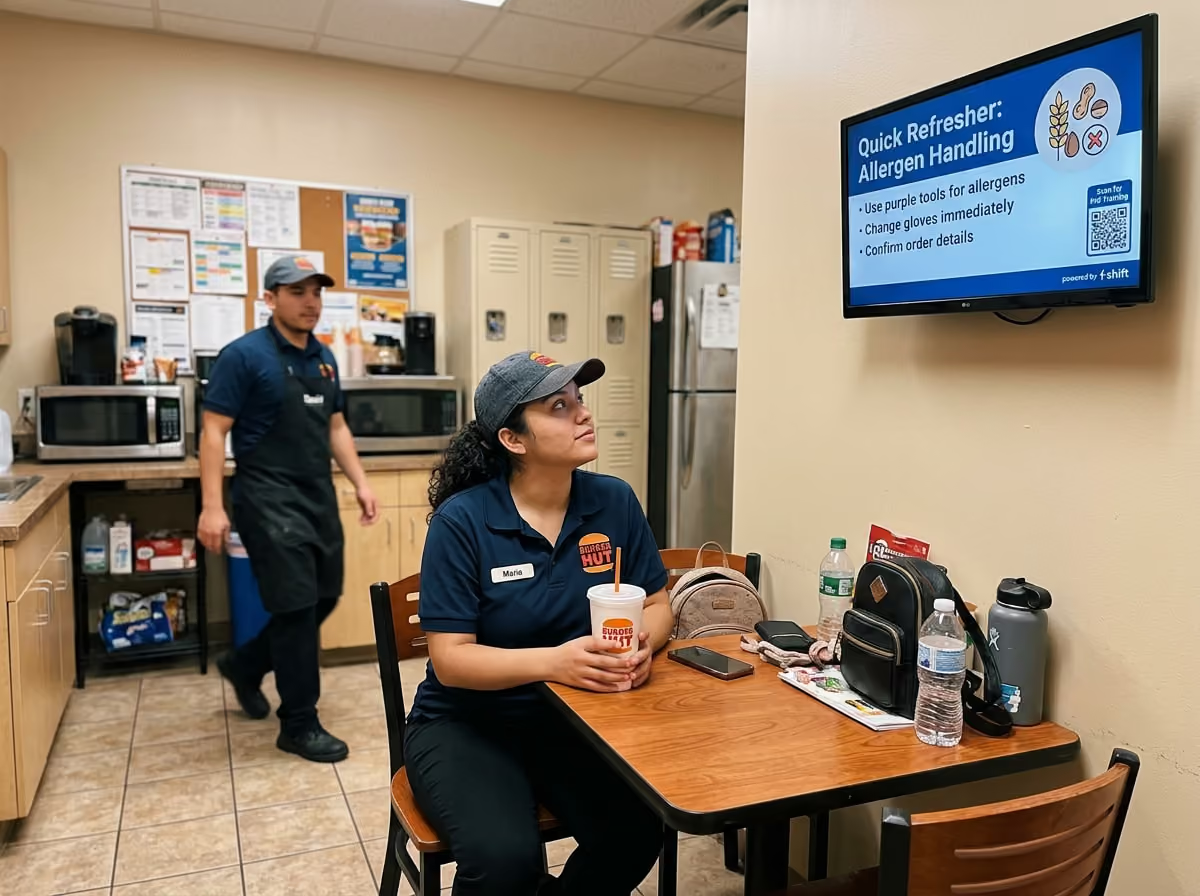
Internal marketing isn't a single campaign or a single channel. It's the ongoing effort to communicate company values, operational updates, promotions, safety protocols, and performance goals to employees in a way that's clear, consistent, and easy to act on. In a corporate office, this might happen through email newsletters or town halls. In a QSR environment, where most employees are on their feet, moving fast, and rarely sitting at a desk, those channels simply don't work.
That's where digital signage becomes a critical piece of the internal marketing puzzle. Break room screens, kitchen display boards, and back-of-house monitors can deliver real-time updates on new menu items, service standards, shift goals, and recognition programs — all without pulling employees away from their tasks or relying on printed memos that go unread and outdated within a week. When internal marketing is visible, current, and consistent, it reinforces the same brand identity employees are expected to represent to customers.
The restaurants that get this right treat their internal communication with the same rigor as their external marketing. They think about tone, timing, and relevance. They repeat key messages across multiple touchpoints. And they measure whether the message is actually sinking in — not just whether it was posted.
Giving Employees the Tools They Need to Improve Customer Satisfaction
Ask any QSR operator what drives customer satisfaction scores, and most will point to the same handful of factors: order accuracy, speed of service, food quality, and friendliness of staff. Every one of those outcomes is directly shaped by whether employees have the tools to do their job well.
"Tools" in this context covers more ground than most people assume. It includes the obvious things — functioning POS systems, kitchen display screens that clearly show order tickets, headsets that actually work in the drive-thru. But it also includes the informational and communication tools that keep employees aligned: clear standard operating procedures, visible service benchmarks, real-time updates when a menu item is out of stock or a promotion changes, and a straightforward way to escalate problems when something goes wrong.
When these tools are missing or unreliable, the effects show up immediately in the customer experience. An employee who doesn't know a promotion has changed will quote the wrong price. A cashier without a clear view of order status will give a customer inaccurate wait times. A crew member who's never been told how to handle a complaint will either freeze or improvise — and improvisation rarely aligns with brand standards.
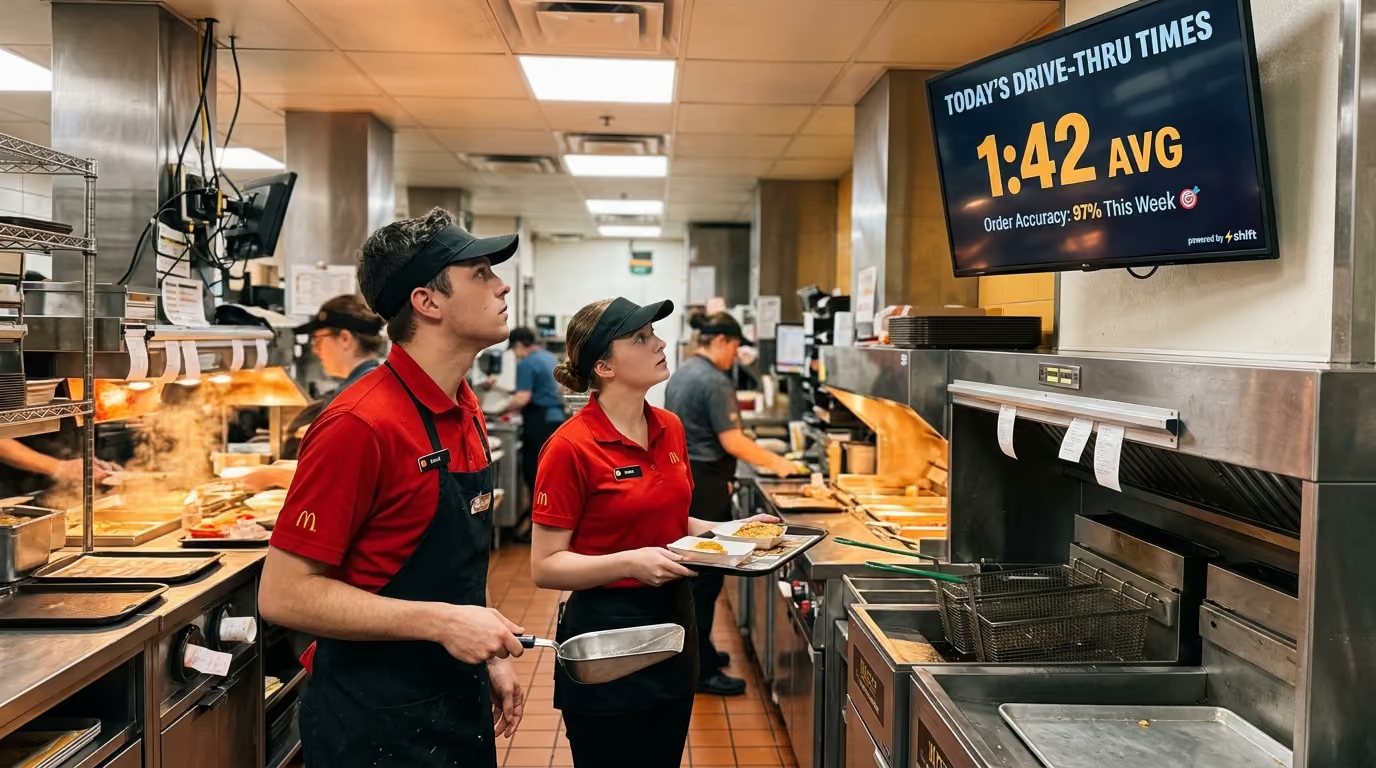
Digital signage plays a meaningful role here too, particularly in back-of-house and break room settings. A screen that displays real-time drive-thru times, current promotions, or daily service goals gives employees a constant, low-friction reference point. It removes the guesswork. Instead of relying on memory or a manager's verbal reminder at the start of a shift, employees have a visual, always-updated source of truth in real time. That reduces errors and gives staff the confidence to make faster, more accurate decisions.
Training: The Foundation for Accuracy and Experience
If tools are what enable good performance, training is what builds the skill and judgment to use those tools effectively. In QSR, training is often treated as a one-time onboarding event — a checklist to get through before someone is cleared to work a register or a fry station. But the operators seeing the strongest customer satisfaction and accuracy numbers treat training as continuous, not a single milestone.
The connection between training and order accuracy is direct and well documented across the industry. Employees who clearly understand menu items, modifiers, allergen protocols, and POS workflows make fewer mistakes. Fewer mistakes mean fewer remade orders, shorter wait times, less wasted food, and fewer refunds — all of which affect both the customer experience and the bottom line. Accuracy isn't just a customer satisfaction metric; it's an efficiency metric that touches nearly every part of restaurant operations.
Training also shapes the softer, harder-to-measure parts of the customer experience: how an employee greets a guest, how they handle a special request, how they respond when something goes wrong. These moments are where brand loyalty is won or lost, and they can't be improved with signage or tools alone — they require employees who understand not just the "how" of their job but the "why" behind service standards.
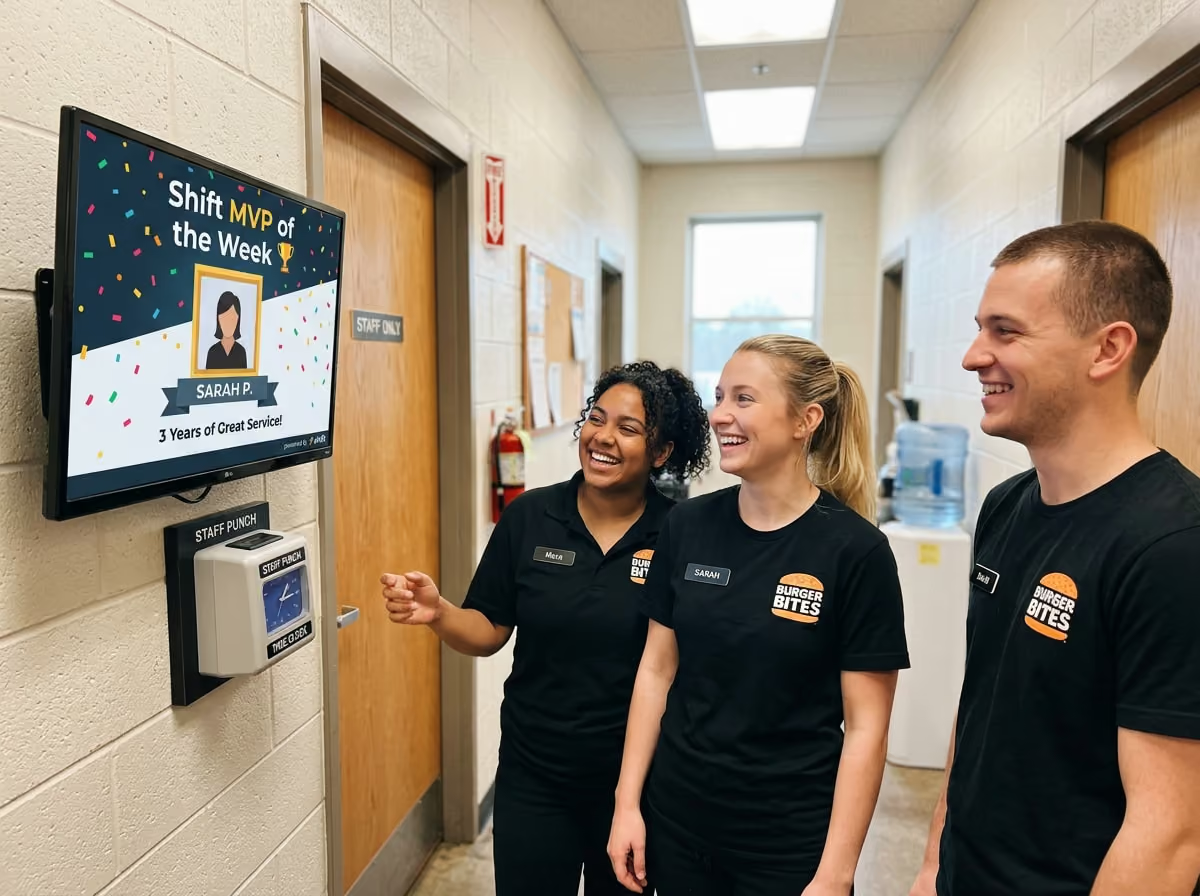
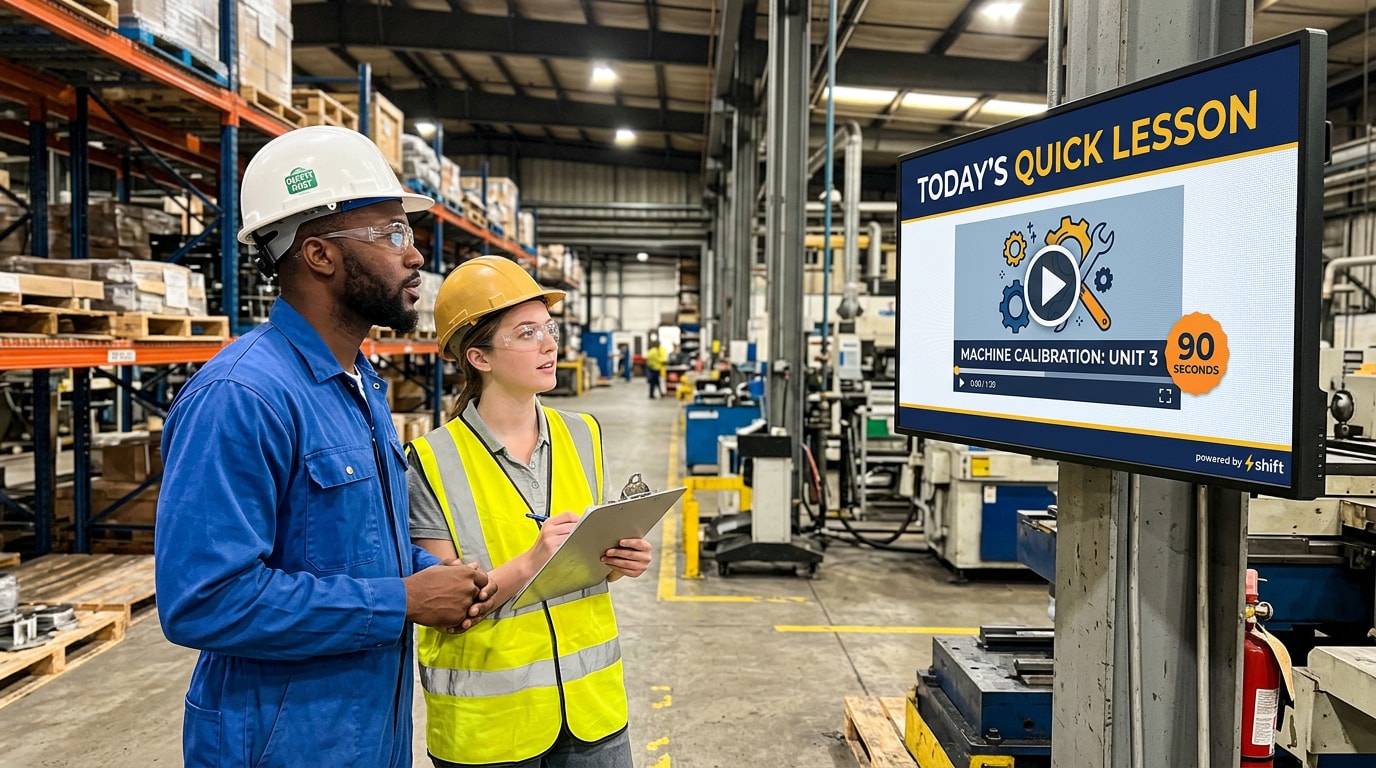
The challenge, of course, is that QSR has some of the highest turnover rates of any industry, which means training can't be a one-and-done process handled entirely by a shift manager during someone's first week. It has to be reinforced continuously, in small, digestible doses, in the flow of a normal shift. This is another area where digital signage adds real value. Screens in break rooms and back-of-house areas can rotate short training reminders, spotlight service tips, reinforce food safety protocols, or recognize employees who exemplify strong customer service. Instead of a single training session that fades from memory within weeks, employees get consistent reinforcement built into their environment.
This approach also supports faster onboarding. New hires absorb information differently when it's reinforced visually and repeatedly, rather than delivered once in a binder or a single orientation video. A new crew member who sees the same service standards reinforced on a screen every shift is more likely to internalize them than one who was told about those standards only once, on day one.
There's also a motivational dimension to this. Employees who feel equipped to do their job well are more engaged, and engagement is consistently linked to better customer interactions. Giving frontline staff the right tools isn't just an operational fix — it's a signal that the company is invested in their ability to succeed, which in turn shapes how they treat the customers in front of them.
Connecting Internal Marketing, Tools, and Training Into One Strategy
These three elements — internal marketing, employee-facing tools, and training — aren't separate initiatives. They work best as a connected system, and digital signage is one of the few channels flexible enough to support all three at once.
A well-designed internal signage strategy might rotate daily service goals and recognition shout-outs (internal marketing), display real-time order and wait-time data that helps staff self-correct in the moment (tools), and cycle through short training refreshers on food safety, upselling, or handling difficult customers (training) — all on the same set of screens, tailored to whether they're in the break room, the kitchen, or the back office.
The result is a workforce that isn't just told what the brand stands for, but is reminded of it, equipped to act on it, and trained to execute it consistently. That consistency is exactly what customers notice, whether they're ordering at a flagship location or a franchise a thousand miles away.
Measuring the Impact
None of this matters if it can't be tied back to results. Fortunately, the outcomes of strong internal marketing, better tooling, and consistent training show up in metrics QSR operators already track: order accuracy rates, average service times, customer satisfaction scores, mystery shopper results, and employee retention. Brands that invest in this side of the business tend to see improvement across all of them simultaneously.
It's also worth tracking other metrics: how quickly new hires reach full productivity, how often managers have to intervene on the floor, and how employees respond to internal surveys about clarity and confidence in their role. These are often early indicators that internal marketing and training investments are working before the customer-facing metrics catch up.
Content Ideas for Internal Marketing in QSR
There are lots of ways to keep your internal marketing fresh and relevant
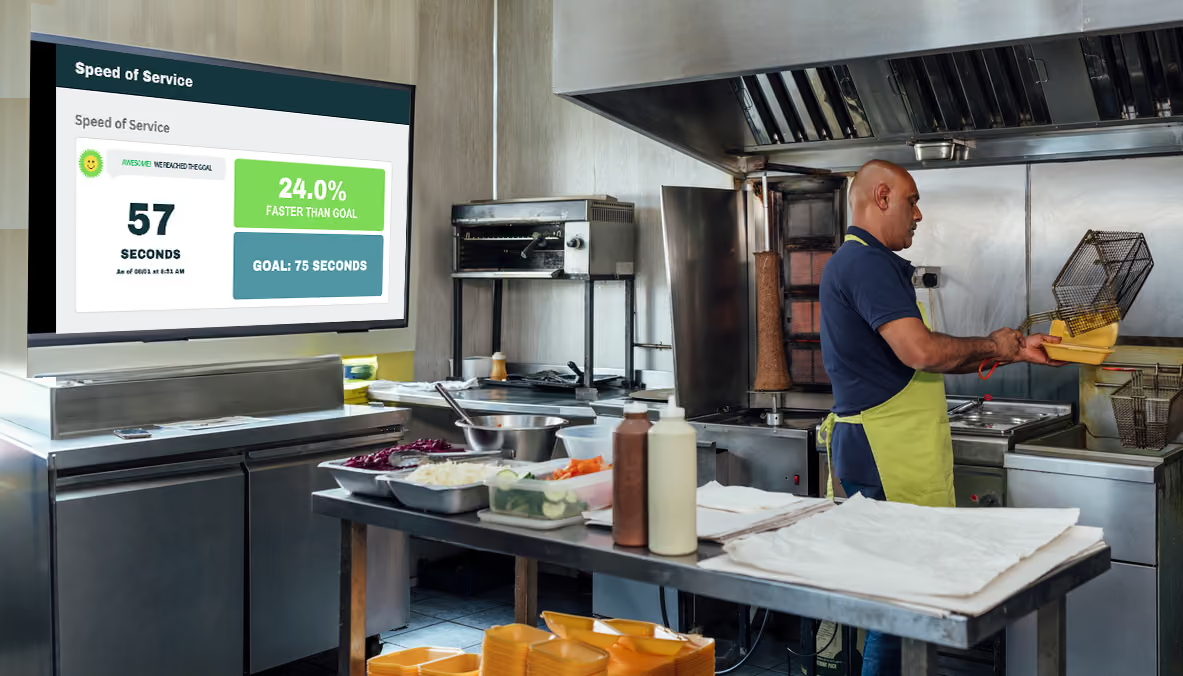
Adjusting your content week to week, or daily if necessary, ensures employees always have the most up to date information.
One of the biggest reasons internal marketing efforts stall isn't a lack of belief in the concept — it's running out of fresh content to share. Screens that show the same static message for weeks lose their effectiveness fast. Employees stop looking at them, and the channel loses credibility right when it's needed most. Building a simple content calendar, even a loose one, keeps the message rotating and relevant. A few content categories worth drawing from:
Recognition and culture
- Employee of the month or shift MVP shout-outs, with names and photos when possible
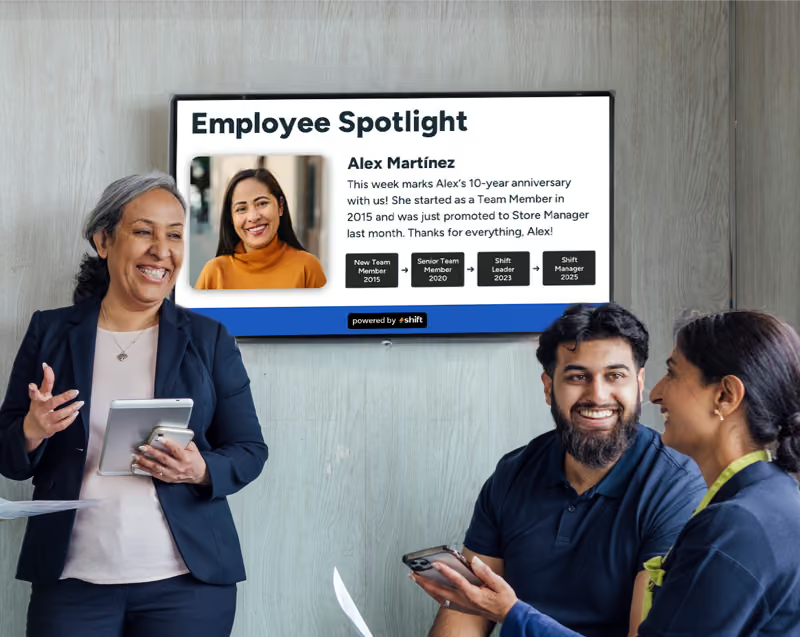
- Milestone celebrations — work anniversaries, promotions, certifications completed
- Team wins, like hitting a speed-of-service or accuracy benchmark for the week
Operational updates
- New menu items, limited-time offers, or discontinued items, with correct pricing and modifiers
- Changes to promotions, coupons, or loyalty program rules before they go live to customers
- Equipment or process changes, such as a new POS feature or kitchen workflow update
Training reinforcement
- Short refreshers on food safety, allergen handling, or proper portioning
- "How to handle it" scenarios for common service situations, like a complaint or a long wait
- Quick tips on upselling or suggestive selling tied to current promotions
Performance and goals
- Real-time or daily drive-thru times, order accuracy rates, or customer satisfaction scores
- Store-level or regional leaderboards to build friendly competition across shifts
- Progress toward a monthly goal, whether it's speed, accuracy, or a sales target
Company and community news
- Corporate announcements that affect day-to-day work, delivered before rumors fill the gap
- Local community involvement, charity events, or store openings
- Safety alerts or weather-related operational changes for the day
The common thread across all of these is relevance and timing. Content that's tied to what's actually happening in the store that week — not generic motivational messaging — is what earns employees' attention and keeps the internal marketing channel effective over time.
Use Shift to Build Your Internal Marketing Strategy for Your QSR
Shift is the digital signage platform that can easily handle all the internal marketing needs of a quick service restaurant. Upload content from any connected device with the easy to use Content Navigator, that offers all kinds of templates perfect for QSR content. No matter if you have signs in the breakroom, the back of house, or both, there are lots of ways you can ensure your employees have the tools and training to take the customer experience to the next level. Shift offers a 60-day free trial with access to everything, so you can really get a feel for how this will improve customer service, boost employee morale, and ensure everyone has the tools to do their job well.
With Shift, you can create:
- Employee recognition through spotlights, work anniversaries, achievements, and birthdays
- Access to training materials and quick QSR refreshers
- Assisting with onboarding (for both employees and locations)
- Wayfinding
- Internal company communications specifically for QSR restaurants
- Posting safety or emergency alerts
- Surveys for staff through QR codes
- Real-time leaderboards and inventory lists
- Showing current promotions and discounts
- Ways to promote cross-selling and upselling opportunities to customers
Give Your Employees the Tools to Improve the Customer Experience in Your QSR
For QSR operators looking to improve accuracy, elevate the customer experience, and build a more engaged frontline team, investing in how they communicate internally may be one of the highest-leverage moves available — right alongside everything they're already doing to win customers on the outside.