By Theresa Bontempo
The success of a hospitality business depends on the training of its employees. This process goes beyond merely instructing them on how to perform their duties, but also involves cultivating a culture of professionalism and customer service. Training initiatives can help organizations establish a robust and capable team of workers who can deliver exceptional customer service.
Let’s learn more about why properly training your employees in the hospitality industry is essential for the success of many businesses!
What are Proper Ways to Train Employees?
Knowing the best practices to train employees is crucial for company success!
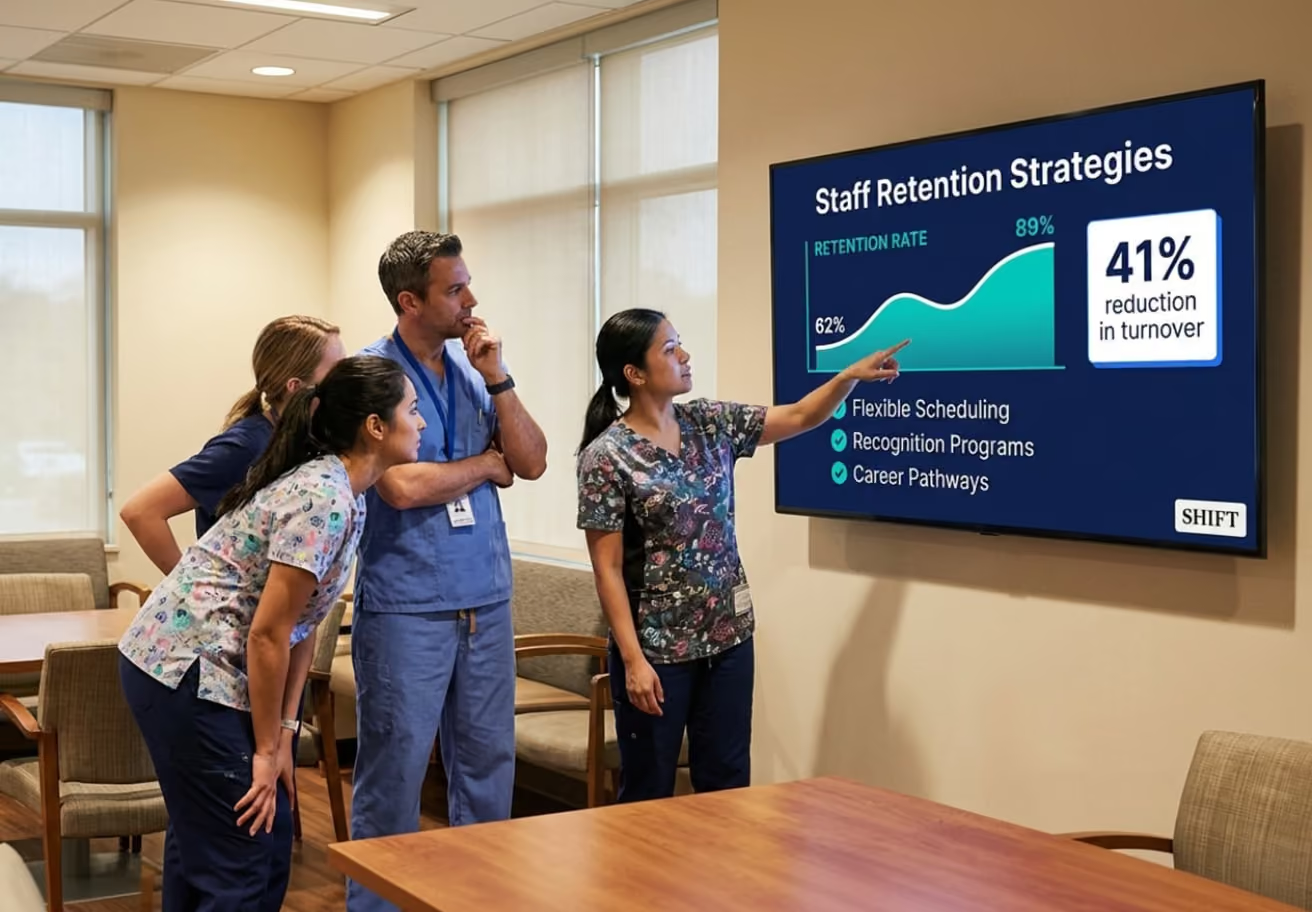
Having the right training can help boost a company's reputation and attract more customers, which can also help develop a culture of professionalism and provide a memorable experience for consumers.
Although technical skills are important, soft skills are also crucial in order to provide the best possible service to customers. Having the right communication skills helps employees understand the preferences and needs of their customers.
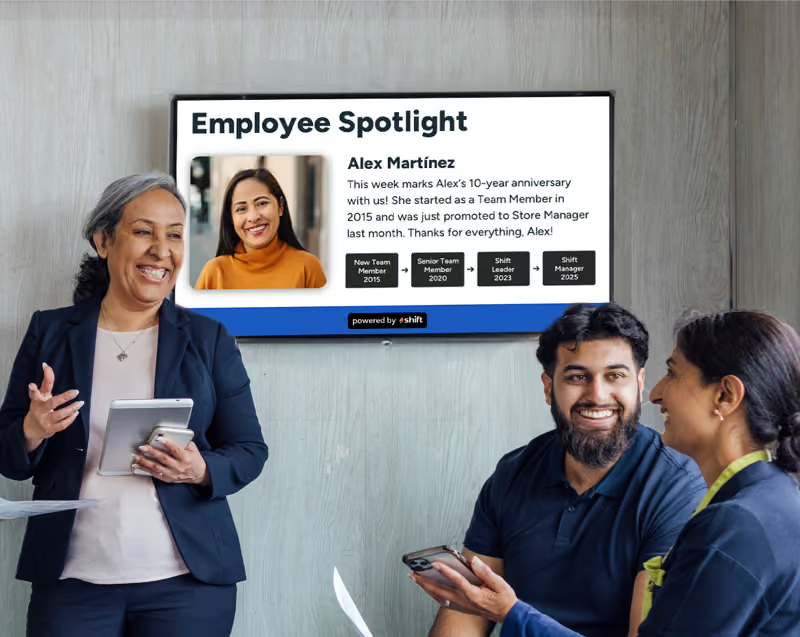
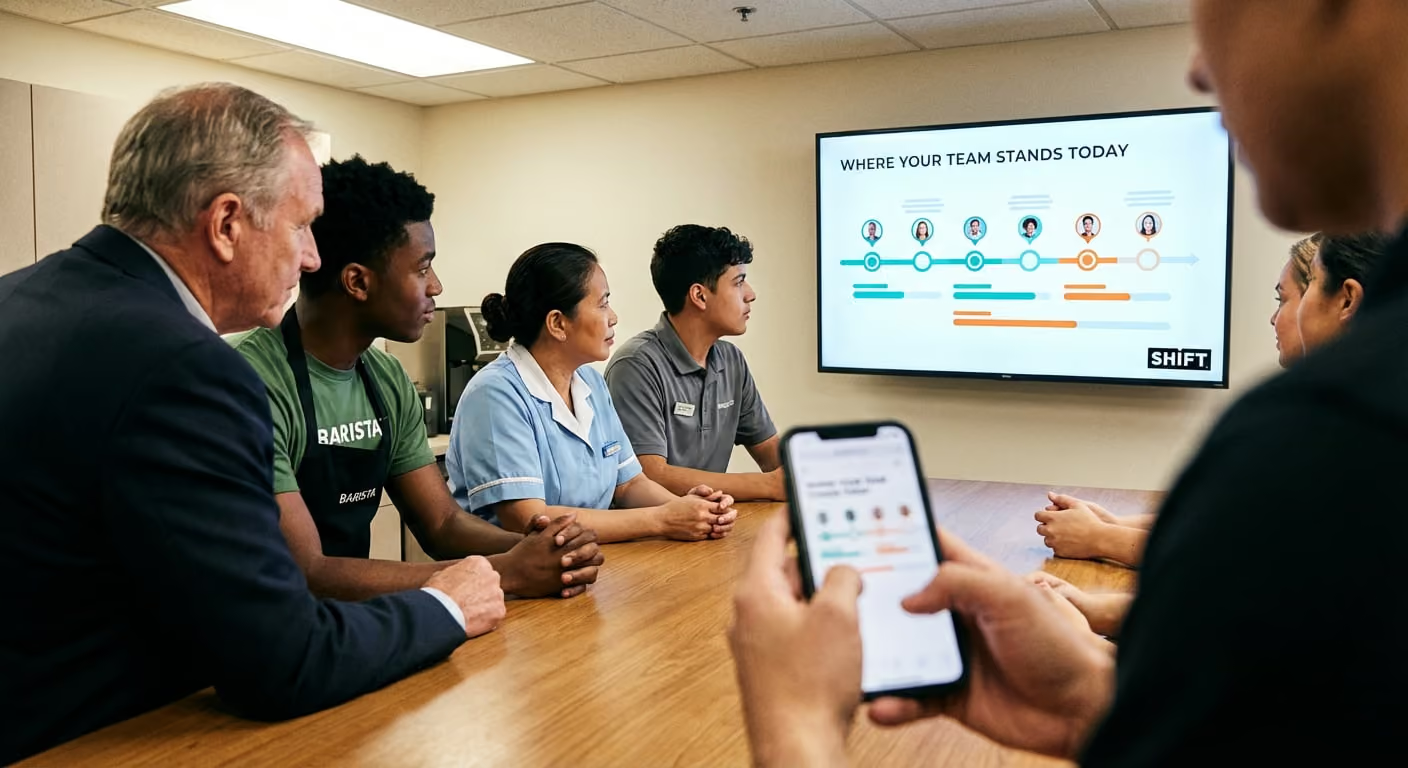
The right problem-solving skills also help employees quickly resolve issues and improve the customer experience. Teamwork is also important in order to create a memorable and cohesive experience for guests. With Shift, take your employee engagement efforts to the next level in combination with digital signage.
Hands-On Training is Key
Through simulations and hands-on training, employees can improve their ability to handle various situations. This can be done through the use of scenarios that are designed to help them develop their skills and confidence. This method not only enhances the employees' abilities but also instills a sense of confidence that will help them deliver exceptional services.
Various forms of passive training are becoming less effective at keeping employees engaged and improving their knowledge. Instead, interactive methods, such as role-playing and group exercises, can be used to improve the learning experience. These also encourage team work and problem-solving.
Through group exercises, employees can get together, share their ideas, and improve their teamwork skills. These activities can be conducted in real-life scenarios such as handling a complaint or managing a team.
Better Training Means Better Employee & Customer Experiences
One of the most important advantages of employee training is the development of their customer service skills. It provides participants with the necessary tools and strategies to assist with conflict resolution, communication, and other issues encountered by guests. This ensures that staff members are more capable of providing the best possible service.
The quality of a guest experience depends on the consistency of the training program. Having a consistent training program helps ensure that every staff member is knowledgeable about the company's standards and expectations, which results in a more reliable experience for customers.
The training process can empower employees by equipping them with the necessary skills and knowledge to perform their jobs efficiently. Highly engaged staff members are more likely to exhibit an exceptional level of performance, exceeding expectations and making guests feel valued and satisfied. This proactive approach results in memorable experiences that can boost customer satisfaction.
Key Ways to Keep Hospitality Staff in Tip-Top Shape For Development and Training
Training is important for the development of staff and for better customer service experience for guests!
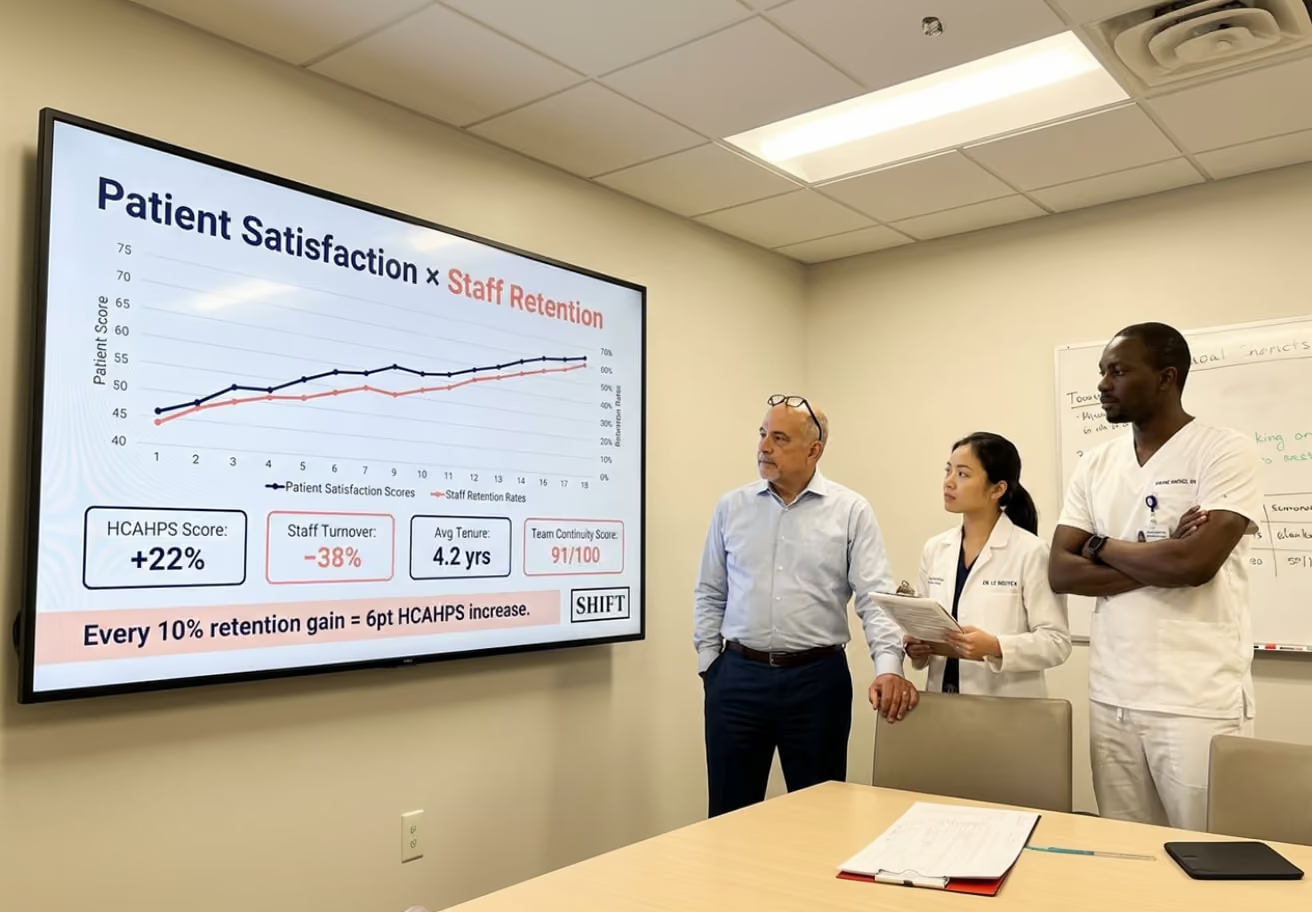
Something that is sometimes overlooked in the hospitality industry is ensuring that staff are properly trained in their specific position and for any scenario that they may be put in. Whether it is simply greeting a customer, taking an order, or even dealing with a complaint, it’s crucial for your staff to know the proper techniques and tricks to do the best job that they can do.
Here are some of the top ways to better train your hospitality staff or help them keep up with their skills no matter how long they’ve held their position!
- Cross Training
In the hospitality industry, cross-training is a practice that involves training your team members in order to be able to handle various positions within the organization. It can also be done at any time. This type of training allows employees to share their knowledge and experience with one another.
Due to the nature of the hospitality industry, training is very important for employees. It can help them improve their performance and provide them with the necessary skills to meet the expectations of their customers. By putting in the effort required to train your staff, you can boost their happiness and support them, leading to a more productive and enjoyable work environment. This results in fewer turnover rates and a stronger business operation.
Everyone in your organization should be trained in customer service. With cross-training programs, employees will be able to take on new roles in the company. One of the most effective ways to start this process is by establishing guidelines for training individuals in basic customer support.
Management shadowing is another great way to expand your team and provide your employees with more opportunities to grow their skills. This type of experience can be offered by each department to help promote in-house candidates.
Although you may believe that only the waiters and certain selling positions can earn you money by upselling, in any hospitality business, there are many employees who can also influence your customers. To help them become more effective at this skill, you should provide training to every member of your team.
- Refresher Training
Refresher training is a process that aims to reinforce and improve the knowledge of employees, both on the job and in formal education programs. It can help them become more competent and maintain the company's compliance with relevant regulations. It is very important that employees regularly review important concepts. This is why regular refresher training is often conducted. It aims to reinforce the fundamentals of a certain skill set so that participants can easily recall or expand their knowledge.
Not addressing gaps in knowledge can lead to costly mistakes, such as miscommunication or even a potential injury. It is therefore important that companies regularly deliver refresher training and re-train their employees on industry standards.
Participants often report that they are unable to retain key concepts after a training session has concluded. This is not surprising since employees tend to forget what they learned in training sessions.
You may have made assumptions about your team's knowledge when it comes to training refreshers. For instance, you might not realize that members of your team are not well-versed in cybersecurity. Having one class may lead to an additional one addressing gaps that emerged in the previous training. Offering multiple classes in different subjects can help employees improve their skills and knowledge. It can also help prevent undertraining, which can lead to issues that can affect your productivity and safety.
In the US, certain companies are required to provide employee refreshers. For instance, certain facilities that produce dangerous products are required by law to provide these types of training at least every three years. OSHA also requires that workers in most industries receive yearly safety training. This may cover respiratory protection, hazardous waste response, hearing protection, and emergency response. In addition, depending on your sector, the agency may require other requirements.
- Leadership Training
The goal of leadership training is to help employees develop the skills they need to lead their teams. It involves delivering various training programs that are designed to help them improve their management techniques and communication skills. This type of training can be beneficial for employees who have recently been promoted to supervisor positions. Although not every worker is ready for an executive role, proper leadership training can equip them with the necessary skills to lead their teams effectively.
Managers can motivate their subordinates by providing feedback, which can make them more engaged. Feedback can also help workers feel that their job is important. In return, employees will be more likely to show up for work and feel engaged. Throughout an organization, managers have varying soft skills, such as decision making and communication. This can lead to various inconsistencies within the company. By unifying management training across the organization, it can help standardize the style of leadership.
Leadership training must be honest, open, and a forum where managers can ask questions if they have any issues. Being empathetic can also make a manager better.
- Technology Training
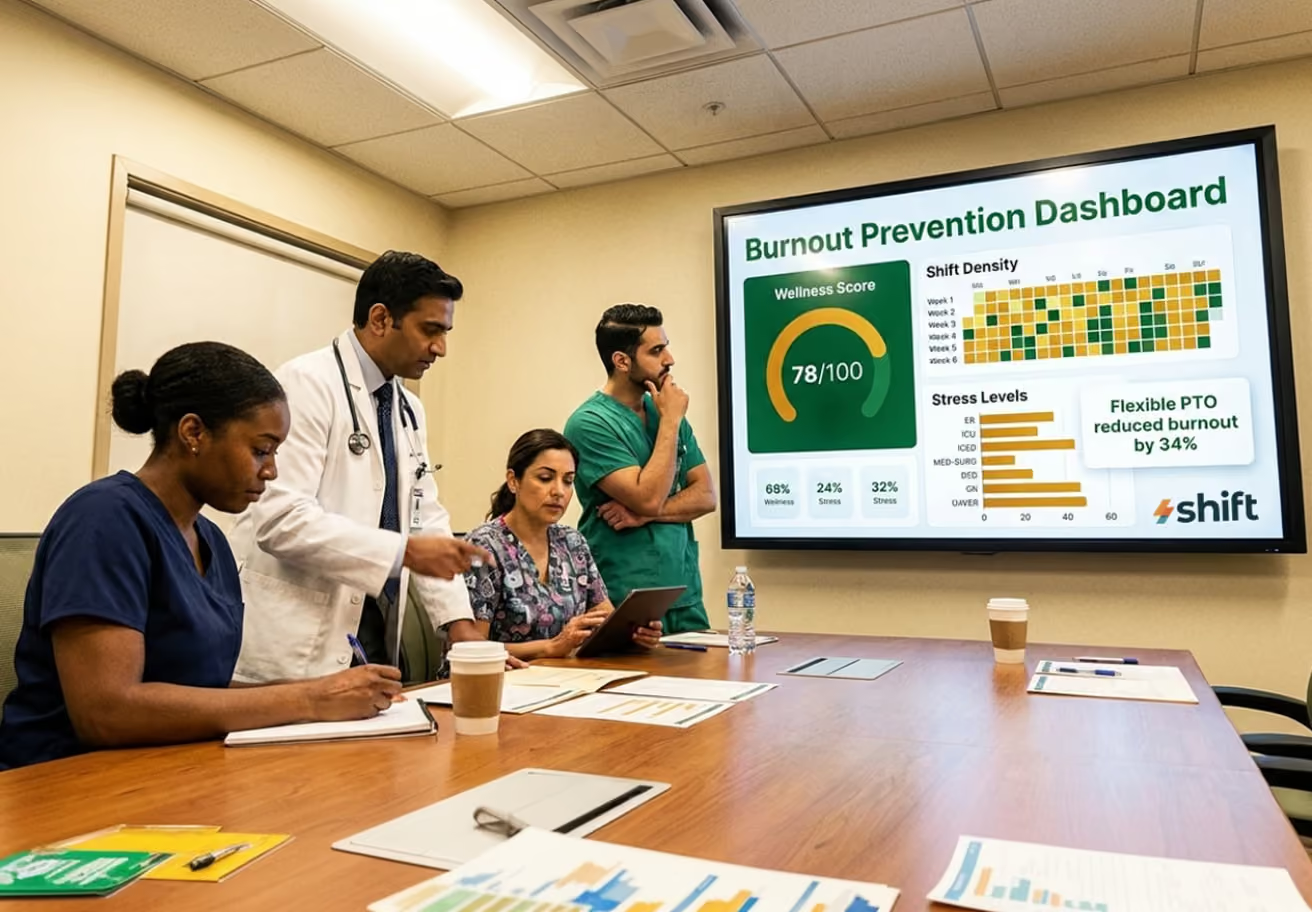
One of the most important advantages of microlearning is that it allows employees to learn quickly about new technologies. Instead of requiring them to spend several days learning how to use a system, they can focus on the features that they will be using immediately.
Various techniques can be used to achieve this, such as video training, which is becoming more prevalent online. For instance, you can provide a short demo of a tool before the actual installation to help people get an idea of how it works. You can also add video tutorials that will pop up once a new feature is activated.
One of the most effective methods for training people on new technology is through peer-to-peer learning. This type of learning involves bringing together various people from different departments. It ensures that the training is relevant to everyone. Being able to work and learn alongside people in a similar role makes it more fun than engaging in conversations with a high-ranking official. It also provides employees with a sense of appreciation and satisfaction.
Employee development is a continuous process that involves training and development. In a learning organization, it's not only about "when needed," but it's also about continuously improving the skills of employees. For instance, in order to keep up with the latest technological developments, an organization has to have a continuous development program.
After your employees have gotten used to the training methods, they can then be put through various training sessions. Through collaborative learning, an organization can help its employees improve their skills.
Traditional training methods involve the management determining the needs of the employees and providing them with training materials. This approach can lead to a misalignment of the actual learning requirements of the employees with the training content. In contrast, collaborative training allows employees to make their own training needs. This allows them to design and create effective training content that addresses their specific skills and knowledge gaps.
- Mentorship Programs
A company must have mentorship programs in place that provide employees with role models that can help them develop their careers. A strong workplace culture can be created by helping workers reach their objectives.
Besides being able to provide an inspirational setting, mentors also make employees feel valued and heard. They can help them navigate through difficult situations and provide insight into the solutions. In addition, the mentoring process can help keep the mentees focused on their goals.
Companies must allocate funds toward supporting learning and development. Likewise, employees must see the value in the lessons that they are receiving. Through mentorship programs, senior leaders can provide their mentees with valuable insight and guidance. Additionally, mentors can help junior employees develop their leadership abilities and provide them with new perspectives.
One of the most important factors that a company must consider when it comes to establishing a successful mentorship program is the pairing algorithm. With the help of software, administrators can easily determine the ideal match and provide the necessary resources to the participants. Besides being able to create a personalized mentor and mentee handbook, most mentoring software also comes with a variety of other features such as agendas and resource guides.
A crucial aspect that businesses consider when it comes to improving their customer experience is training their employees. This can help them develop the skills and knowledge they need to handle the various challenges that the hospitality industry has to offer. In addition to being able to onboard and develop new employees, training also helps improve the overall workforce's soft skills and technical abilities. In order to attract and retain the best talent, businesses must establish an environment that is conducive to their employees' success. This can be achieved through the use of effective recruiting and retention techniques, as well as regular development and training opportunities.
- Customer Service Training
The hospitality industry can be a challenging field to work in at times, and it’s not entirely because of the job itself, but also because of customers. Providing the best customer experience and learning how to properly address and handle complaints is crucial in this field, and sometimes special training is a key way to keep staff prepared for any circumstance.
It’s a fact that positive customer interactions can influence up to 70% of purchase decisions and even keep people coming back to your place of business. Training staff on communication skills, company principles, and even problem-solving skills can help to make the customer experience better, boost sales, and provide staff with a better understanding of how to handle any situation they could be in on a day-by-day basis.
- Scenario-Based Training
Something that many hospitality businesses lack in training their staff is what to do in different kinds of scenarios. For example, for someone new to customer service, it can be difficult to handle a complaint or go about the right way of doing so–and scenario-based training can be a great way for staff to understand what to do in certain situations.
Scenario-based training can be a way to simulate real-life situations that they would face on a day-by-day basis. While it’s impossible to come up with every situation that can occur in their field, scenario-based training gives staff a good idea on what to expect going about their job every shift.
From complaints, to taking special requests, managing peak rushes, and even resolving staff conflicts are a few common scenarios that staff in the hospitality industry can go through, and this specific training can help gauge staff for the proper tactics on how to take on any situation.
Use These Top Ways to Train Hospitality Staff to Take Your Business to the Next Level
Learning the key ways to keep your hospitality properly trained is not only crucial for them, but also a customer’s experience entering your business, and it can help to boost productivity and profit too. By implementing mentorship programs and different forms of training, it can help to keep your staff engaged, improve retention rates, and also give them a better sense of understanding of how important their position really is.
Consider adding these training methods to your hospitality business to properly train your employees with, plus implement Shift and digital signage in your business to help better engage them too!