
Business expansion is exciting, but every new store, restaurant, branch, or franchise location comes with the same operational headache: getting the physical space ready to open on time. Menus need to go up. Wayfinding signs need to be installed. Promotions need to launch on day one, not week three. This is where digital signage for faster location onboarding has become a game-changer for multi-location brands.
Instead of treating each new site as a from-scratch project, companies are using centralized digital signage networks to standardize, automate, and accelerate the entire onboarding process.
But how exactly are they doing this? In this article, we'll be discussing:
- What "onboarding a location" actually means
- Why traditional signage slows expansion down
- How digital signage helps brands open new locations faster (and more consistently)
What Does Onboarding Location Mean?
If you’re not already a multi-location businesses, you may not have heard of location onboarding before
Before examining why digital signage is the best way to improve location onboarding, it's worth answering a question many operations teams ask directly: what does onboarding location mean?
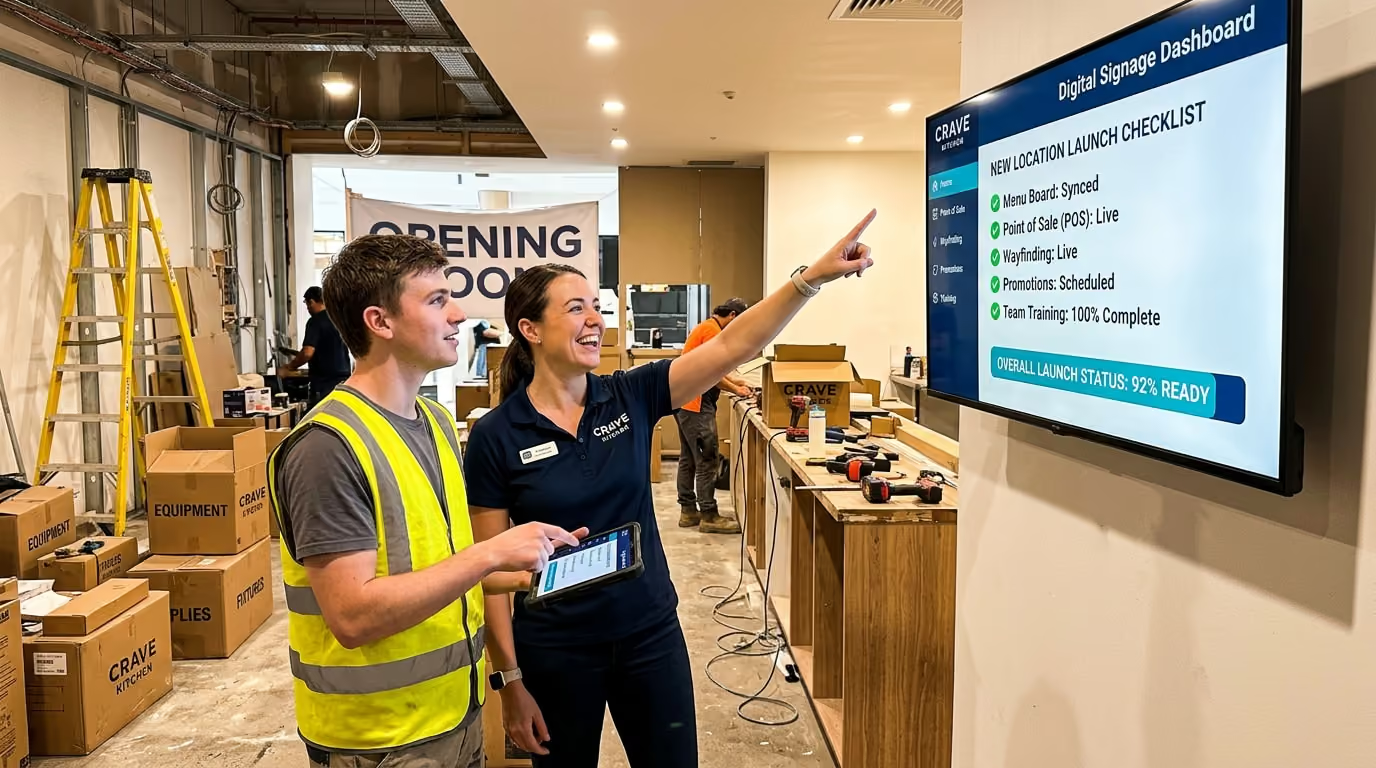
Location onboarding refers to the full set of steps required to take a new business site — a retail store, restaurant, bank branch, gym, clinic, or franchise unit — from an empty or under-construction space to a fully operational, brand-compliant, customer-ready location. It's the location-level equivalent of employee onboarding, but instead of preparing a person to do their job, you're preparing a physical space to represent your brand and serve customers.
Typical location onboarding tasks include:
- Setting up point-of-sale and payment systems
- Installing network and IT infrastructure
- Stocking inventory and setting up displays
- Training on-site staff
- Applying branding, signage, and wayfinding
- Loading menus, pricing, and promotional content
- Ensuring compliance with regional regulations and safety signage
- Linking digital signage systems
Because so many of these steps depend on physical materials — printed signs, menu boards, posters, and static displays — onboarding often becomes a bottleneck. A single wrong price on a printed menu board or a missing regulatory sign can delay a grand opening or create compliance risk. This is exactly where digital signage can help.
Why Traditional Signage Slows Down Expansion
For brands opening multiple locations per quarter — or even per year — traditional signage creates complications at nearly every stage:
Design and print lead times. Static signage has to be designed, proofed, printed, shipped, and installed. Any last-minute change (a new promotion, updated pricing, a menu revision) means starting the print cycle over.
Inconsistent branding across locations. When each location or franchisee sources signage independently, fonts, colors, and messaging drift from brand guidelines. This inconsistency undermines customer trust and dilutes brand identity during a critical growth phase.
Manual coordination overhead. Marketing, operations, and construction teams have to coordinate shipping schedules, installation crews, and content approvals separately for every new site. The more locations opening simultaneously, the more this manual process breaks down.
Costly errors and reprints. Pricing mistakes, outdated promotions, or regulatory sign errors discovered after printing mean wasted materials and delayed openings.
No centralized control post-launch. Even after a location opens, updating static signage for a new promotion or seasonal campaign requires repeating the entire print-and-ship cycle at every single site.
For a business trying to scale quickly, these delays add up — both in time and in cost. A brand planning to open ten locations in a year may find that signage alone accounts for weeks of cumulative delay across the portfolio once design revisions, printing backlogs, and shipping delays are factored in. Multiply that across dozens or hundreds of locations, and signage shifts from a minor logistical detail into a constraint on how fast the business can grow.
There's also a hidden cost in staff time. Operations managers often spend hours coordinating with print vendors, tracking shipments, and fielding calls about missing or damaged signage. That time could otherwise go toward higher-value onboarding work, like staff training or local marketing efforts that actually drive revenue at the new location.
How Digital Signage for Faster Location Onboarding Works
Why choosing to upgrade to digital signage for your onboarding needs is the way to go
Digital signage solves the problems caused by traditional signage by replacing print-dependent processes with a centralized, cloud-based content system that can be deployed to any number of screens, at any number of locations, simultaneously.
1. Centralized Content Templates
Instead of designing signage from scratch for every new location, brands build a library of approved templates — menu boards, promotional displays, wayfinding graphics, safety and compliance notices — in a content management system (CMS). When a new location is ready to onboard, teams simply select the right templates and populate them with location-specific details like address, hours, or local pricing.
This eliminates duplicate design work and guarantees every location launches with on-brand, approved content from day one.
2. Remote Deployment to New Screens
Modern digital signage platforms allow new displays to be shipped directly to a location, powered on, and automatically connected to the network. Content is pushed remotely from a central dashboard rather than manually loaded on-site. A regional or corporate team can configure and schedule content for a new location before the hardware even arrives, so the screens are showing correct, branded content the moment they're turned on.
3. Simultaneous Multi-Location Rollouts
Because content lives in the cloud, brands opening five, ten, or fifty locations in a single quarter can push identical (or localized) content to every site at once. There's no dependency on shipping speed or regional print vendors — a launch-day promotion can go live across every new location at the exact same time.
4. Built-In Brand Compliance
Digital signage platforms often include permission controls, so local managers can only edit approved fields (like a local phone number or store hours), while corporate maintains control over branding, layout, and core messaging. This keeps every new location visually consistent with existing sites, even when many locations are onboarding at once.
5. Faster Updates After Opening Day
Onboarding doesn't end at the ribbon-cutting. New locations often need quick adjustments in their first weeks — updated hours, corrected pricing, new promotions based on local demand. Digital signage allows these updates to be pushed instantly and remotely, without reprinting or reshipping anything.
6. Real-Time Monitoring and Troubleshooting
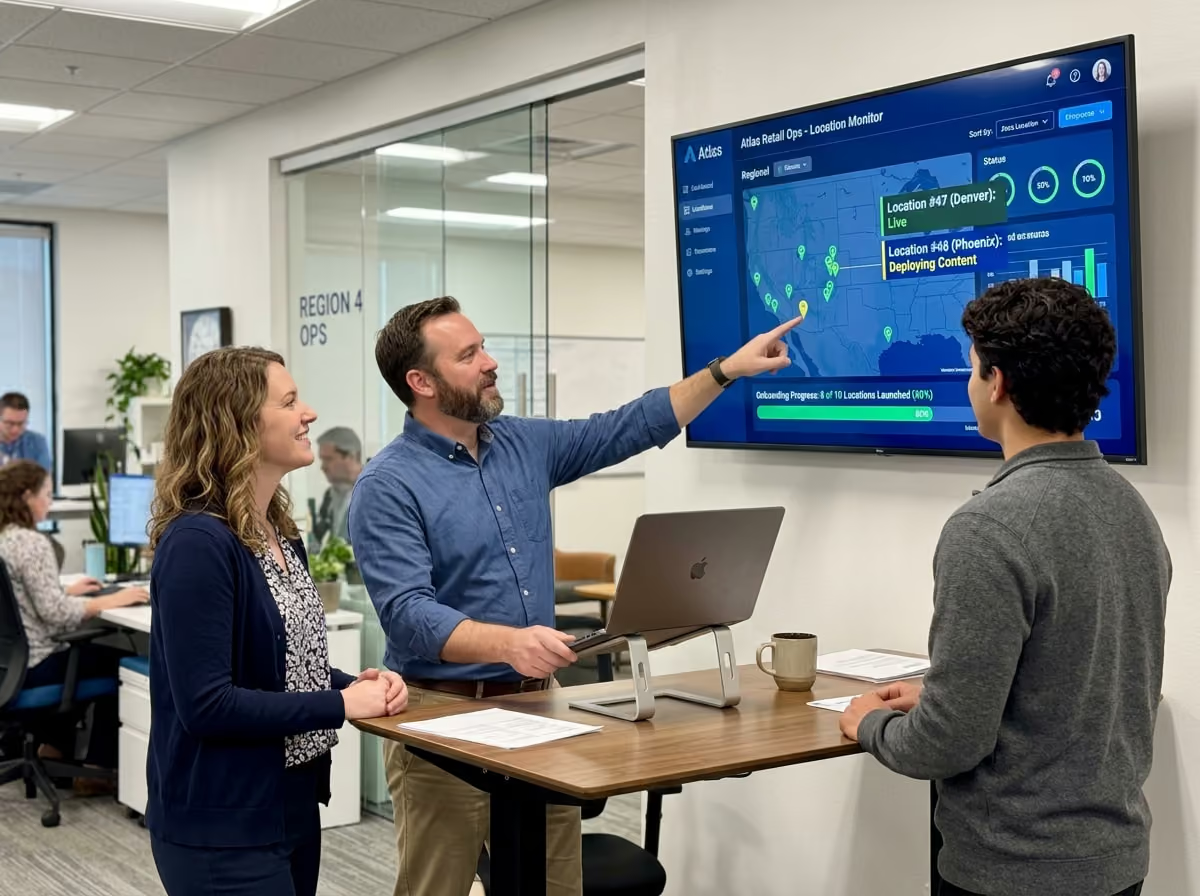
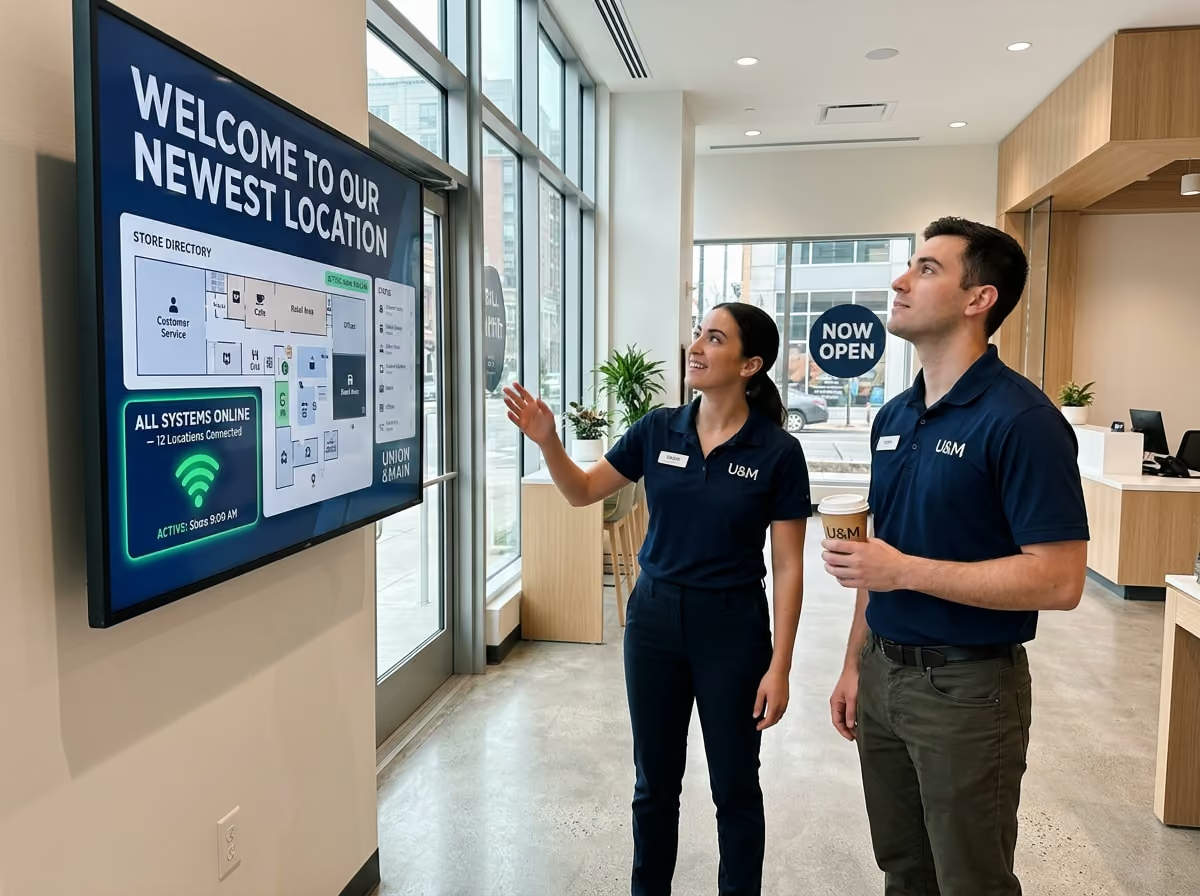
Centralized platforms typically include dashboards showing which screens are online, offline, or displaying errors. This means IT and operations teams can confirm that every new location's signage is functioning correctly before opening day, and quickly resolve issues remotely instead of dispatching a technician.
Key Benefits for Multi-Location Expansion
Speed to opening day. Because content and hardware setup can happen in parallel with construction and staffing, digital signage compresses the onboarding timeline significantly compared to print-based workflows.
Lower operational costs. Eliminating recurring print, shipping, and installation costs for signage updates reduces the total cost of opening and maintaining each new location.
Consistent brand experience. Customers see the same quality, messaging, and visual identity whether they're at a flagship location or a brand-new site that opened last week.
Scalability. Whether a business is opening one new location or fifty in a single rollout, the same centralized system handles it without adding proportional manual work.
Reduced risk. Compliance and safety signage can be verified and updated instantly across all locations, reducing the risk of outdated or incorrect information at a new site.
Local flexibility. Location managers can still adjust specific local details — like a regional promotion or local event signage — without needing corporate design resources for every request.
Practical Use Cases for Location Onboarding
- Retail chains launching new stores can have grand-opening promotions, directional signage, and product displays live on opening morning, synced across every new location in a launch wave.
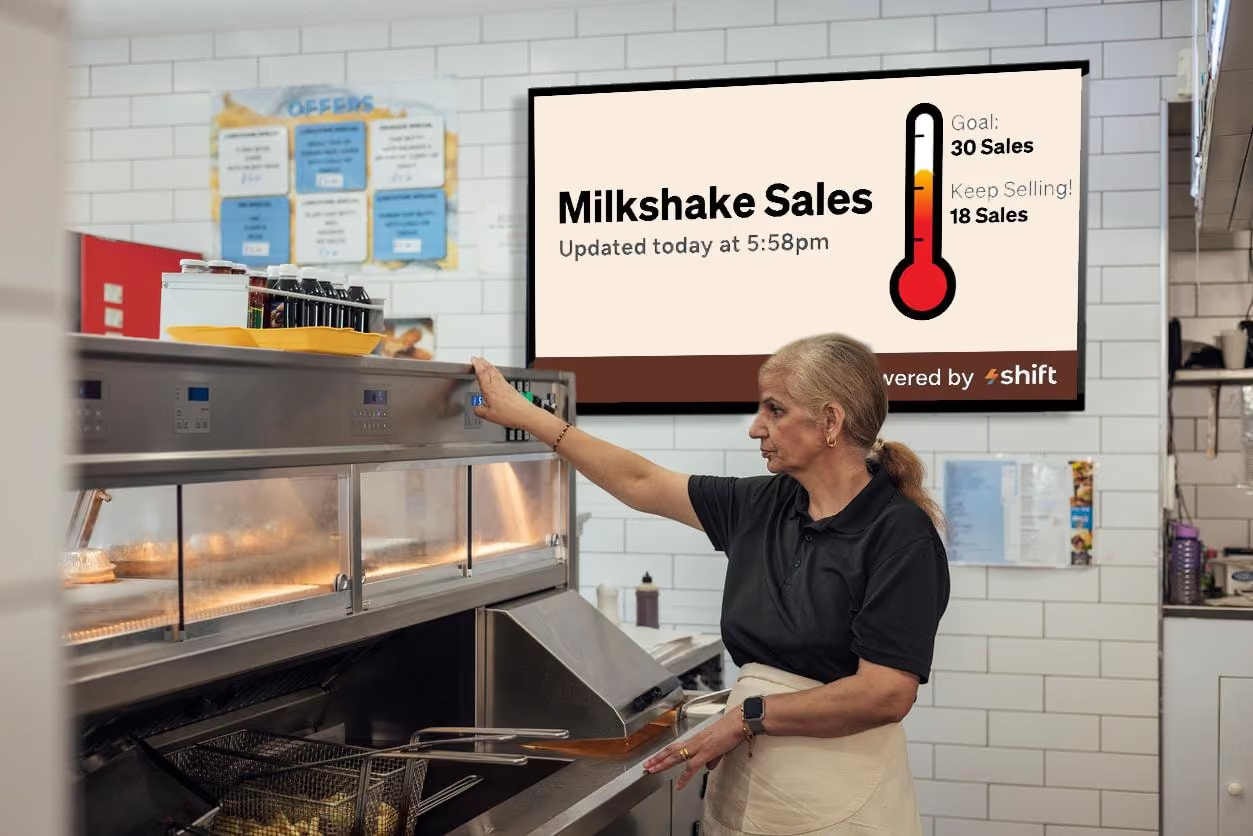
- Restaurant and QSR franchises can onboard new units with digital menu boards preloaded with current pricing and promotions, and update them instantly for regional pricing differences or limited-time offers.
- Banks and financial institutions can ensure every new branch displays current rates, compliance disclosures, and wayfinding signage without waiting on printed materials.
- Gyms and healthcare clinics can standardize class schedules, service menus, and safety notices across newly opened facilities from day one.
- Corporate and retail office spaces expanding into new markets can use digital signage for employee wayfinding, meeting room scheduling, and building safety notices, ensuring new offices feel fully operational from the moment employees walk in rather than weeks later.
Things to Keep in Mind When You’re Using Digital Signage for Location Onboarding
Businesses looking to speed up location onboarding with digital signage typically start with a few foundational steps:
- Audit current signage needs across a typical new location — menu boards, wayfinding, promotional displays, compliance signage.
- Build a template library in a content management system that reflects brand standards and can be customized per location.
- Standardize hardware selection so screens, media players, and mounting requirements are consistent and easy to replicate at scale.
- Define roles and permissions so corporate teams control branding while local managers can adjust approved local details.
- Create an onboarding checklist that integrates signage setup alongside other onboarding tasks like POS installation and staff training, so it's not an afterthought.
Digital Signage Location Onboarding FAQs
Does digital signage work for franchise locations, not just corporate-owned sites?
Yes. Many platforms are built specifically for franchise models, allowing corporate teams to maintain brand control over templates while giving franchisees limited permissions to adjust local details like hours, pricing, or local promotions.
What happens if internet connectivity is unreliable at a new location?
Most digital signage players can store and display content locally, syncing with the cloud when connectivity is available, so a temporary outage doesn't take screens offline.
Can digital signage integrate with other onboarding systems?
Many platforms support integrations with POS systems, inventory management, and marketing calendars, allowing pricing or promotional content to update automatically rather than requiring manual entry at each location.
Is digital signage more expensive than print for a single location?
The upfront hardware cost per screen is generally higher than a one-time printed sign. However, the cost advantage of digital signage grows with scale and with the frequency of content updates, since ongoing print, shipping, and reinstallation costs are eliminated.
Use Shift’s Digital Signage Solution for Faster Location Onboarding
If you’re looking for a digital signage platform that is designed to help you streamline your location onboarding procedure, look no further than Shift. Shift makes it easy to create content with the Content Navigator or use helpful templates that can be branded and used at all your business’ locations. It’s simple to set up, requires no IT department, and can be scaled across locations as you grow. Not to mention you get a 60 day trial to see if it’s right for you! There are lots of ways to take advantage of digital signage at your company, including:
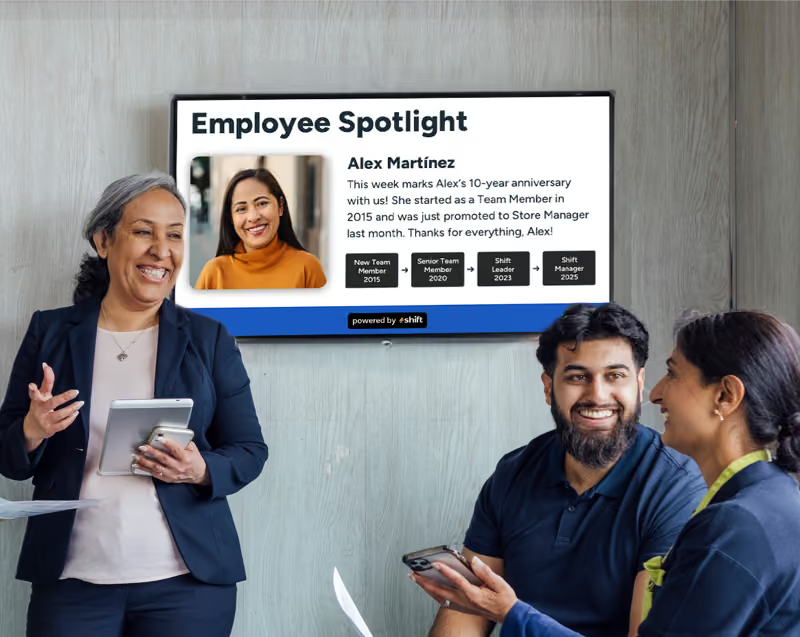
- Employee recognition through spotlights, work anniversaries, achievements, and birthdays
- Access to training materials
- Assisting with onboarding (for both employees and locations)
- Wayfinding
- Internal company communications
- Posting safety or emergency alerts
- Surveys for staff through QR codes
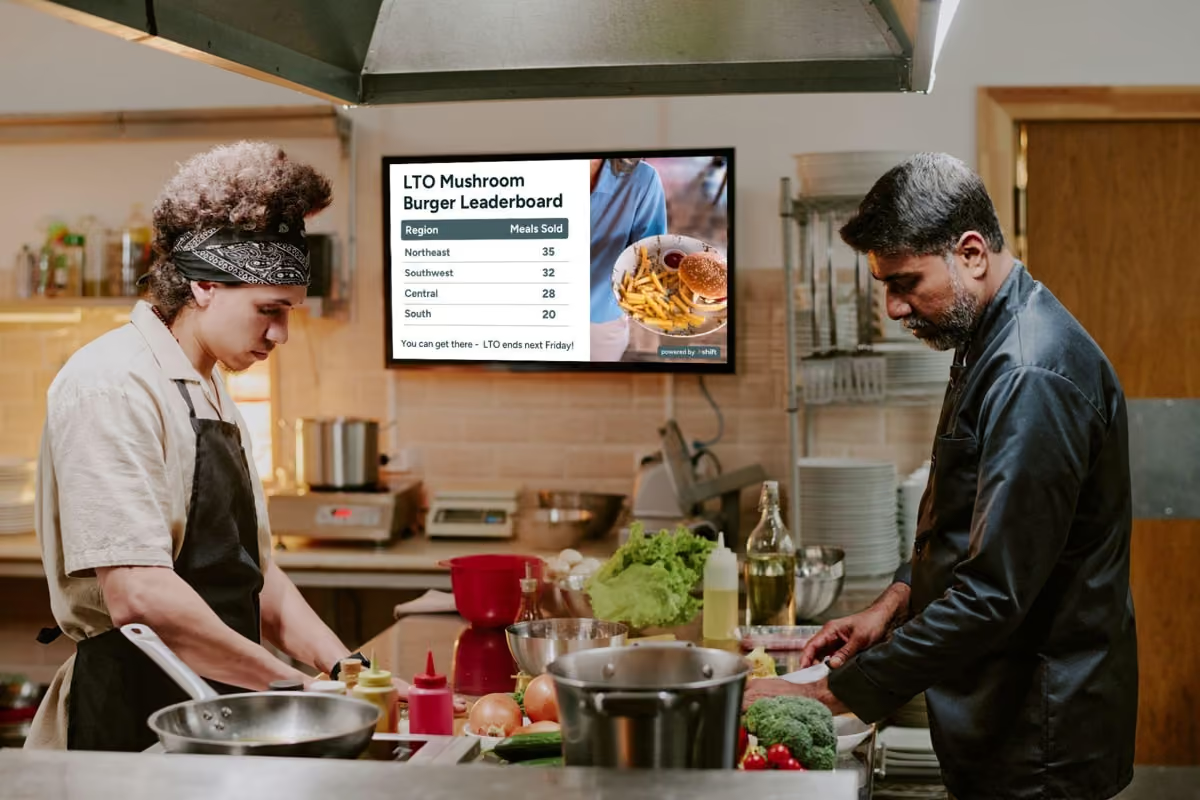
- Real-time leaderboards
Use the power of Shift’s digital signage to boost productivity, organize the workflows of multiple locations, and improve employee retention.
Don’t Get Left Behind, Take Advantage of Digital Signage with Shift!
Expanding a business to new locations is inherently complex, but signage shouldn't be the reason a location takes longer to open. By adopting digital signage for faster location onboarding, brands replace slow, error-prone print cycles with a centralized, remotely managed system that gets new locations customer-ready faster, keeps branding consistent across every site, and makes post-launch updates instant rather than another logistics project. For companies scaling quickly, that speed and consistency can make all the difference in the world.