Manufacturing has always run on communication. Long before anyone used the phrase "internal marketing," plant managers were posting production numbers on whiteboards, safety officers were pinning up incident reports, and HR was taping flyers to breakroom doors. The instinct was right — frontline workers need information fast, in the flow of their day, without having to go looking for it. Thankfully digital signage has replaced the whiteboard and the flyer, and in doing so, it has turned a basic communication habit into an effective internal marketing channel.
Internal marketing is the practice of selling your own culture, goals, and wins to your staff — the same way you'd market a product to a customer. In manufacturing, that means promoting safety behavior, celebrating production milestones, reinforcing company values, and making shift workers feel like they're part of something bigger than a single task on a line. Digital signage has become one of the most effective ways to do this, precisely because it meets largely deskless employees like manufacturing staff exactly where they are: on the floor or in the breakroom.
With this guide, we’re going to discuss in more detail:
- Why digital signage works so well in the manufacturing industry for internal marketing
- How to apply digital signage effectively
- The digital signage platform that can transform your internal marketing strategy
- What to avoid when it comes to internal marketing
Fixing Communication in the Manufacturing Industry
There’s a better way to ensure staff in this industry are always informed and engaged
Most internal communication tools were built with office workers in mind. Email, intranets, Slack channels, and company newsletters assume a few things: that the reader has a laptop or smartphone in hand, has a few free minutes to read, and checks a company inbox regularly. None of those assumptions hold up on a manufacturing floor.
Plant and warehouse employees are often described as "deskless" or "frontline" workers, and manufacturing is one of the largest deskless workforces in the country. These employees are on their feet, wearing PPE, running machinery, or moving products around to complete orders. They may not have a company email address, and even if they do, checking it during a shift isn't realistic or safe. Traditional internal communication channels simply don't work for these employees.
This is exactly what digital signage aims to fix. Screens placed in breakrooms, near time clocks, at line entrances, and in common walkways deliver information passively — no login, no app, no interruption to the task at hand. The message comes to the worker instead of asking the worker to go find it. But why does it work so well in manufacturing?
Why Digital Signage Makes Sense in the Manufacturing Industry
There are a handful of specific reasons digital signage performs so well in manufacturing settings, and they all trace back to how the environment itself is structured.
1. It Meets Deskless Workers Where They Already Are
Every manufacturing facility has natural gathering points — breakrooms, locker areas, time clocks, cafeterias, hallways between departments. These are places employees pass through multiple times a day regardless of their role or shift. A screen placed in one of these locations doesn't require any behavior change from the employee. They don't have to open an app or check an inbox; the message is simply part of the environment they're already moving through.
2. It Solves the Shift-Work Communication Gap
Manufacturing rarely runs on a single 9-to-5 schedule. Plants often operate first, second, and third shifts, sometimes with weekend crews on top of that. A message shared verbally in a morning huddle never reaches the night shift. A printed flyer posted on Monday may be outdated — or missing — by Thursday. Digital signage solves this by displaying the same message continuously across every shift, ensuring that a safety alert, a production update, or a leadership message reaches the third-shift crew with the same consistency as the first.
3. It Cuts Through Noise and Distraction
Factory floors are loud, fast-paced, and visually busy. A printed sign competes with machinery, safety markings, and equipment for attention, and it's easy to become invisible after the first week on the wall. Screens, on the other hand, use motion, color, and rotating content to naturally draw the eye. Even a glance at a screen while walking to the breakroom is often enough to absorb a headline message — something static paper struggles to achieve in a visually cluttered environment.
4. It Delivers Real-Time, Relevant Information
Manufacturing operates on tight timelines where information can go stale within hours. A safety incident, an equipment issue, a schedule change, or a production target update all lose value if they aren't communicated immediately. Digital signage content can be updated centrally and pushed to every screen in the facility in minutes, which means the floor is working from the same current information as the front office — not last week's printout.
5. It Reinforces Culture Through Repetition and Visibility
Internal marketing, like external marketing, depends on repetition to build recognition and buy-in. A single all-hands meeting about a new safety initiative or company value won't stick on its own. But when that same message appears on screens throughout the plant — reinforced with visuals, statistics, and employee recognition — it becomes part of the everyday visual landscape. Over time, this repeated visibility does the quiet work of shaping culture that a one-time announcement never could.
6. It Standardizes Messaging Across Multiple Facilities
Many manufacturers operate more than one plant, often across different states or even countries. Keeping messaging consistent across locations is a real challenge when each site relies on its own bulletin board or local manager to relay information. A centrally managed signage network allows corporate communications, HR, and safety teams to push the same message to every facility simultaneously, ensuring that a policy update or leadership announcement looks and reads the same whether an employee is in Ohio or Texas.
7. It's Built for a Visual-First, Low-Literacy-Barrier Workforce
Manufacturing workforces are often diverse in language and literacy level. A screen can lean on icons, images, color coding, and short bursts of text to communicate quickly, reducing reliance on dense written paragraphs. This makes signage a more inclusive communication tool than email newsletters or printed memos, which assume a level of reading comfort and language fluency that doesn't reflect every plant floor.
Practical Applications of Digital Signage on the Manufacturing Plant Floor
There are lots of ways you can use digital signage to engage staff!
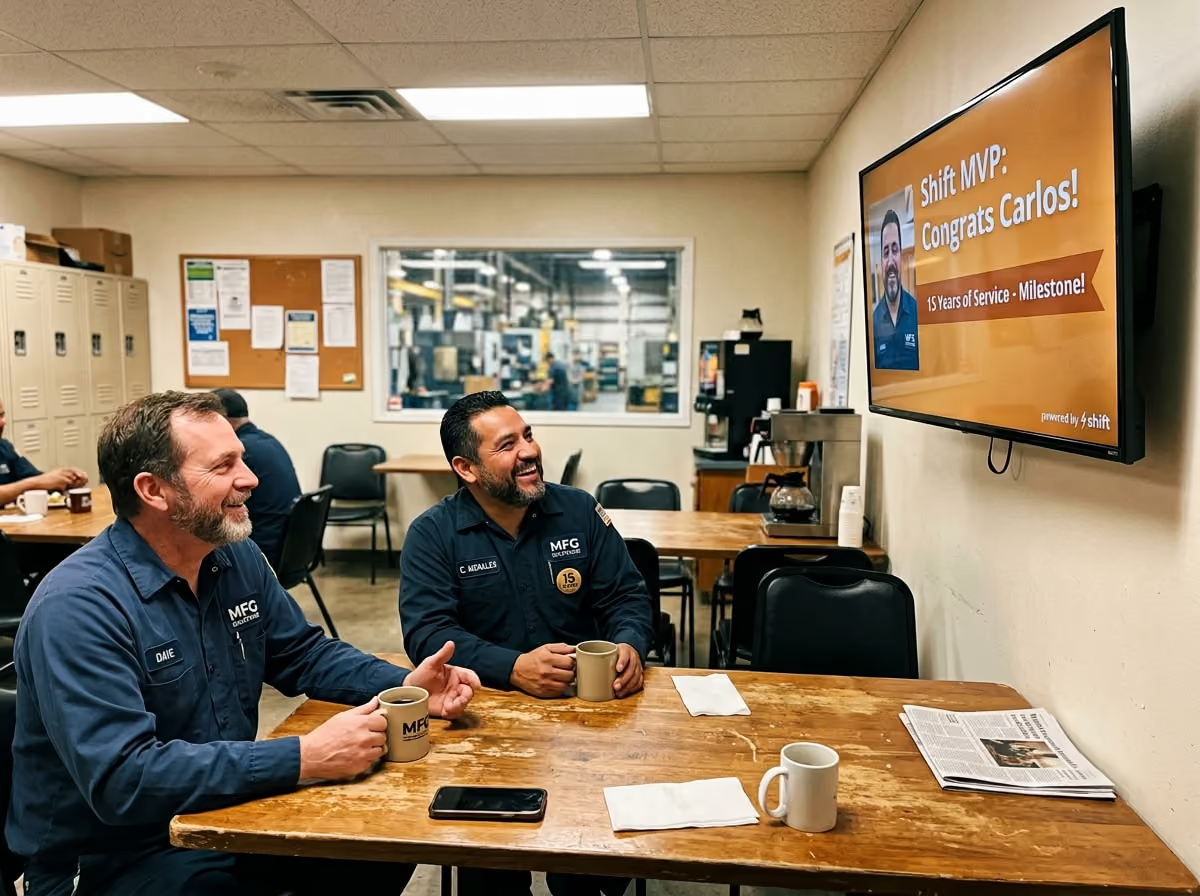
Understanding why digital signage works is only half the picture — what matters just as much is how manufacturers are actually using it.
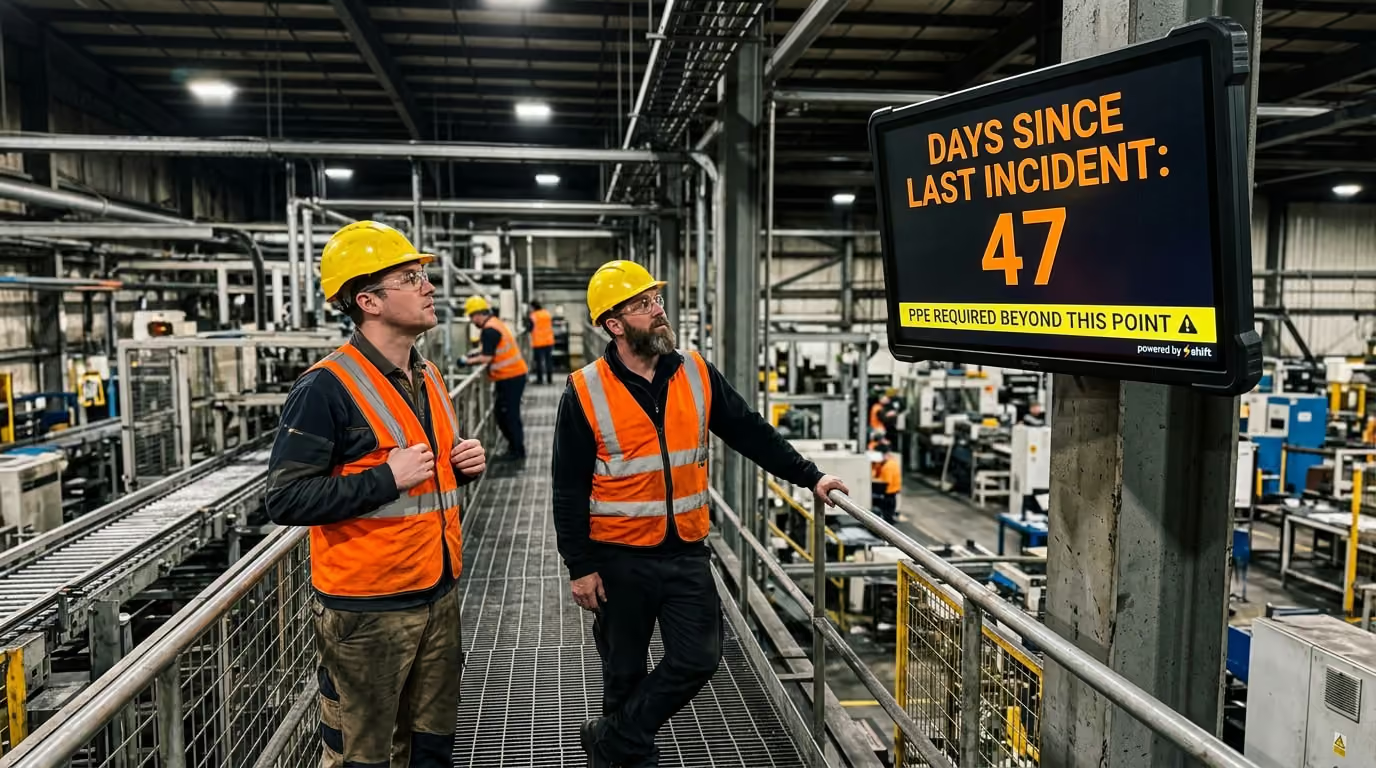
Safety communication. Safety is arguably the most natural fit for signage in manufacturing. Screens can display real-time days-since-last-incident counters, PPE reminders near entry points, weather or emergency alerts, and rotating safety tips. Because safety messaging benefits from constant reinforcement rather than one-time training, signage is far more effective than a poster that fades into the background after the first few days.
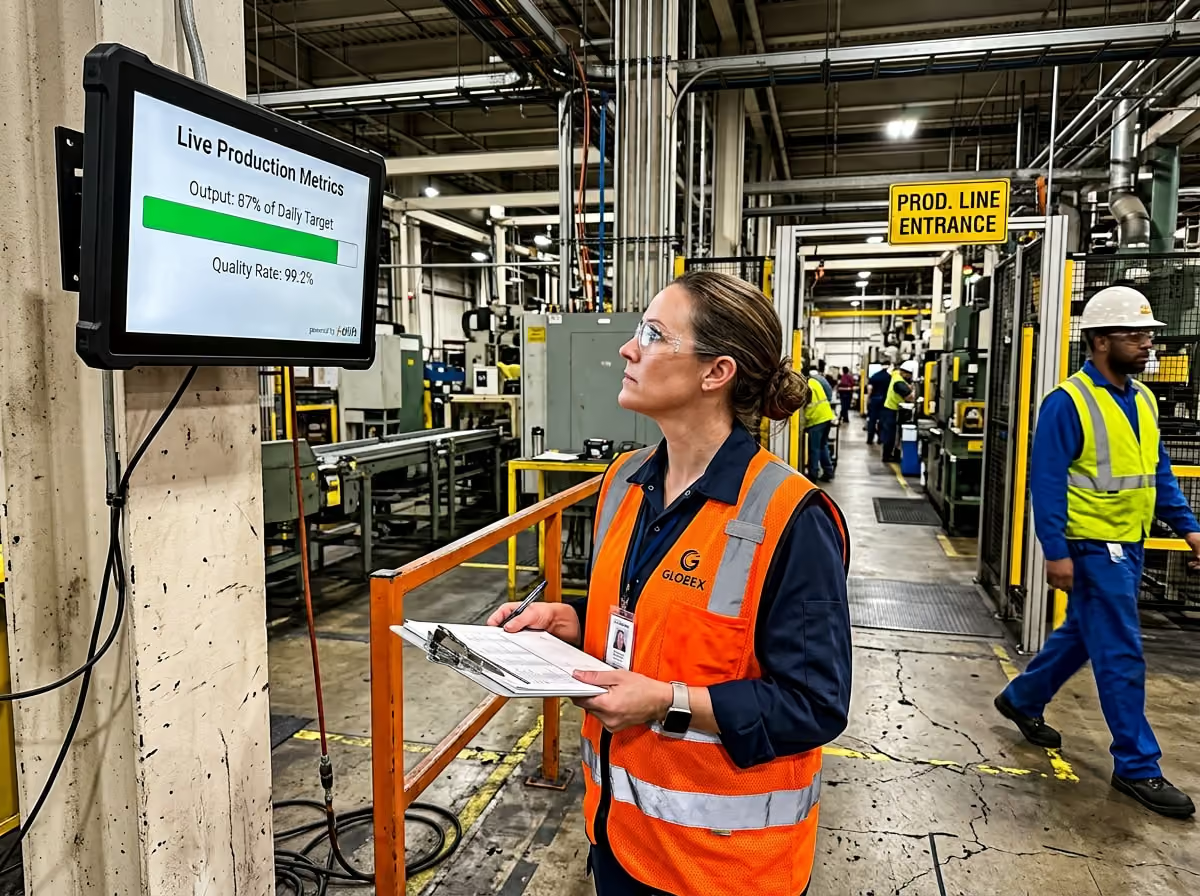
Production and performance dashboards. Many plants now use screens on the floor to display live production metrics, output against targets, and quality statistics. This isn't just an operational tool — it's an internal marketing one. When workers can see their team's numbers updating in real time, it builds a sense of ownership and healthy competition between shifts or lines.
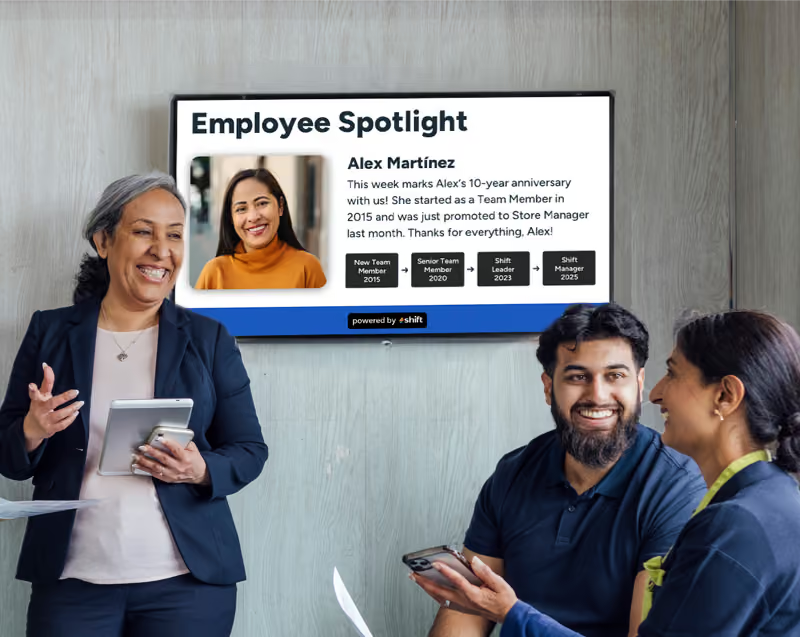
Recognition and employee spotlights. Manufacturing work can be repetitive, and it's easy for individual contributions to go unnoticed on a large floor. Signage gives HR and plant leadership a simple way to recognize employee milestones, anniversaries, and shift MVPs. Seeing a coworker's name and photo on the breakroom screen carries more weight than the same announcement buried in an email chain.
Company news and leadership updates. When leadership shares a message — a new client win, a facility expansion, a strategic shift — the goal is for that message to reach everyone, not just the office staff who happened to be copied on the email. Digital signage extends leadership communication to the entire workforce, eliminating the bottleneck between corporate messaging and the floor.
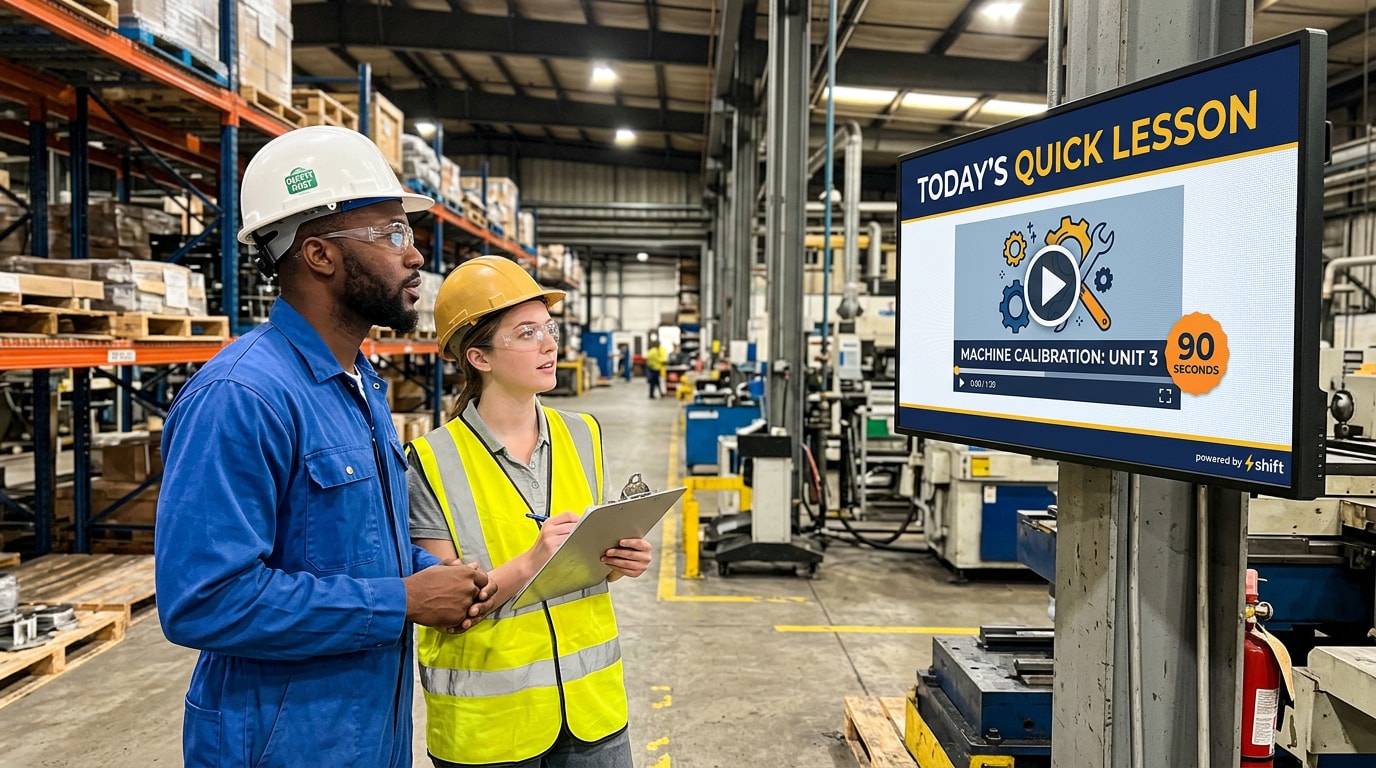
Training reinforcement and onboarding support. While signage isn't a replacement for formal training, it's an effective way to reinforce key training points — proper lifting technique, machine lockout procedures, quality checkpoints — through short, recurring content that keeps information top of mind long after initial training ends.
Wellness and benefits awareness. Many manufacturing employees are unaware of the full scope of benefits available to them, from healthcare enrollment windows to employee assistance programs. Signage placed in breakrooms is a low-effort way to keep these programs visible throughout the year, rather than only during a single open-enrollment email blast.
What to Avoid When You Roll Out Digital Signage
Even in an environment as well-suited to signage as manufacturing, poor execution can give underwhelming results. It’s a good idea to be aware of a few mistakes that show up repeatedly.
- Treating signage as a one-way bulletin board. The plants that get the most value from digital signage don't just push announcements outward — they build a feedback loop. Give employees a way to submit safety concerns, shout-outs for coworkers, or suggestions.
- Letting content go stale. A screen displaying the same slide for weeks defeats the purpose of going digital in the first place. Employees notice quickly when content stops changing.
- Overloading a single screen with too much information. Because plant floors are already visually busy, screens need to work in short, digestible bursts rather than dense paragraphs.
- Ignoring shift and language differences. A rotation built entirely around first-shift priorities, or written only in English, will underserve a meaningful part of the workforce.
- Placing screens where no one actually looks. Location matters as much as content. A screen tucked in a rarely used hallway won't get the traffic that one positioned at a time clock, breakroom entrance, or main walkway will.
Use Shift to Really Engage Your Manufacturing Staff
Easily create content your employees will actually look at!
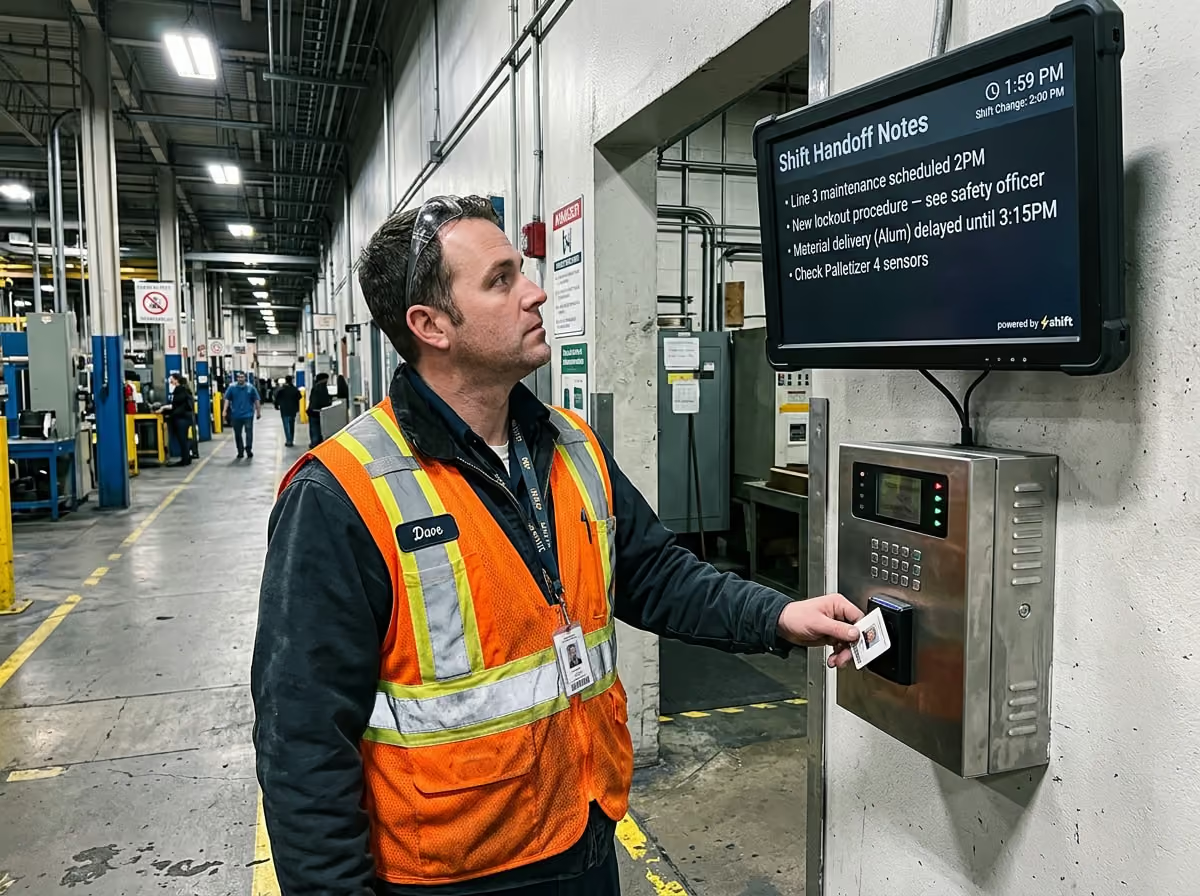
If you’re ready to see how effective internal marketing to your staff can be when it comes to increasing productivity, engagement, and reducing turnover and safety issues, consider going with Shift digital signage. This is your one stop system that can handle all kinds of content designed specifically for employees. Shift makes it easy to set up campaigns that you can start running immediately, thanks to their Content Navigator, which includes all sorts of templates to get you started. With Shift, start engaging your manufacturing staff with options like:
- Employee recognition through spotlights, work anniversaries, achievements, and birthdays
- Access to training materials and quick refreshers
- Assisting with onboarding
- Wayfinding throughout the warehouse or manufacturing floor
- Internal company communications specifically for your workforce
- Posting safety or emergency alerts
- Surveys for staff through QR codes
- Real-time information like production and performance KPIs
Will You Take Advantage of the Benefits of Digital Signage for Internal Marketing?
Manufacturing workers who feel informed, recognized, and connected to the bigger picture are more engaged, safer, and more likely to stay. Digital signage doesn't replace the human elements of internal marketing — the huddles, the recognition programs, the leadership visits to the floor — but it does something those efforts can't do alone. It puts the message in front of every worker, on every shift, every single day.