
Walk into almost any school or university today and you'll notice something has changed. The paper flyers taped to hallway walls, the laminated posters curling at the corners, the whiteboard outside the front office with last week's lunch menu still scrawled on it — they're being replaced. In their place: sleek screens quietly cycling through announcements, event countdowns, student spotlights, and safety alerts. This is digital signage, and while it's often associated with retail storefronts or corporate lobbies, it is also becoming one of the most effective internal marketing tools available to educational institutions.
Internal marketing — the practice of communicating with the people already inside your organization, rather than trying to attract new ones — is often an afterthought in education. Schools and universities pour enormous energy into external marketing: recruitment brochures, open house events, social media campaigns aimed at prospective students and their families. But the audience that spends the most time on campus, that shapes culture, retention, and satisfaction day in and day out, is the one already enrolled. Students, faculty, and staff are the internal audience, and how well an institution communicates with them has a direct impact on morale, engagement, safety, as well as enrollment retention.
We’re going to discuss how this all works in more detail, including:
- Why internal marketing works so well in the education industry
- The benefits of taking advantage of digital signage
- Why all levels of education can use this tool
- The only digital signage system you need
Why Internal Marketing Matters in Schools
There are all kinds of people who can be reached by digital signage in the education industry, including both staff and students

Every educational institution is, functionally, a small city. There are announcements to make, events to promote, policies to reinforce, and a constant stream of information that needs to reach thousands of people who are moving between classrooms, offices, and common spaces all day. Email gets ignored. Printed flyers get outdated the moment they're posted. Word of mouth is unreliable and slow.
Internal marketing in this context isn't about selling something — it's about building a shared sense of community, keeping people informed, and reinforcing institutional identity. It answers questions like: What's happening on campus this week? Who won the science fair? Where do I go in an emergency? What does our school stand for? When executed well, internal marketing turns a building full of individuals into a connected community. When done poorly, it produces disengaged students, uninformed staff, and a campus that feels disjointed.
The Core Benefits of Digital Signage for Internal Marketing
Real-time, centralized updates. A single content management system can push updates to every screen across a campus instantly. A schedule change, a weather delay, a room reassignment — all of it reaches the right audience in seconds, without printing a single page.
Cost and labor savings. Print materials require design time, printing costs, physical posting, and constant replacement. Digital signage networks eliminate nearly all of that overhead once the initial screens are installed. Content updates become a matter of uploading a new file, not reprinting hundreds of posters.
Increased engagement. Motion, color, and video draw the eye in ways static paper cannot. Studies on attention and signage consistently show that dynamic displays capture more attention than static ones, which matters enormously in high-traffic areas like cafeterias, hallways, and student unions where information competes with a hundred other distractions.
Emergency and safety communication. Perhaps the most critical function digital signage serves is in crisis communication. Integrated with alert systems, digital displays can instantly switch to lockdown notices, severe weather warnings, or evacuation instructions — something no printed sign could ever do.
Reinforcing culture and identity. Screens can showcase school spirit, celebrate student and staff achievements, display mission statements, and highlight campus values in a way that feels alive rather than static. This steady visual reinforcement builds a sense of pride and belonging that's hard to replicate through email newsletters alone.
Reduced information overload. Rather than bombarding students and staff with emails they'll never read, signage delivers bite-sized, visually digestible content at the exact moments people are walking past.
Why Digital Signage Is a Natural Fit for Education at Every Level
Using digital signage to communicate internally fits at all levels of education
What makes digital signage particularly well-suited to education isn't just that it solves communication problems — it's that educational institutions can really function no other way. Schools are physical, high-traffic, schedule-driven environments where large groups of people pass through shared spaces multiple times a day. That's precisely what digital signage was built to serve. Whether it's a 500-student elementary school or a 30,000-student university, the same underlying dynamics apply: constrained attention spans, constant scheduling changes, dispersed physical campuses, and a captive audience moving through common areas on a predictable rhythm. The specific use cases shift by age and institution type, but the fit is consistent across the board.
Elementary Schools
At the elementary level, digital signage plays a slightly different role than it does in higher grades — it's less about complex information delivery and more about building a warm, engaging environment for young students and the parents who visit the building regularly.
- Lunch menus and daily schedules displayed in the cafeteria and front lobby, replacing the printed calendars that quickly become outdated.
- Birthday and achievement shout-outs, where a screen in the main hallway celebrates a student's birthday or highlights a class that read the most books that month — small moments that mean a great deal to young children.
- Arrival and dismissal information in the front office and pickup areas, helping parents and visitors navigate procedures without confusion.
- Behavior and character education themes, such as a "word of the week" or kindness campaign, displayed with bright, animated graphics that hold a child's attention far better than a bulletin board.
- Safety and visitor check-in reminders near the entrance, reinforcing procedures for parents and guests in a friendly, easily updated format.
Because elementary schools have a constant flow of parent visitors — drop-off, pickup, volunteer days, school events — the front-of-building screens also function as a first impression tool, informing visitors that the school is organized, modern, and well-run.
High Schools
High schools operate at a much faster pace, with more complex scheduling, more student autonomy, and a student body that's beginning to expect the same digital-first experience they get everywhere else in their lives. Digital signage becomes a natural extension of that expectation.
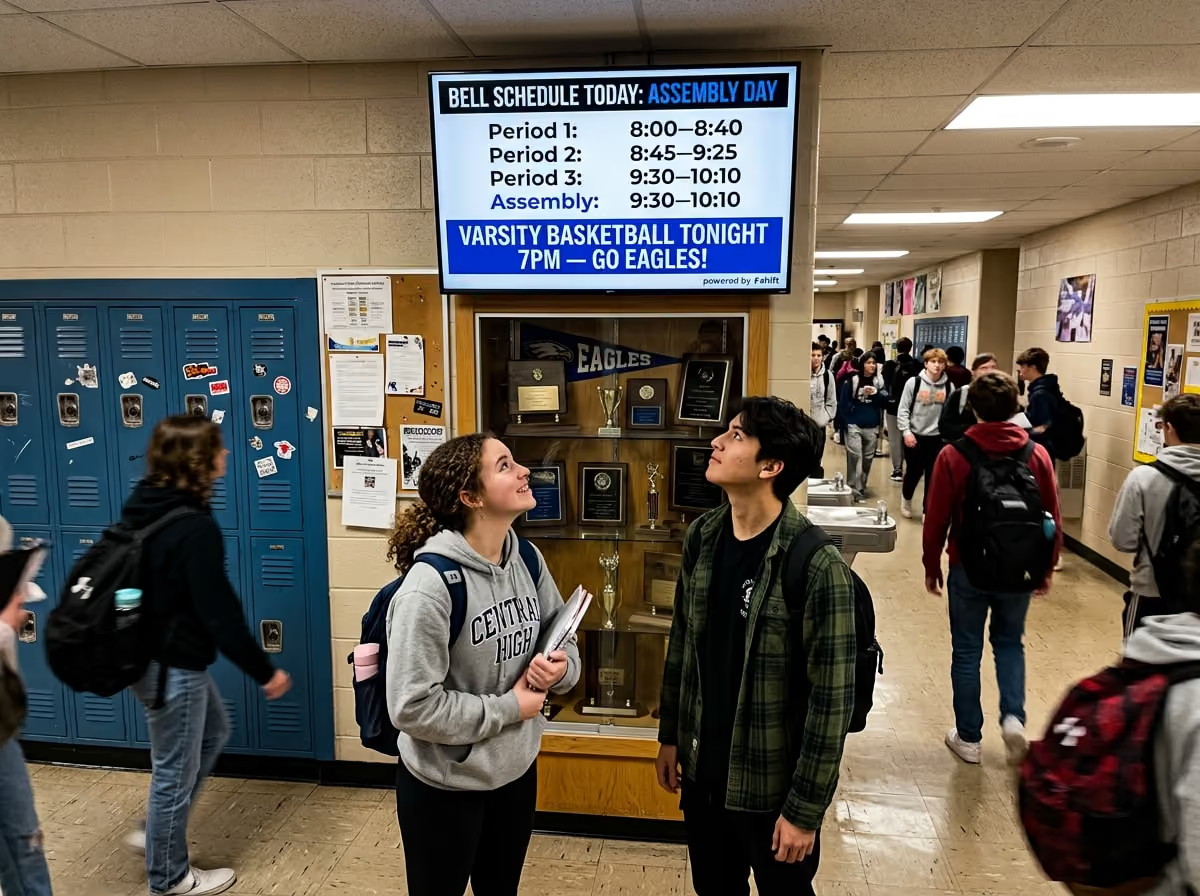
- Class schedule and bell changes, especially useful on days with assemblies, testing, or modified schedules that would otherwise cause confusion.
- Sports scores and athletic event promotion, displayed in gyms, cafeterias, and hallways to build school spirit and boost attendance at games.
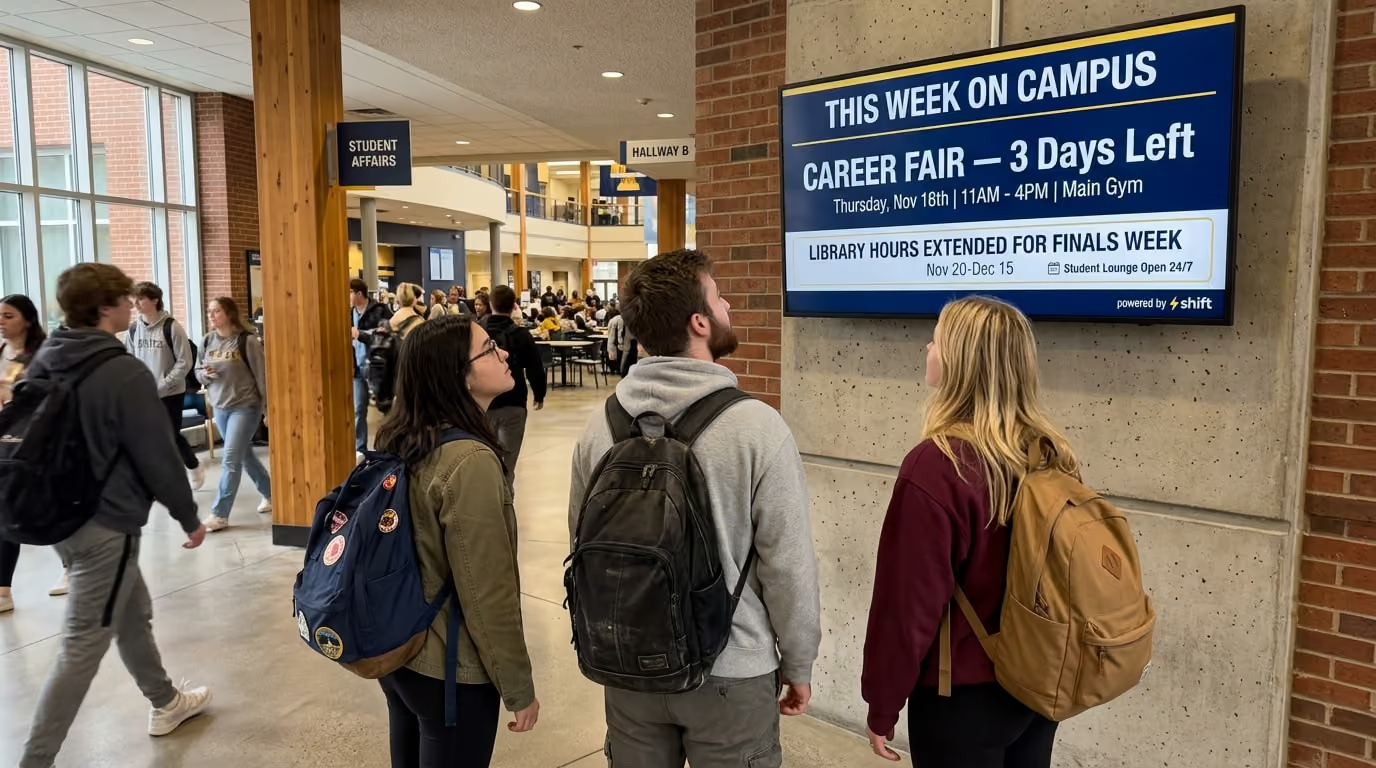
- College and career readiness content, such as scholarship deadlines, college fair dates, and financial aid reminders — critical, time-sensitive information that students frequently miss in email.
- Club and activity fair promotion, giving student organizations a modern way to recruit members without competing for wall space.
- Student council and leadership announcements, along with recognition of academic and extracurricular achievements, reinforcing a positive campus culture.
- Mental health and wellness resources, a growing priority for high schools, communicated visually in common areas rather than buried in a handbook.
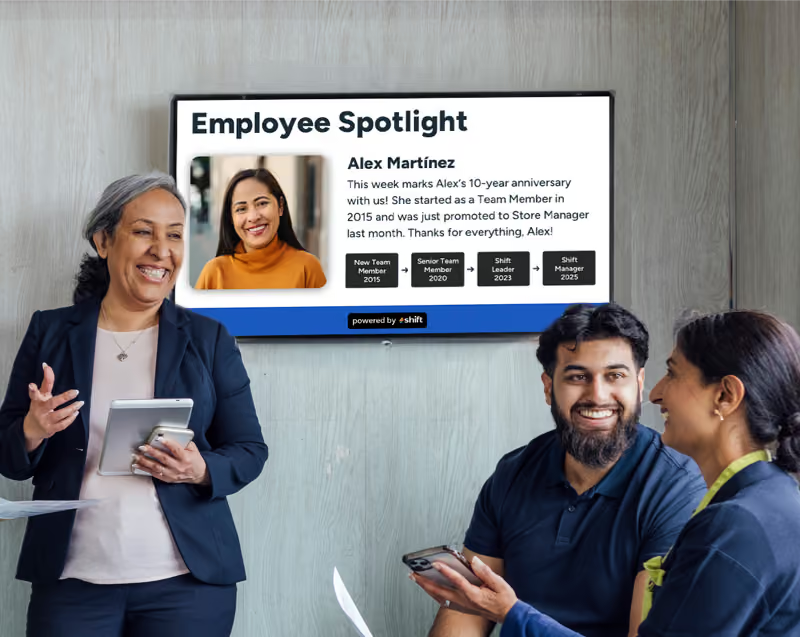
- Highlights staff achievements and marks birthdays and work anniversaries.
At this level, signage also plays a subtle recruitment and retention role: prospective students and families touring the building see a campus that feels current and engaged, which shapes their perception of the school before a single conversation happens.
Colleges and Universities
Higher education presents the most complex signage environment of the three, largely because of scale. A university campus may span dozens of buildings, thousands of students, multiple departments, and a constant churn of events, deadlines, and services — making digital signage for internal marketing less of a nice-to-have and more of an operational necessity.
- Campus-wide event promotion, from guest lectures and career fairs to concerts and club meetings, displayed across dining halls, student unions, libraries, and residence halls.
- Registration and enrollment deadlines, ensuring students see critical dates repeatedly throughout the day rather than relying on a single email that gets buried.
- Wayfinding and building directories, especially valuable in large or newly constructed buildings where students and visitors need help navigating.
- Department-specific content, such as research spotlights, faculty achievements, or internship opportunities displayed on screens within specific academic buildings.
- Dining hall menus and hours, updated instantly to reflect closures, special events, or menu changes.
- Emergency alerts and weather notifications, arguably even more critical at the university level given the sprawling, often open campus layouts.
- Digital bulletin boards for student organizations, replacing the cluttered cork boards outside student unions with rotating, organized content from dozens of clubs and Greek organizations.
- Educate employees and students on the values and vision of the institution.
- Improves staff retention with recognitions and call outs.
Universities also use signage as a subtle brand-reinforcement tool, aligning screen design with institutional branding to create a cohesive visual identity across a campus that might otherwise feel fragmented across departments and buildings.
A Common Thread Across All Levels

As you can see, at every level, digital signage succeeds because it meets people where they already are, physically and mentally. Students might not necessarily check email between classes, but they do walk past the same hallway screen five times a day. Parents don't read the monthly newsletter cover to cover, but they do glance at the lobby display while waiting for pickup. Faculty don't have time to scroll through a shared drive of PDF flyers, but they'll absorb information from a screen in the break room without even trying.
This is the real reason digital signage fits education so naturally — schools and universities are built around shared physical spaces and repeated daily rhythms. Every institution, regardless of age group, has hallways, cafeterias, entrances, and gathering spaces that see the same people pass through on a loop. Digital signage simply takes advantage of that built-in structure for effective internal communication, turning idle moments and transitional spaces into opportunities for communication that would otherwise be wasted.
Getting Started Thoughtfully with Shift Digital Signage
Institutions considering digital signage for internal marketing should resist the temptation to treat it as "set it and forget it" technology. The screens themselves are only as effective as the content strategy behind them. That means assigning ownership of content updates, establishing a simple approval workflow, and resisting the urge to overload screens with too much information at once. A rotating set of five to seven simple messages will always outperform a single cluttered screen trying to say everything at once.
It's also worth starting small — a pilot in the cafeteria or main lobby — before scaling to a campus-wide network. This allows staff to build confidence with the content management system and refine messaging before a full rollout.
And if you want a seamless roll out for important school-wide internal communication, you go with the pros at Shift digital signage! Shift makes it easy to start creating content from day one with their Content Navigator. Use helpful templates or create your own and make changes on the fly from any device. There’s a 60 day trial period, so you can really learn the ins and outs of the software, and determine if it’s right for your school’s needs. There are all kinds of ways to internally communicate with staff and students using digital content, including:
- Employee or student recognition through spotlights, work anniversaries, achievements, and birthdays
- Access to training materials and quick refreshers for staff
- Assisting with onboarding of staff
- Wayfinding throughout the school or campus
- Internal company communications specifically for the student body or staff
- Posting safety or emergency alerts
- Surveys for staff through QR codes
- Real-time information like class and scheduling changes
- Dining hall menus
- Campus-wide events
- Sports and club information for students
Rely On Digital Signage from Shift for Internal Marketing in Education!
Digital signage has moved well beyond its origins as a retail and corporate tool. In education, it has found a use case that feels almost purpose-built: institutions with captive, physically co-located audiences, constant scheduling changes, and a genuine need to build community and reinforce culture. From the cheerful birthday shout-outs in an elementary school lobby to the emergency alert systems spanning a university campus, Shift digital signage adapts to whatever internal marketing challenge an institution faces.